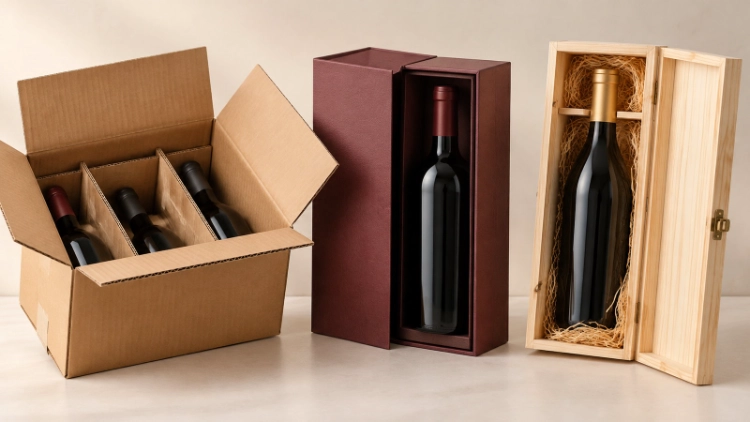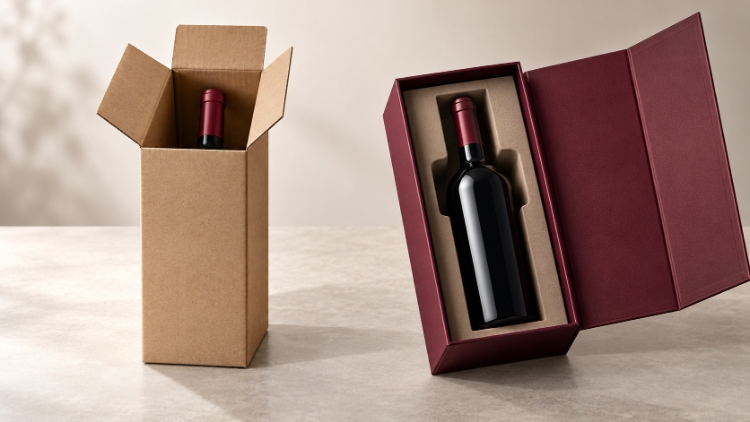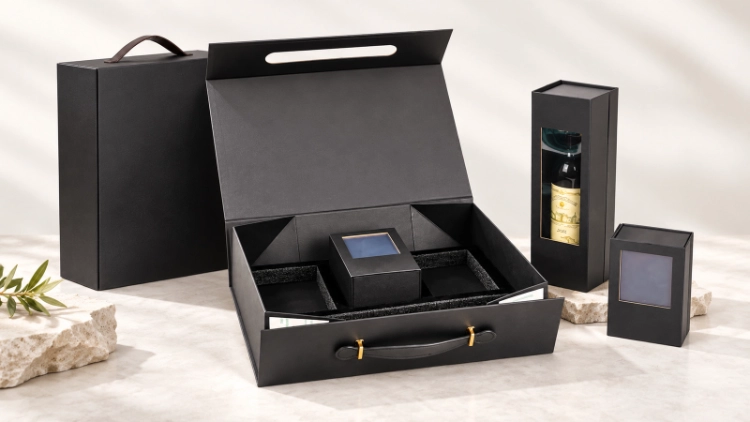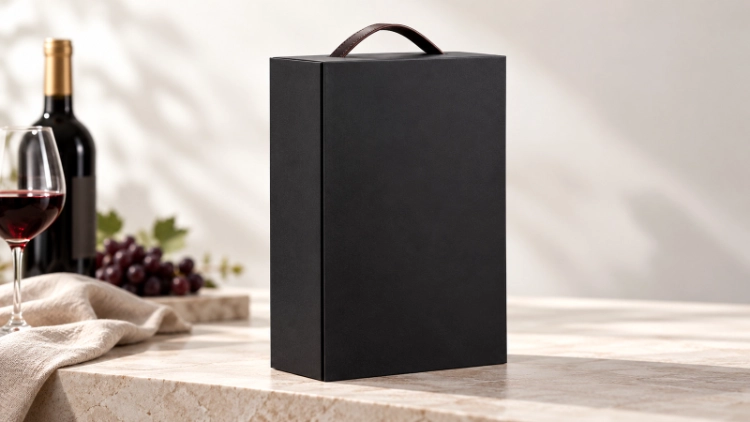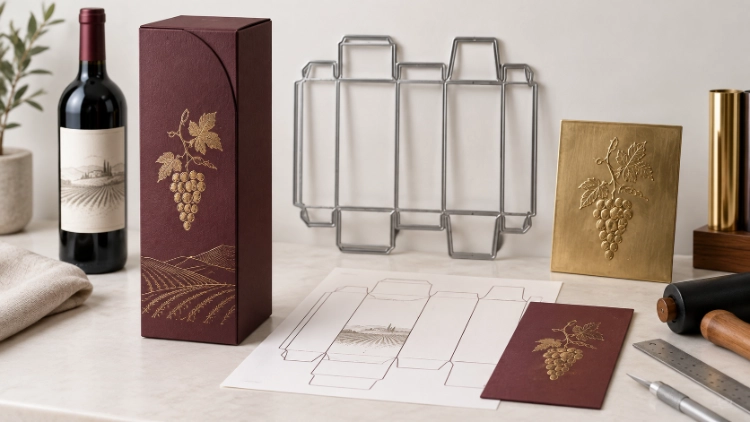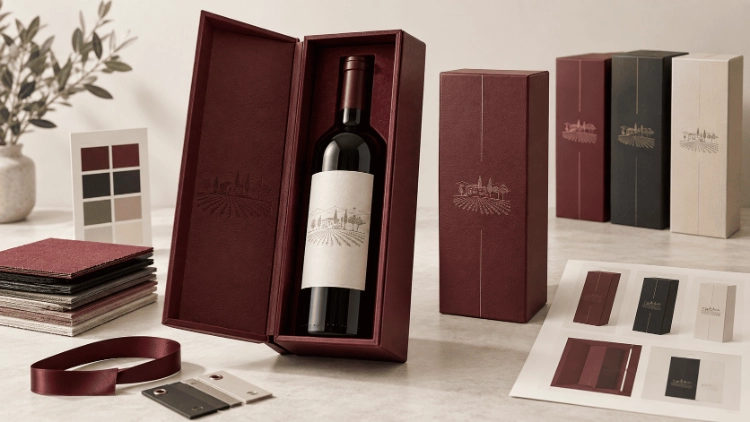

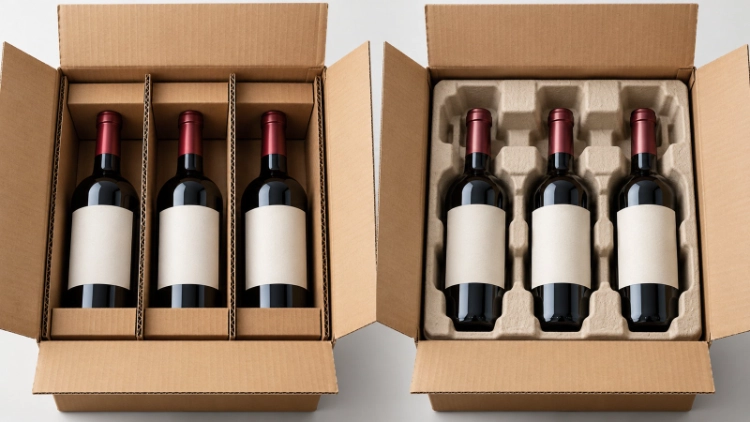
Choosing between corrugated and molded pulp wine bottle inserts is not simply a choice between two paper-based materials. Each structure controls bottle movement differently, and neither protects a bottle independently of the outer shipping carton. Corrugated inserts typically use cut or folded partitions to separate bottles; molded pulp inserts use shaped cavities to cradle specific areas of a bottle. The better option depends on the bottle range, packing process, distribution route, cost structure, and material requirements.
One distinction is important from the start: this comparison concerns the insert inside the package, not corrugated outer boxes versus molded-pulp shipping systems as complete products. A molded pulp insert can sit inside a corrugated carton, so the two materials can work together rather than compete as mutually exclusive choices.
What Are Corrugated and Molded Pulp Wine Bottle Inserts?
Corrugated inserts use partitions to create space between bottles
Corrugated inserts use slotted, folded, or die-cut board components to form cells between bottles. Depending on the design, partitions may also support the bottle body, shoulder, or neck. Performance depends on board grade, flute construction, partition height, slot accuracy, and how securely the insert fits inside the carton.
Corrugated board combines flat liners with a fluted medium. The FEFCO overview of corrugated packaging explains this construction, but the cell layout and fit with the bottle and outer carton determine how a divider performs.
Molded pulp inserts use formed cavities
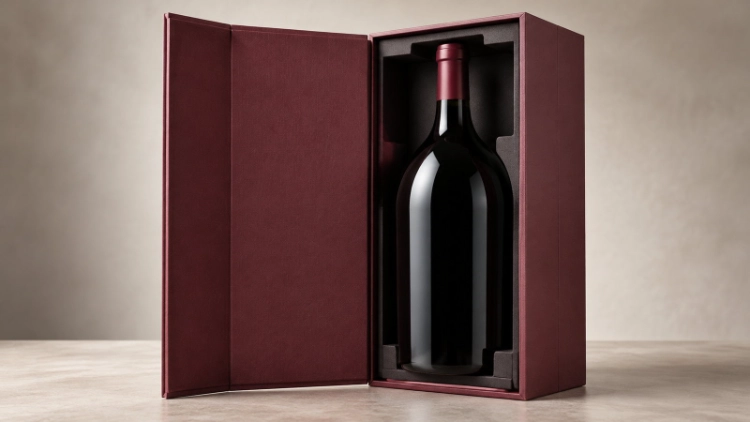
Molded pulp inserts are formed from fibrous material into three-dimensional shapes. Cavities can support the bottle base and body, with contours around the shoulder or neck where needed. The shape determines contact points and how much movement remains.
Fiber source, density, wall thickness, surface finish, coatings, and additives vary. Buyers should confirm the proposed insert’s cushioning, moisture response, recycled content, and end-of-life profile instead of assuming all molded pulp parts behave alike.
Which Factors Determine Shipping Protection?
Impact cushioning and movement control are different requirements
An insert must limit movement and manage contact when a package is handled, dropped, vibrated, or shifted. Molded pulp uses shaped surfaces to support selected bottle areas; corrugated partitions create barriers and may add folded supports. Neither guarantees better impact performance without the right geometry, fit, and outer package.
A loose cavity can let a bottle rock; an overly tight one can complicate loading or press against a label. A short divider may separate bottle bodies but leave shoulders touching. Both designs must restrain the bottle without making loading and removal difficult.
The outer carton carries part of the protection load
An insert cannot compensate for a weak outer carton, excessive clearance, or an insert that shifts. The carton’s base, walls, closure, and fit help manage stacking and handling loads and should be reviewed with the bottle in place.
A single-bottle parcel faces different handling from a multi-bottle master carton on a pallet. Parcel sorting, warehouse stacking, long routes, and humidity affect the complete pack, so material choice should follow the actual distribution conditions.
How Do Corrugated and Molded Pulp Inserts Compare?
| Decision factor | Corrugated insert | Molded pulp insert |
| Main support method | Partitions, cells, and folded or die-cut features | Shaped cavities and molded contact surfaces |
| Bottle layout | Well suited to defined grids and multi-bottle separation | Suited to cavities shaped around specified bottle profiles |
| Design changes | Cell dimensions and partition layout can often be revised through converting changes | A changed bottle profile may require a revised cavity or mold |
| Storage before packing | Flat components may take limited space before assembly | Storage efficiency depends on cavity depth and whether parts can nest |
| Production factors | Board grade, die cutting, slot fit, and assembly time | Mold development, forming, drying, cavity consistency, and part handling |
| Key checks | Divider stability, partition height, bottle separation, and carton fit | Cavity accuracy, contact points, edge quality, moisture behaviour, and removal |
These are common design considerations, not a universal performance ranking. A well-fitted divider can outperform a poorly designed pulp cavity, while a correctly molded insert can provide controlled contact around a defined bottle.
How Do Cost and Production Requirements Differ?
Corrugated inserts may suit regular bottle grids or layouts that change within a defined product range. Flat components save space before assembly, but staff must slot them correctly; an unstable divider can bow or lift. Board grade and die-cut accuracy affect consistency, so material price alone does not establish total cost.
Molded pulp has a different cost structure. Tooling, forming, drying, trimming, stacking, and quality control affect the finished part. A stable bottle range may justify a dedicated cavity, while a changed profile may require revised tooling or another insert version. These factors do not mean molded pulp is always more expensive.
Compare cost per packed unit, including material, tooling or die preparation, assembly, storage, packing speed, rejects, and potential damage costs. Ask for quotes based on the same bottle, quantity, carton, finish, and order assumptions so the comparison is fair.
What Should Buyers Consider About Sustainability?
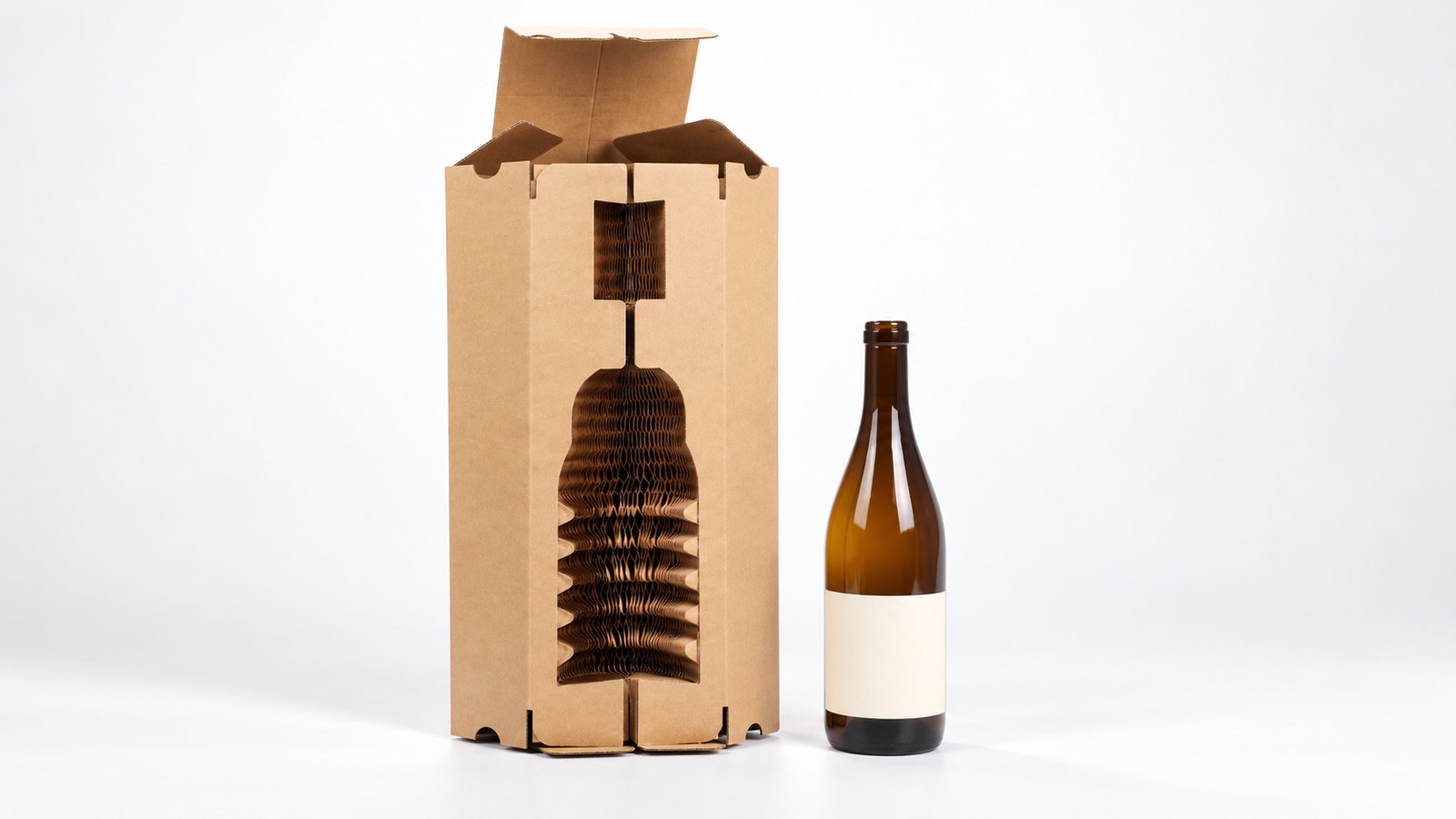
Both options are fiber-based, but their environmental profile depends on fiber sourcing, recycled content, coatings, adhesives, inks, moisture barriers, and local collection systems. Molded pulp is not automatically compostable everywhere, and corrugated packaging may be harder to recover if incompatible layers or components are added.
Check whether the insert separates cleanly from the outer box and request material specifications to support recycled-content or certification claims. Windows, foam, textile lining, coatings, and permanent adhesives should be assessed separately. TopWinePack’s eco-friendly printed wine box guidance likewise treats inserts and finishes as part of the complete material assessment.
Choose the least complex material combination that still protects the bottle. Removing a component is not an improvement if it increases movement, breakage, or replacement shipments.
Which Insert Fits Different Wine Shipping Needs?
Corrugated dividers suit defined multi-bottle layouts
A corrugated divider is worth evaluating when bottles share a predictable format and need separate cells in a multi-bottle pack. It can be useful when flat storage or adjustable cell layouts matter. Check partition height at the bottle body and shoulder, whether the insert stays seated, and whether the carton closes without compressing the bottle or divider.
TopWinePack corrugated wine shipping box range includes outer formats for single, double, and triple bottles. These formats do not prove a specific insert’s performance; the divider, bottle, and carton must be assessed together.
Molded pulp suits projects that benefit from a shaped cradle
Molded pulp may suit a stable bottle profile that needs defined contact around the base, body, or neck. It may replace separate partitions when the molded form provides the required separation, but cavity depth, consistency, edge finish, moisture response, and bottle removal need to be checked in a sample.
For unusual bottles, heavy closures, or accessory sets, confirm dimensions and filled weight, then check support points and carton clearance rather than choosing by appearance alone.
A combined system may be the more suitable answer
The two materials are not always alternatives. A molded pulp cradle can support the bottle while a corrugated outer carton provides enclosure and stacking strength. The decision should reflect each component’s role rather than assume one material must replace the other.
How Should the Complete Package Be Tested?
Review the actual bottle, insert, closure, and outer carton together. Record height, maximum and base diameters, shoulder shape, neck dimensions, closure height, and filled weight. Check loading and removal, label scuffing, bottle-to-bottle contact, and insert movement after closure and handling.
A static fit check is only the first step. Select testing based on the route and handling risks. The International Safe Transit Association’s test procedures cover different package-testing approaches; choose one that matches the distribution conditions and acceptance criteria. A visual inspection or one unrecorded drop does not prove a material is safer.
Record the sample version, material specification, test conditions, observations, and corrections. Recheck whether earlier results still apply after changes to the bottle, insert, board grade, or carton.
How Should Buyers Specify a Custom Insert Project?
The brief should include bottle dimensions and weight, bottle count, closure, carton size, route, stacking conditions, and any environmental requirements. State the priority—separation, shaped cushioning, flat storage, or assembly speed—and provide photos or a physical bottle when possible.
TopWinePack OEM/ODM service lists insert and box options including paper molds, EVA, blister, and velvet trays. If molded pulp is specified, confirm the material and cavity design rather than assuming every paper-based insert is molded pulp.
The existing wine box insert guide covers broader insert choices; this article focuses on corrugated and molded pulp for shipping protection.
Once the bottle and route are defined, send the packaging requirements for a custom review. Confirm the insert material, carton construction, sample plan, and test requirements together rather than approving the insert separately.
Conclusión
Corrugated and molded pulp wine bottle inserts use different structures: dividers create cells between bottles, while molded pulp uses shaped cavities around a specified bottle. Choose according to bottle fit, quantity, production, storage, sustainability criteria, outer carton, and route. A combination may be appropriate. A matched sample and relevant package test provide a sounder basis than broad claims about cost or protection.
Preguntas frecuentes
Q1: Are molded pulp inserts always better than corrugated dividers for wine shipping?
A: No. Molded pulp provides shaped contact around a defined bottle, while corrugated dividers separate bottles in a regular layout. Either can work when designed and tested with the complete package.
Q2: Which insert is more cost-effective for a custom wine shipping box?
A: Compare tooling or die preparation, material, assembly, storage, quality control, and order quantity using the same package assumptions. Actual quotations are needed to determine the lower total cost.
Q3: Can molded pulp inserts be used inside corrugated wine shipping boxes?
A: Yes. A molded pulp cradle can support the bottle inside a corrugated carton. Sample and test the bottle, insert, and carton together for fit and restraint under the intended shipping conditions.