
A Christmas wine box can look finished in the artwork file and still create production problems. A motif may cross a fold, foil may sit too close to a seam, or a sleeve may no longer fit after an insert change. The first decision is whether the project needs a new structure or a seasonal update to an existing one.
That choice affects the dieline, materials, sampling, and version control. A single-bottle gift and a two-bottle set with accessories need different internal layouts, so the brief should describe the complete packed set, not just the empty box.
What Should Change for a Christmas Wine Gift Box?
Seasonal packaging may reuse an existing structure while changing the paper, artwork, greeting, or finish. A new structure is needed when bottle count, bottle profile, accessories, opening method, or carrying requirements change.
Separate Seasonal Artwork from Structural Requirements
List the campaign changes first: colors, illustration, logo treatment, seasonal wording, and market-specific text. Keep them separate from the bottle cavity, lid clearance, closure, handle position, and insert depth. This prevents a visual revision from unintentionally changing the package.
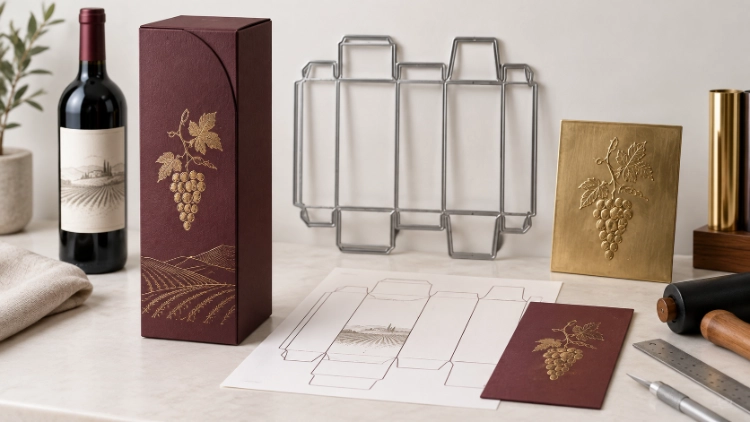
Prepare artwork against the current dieline, keeping bleed, folds, glue areas, and safe zones visible. A Christmas motif that looks balanced on a flat panel may appear off-center once the box is assembled.
Define the Contents Before Choosing Decoration
A gift box may hold one bottle, several bottles, or wine with accessories. A corkscrew, stopper, glass, or greeting card needs a defined position; loose accessories can move against the bottle or interfere with the lid.
Record bottle dimensions, quantity, filled weight, and accessories before finalizing the structure. If bottle shapes vary, confirm whether one insert can fit them all or whether separate cavities are needed before artwork is locked.
Which Box Structure Fits the Gift Set?
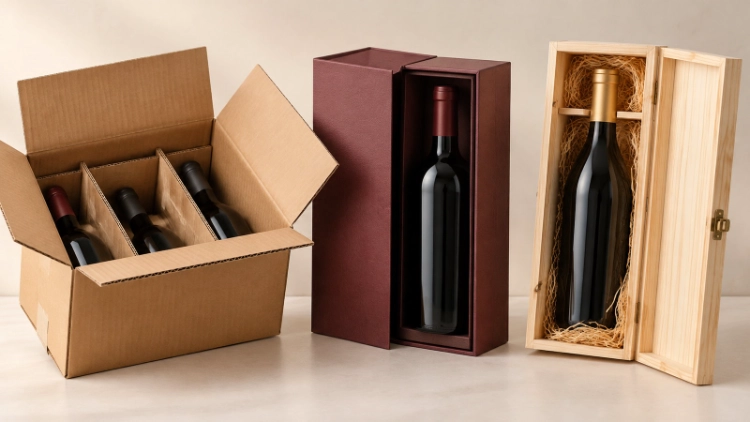
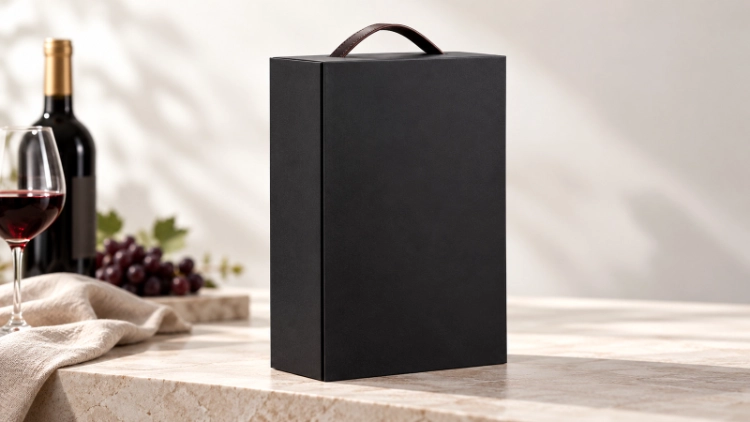
Choose the structure around opening, carrying, display, and packing. A rigid box creates a substantial presentation; a foldable format may reduce storage space before assembly. Neither suits every seasonal project.
Single-Bottle and Multi-Bottle Formats
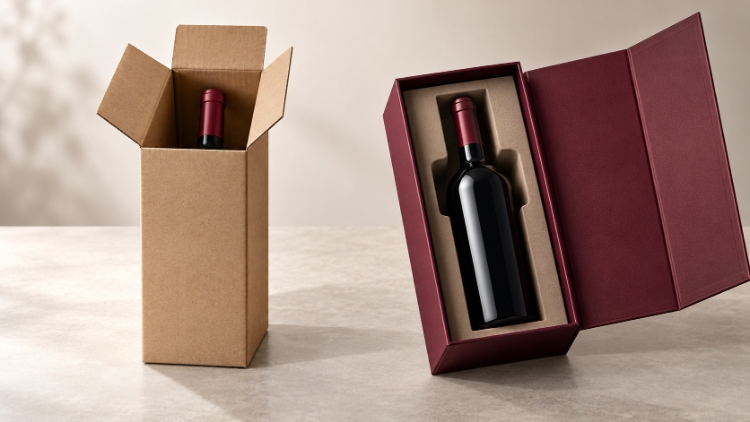
A single-bottle box must support the base and body while allowing easy removal. The opening should show the label as intended, with clearance around the closure. Multi-bottle layouts also need bottle separation and balanced weight across the base.
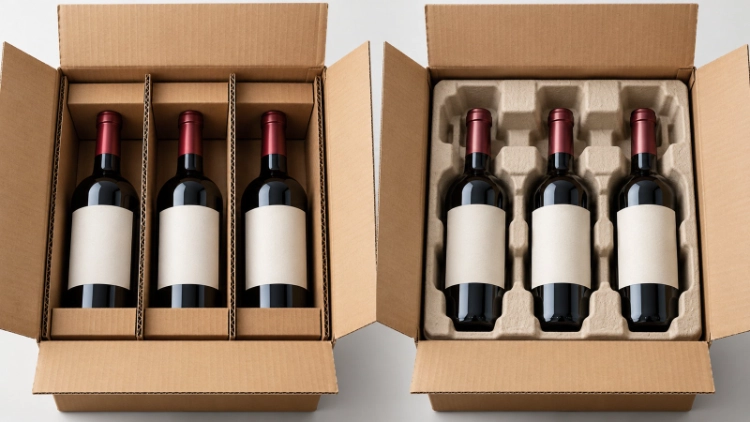
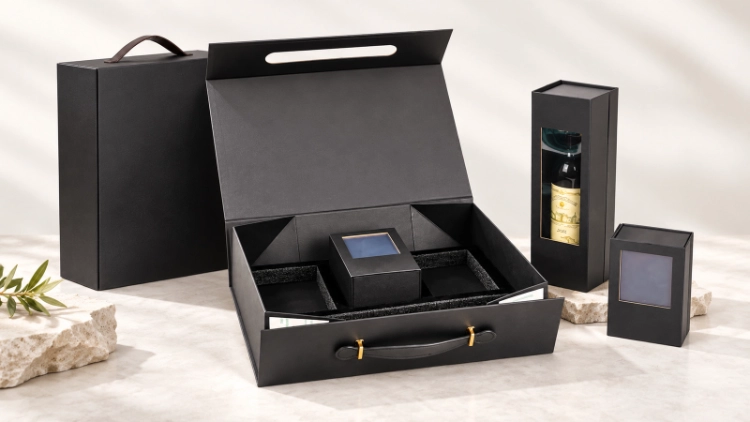
A wider set may need dividers or accessory cavities that change the internal dimensions and closure clearance. When a glass is included, allow for its full height and protective space.
Opening Style and Carrying Format
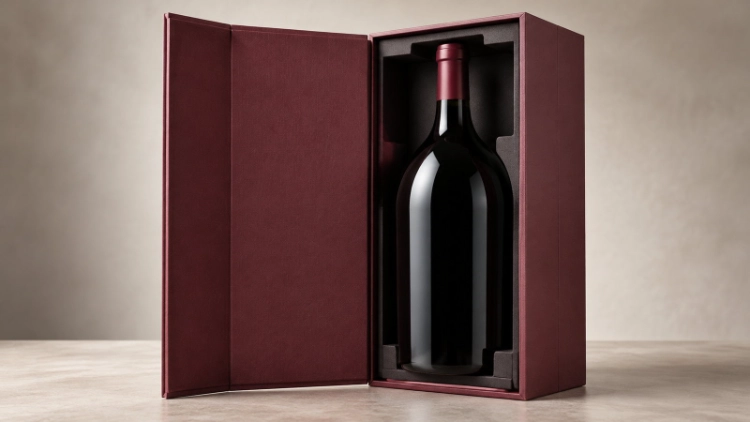
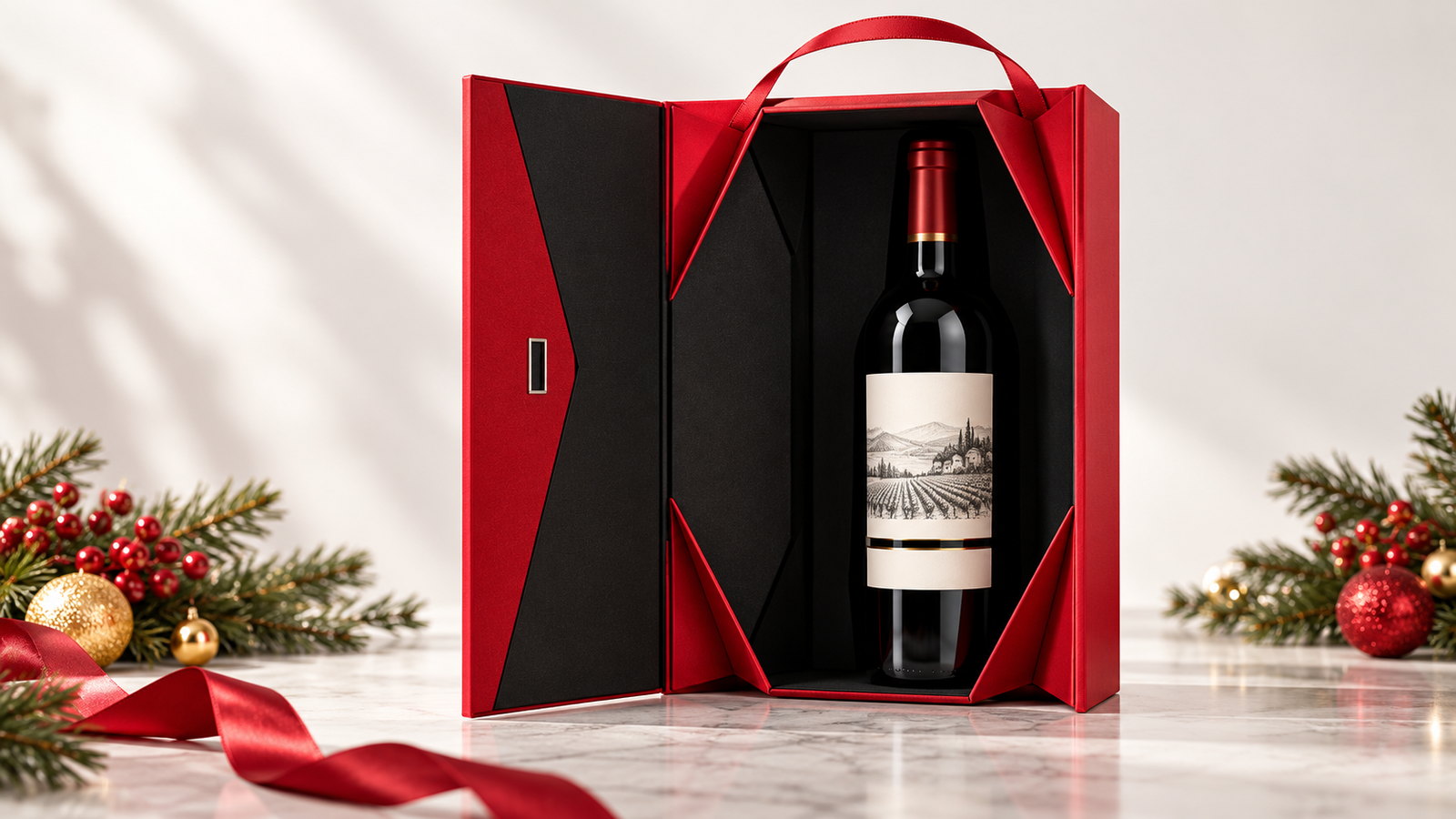
Magnetic closures, double doors, drawers, and lid-and-base structures open differently. Double doors create a center meeting line; a drawer needs clearance to slide past ribbons or decoration. A handle must be checked with the intended contents inside.
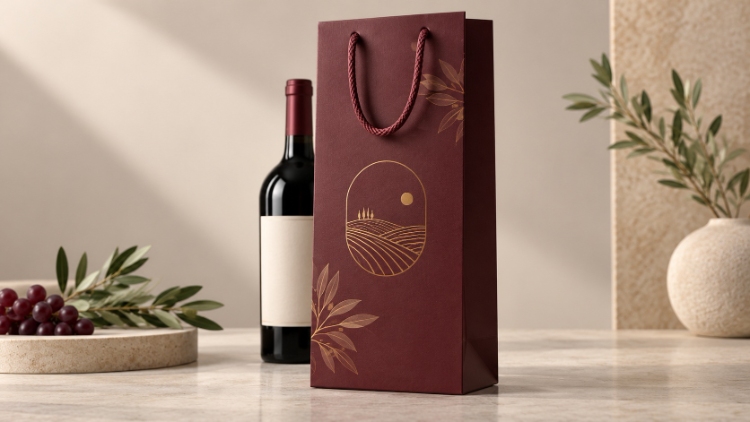
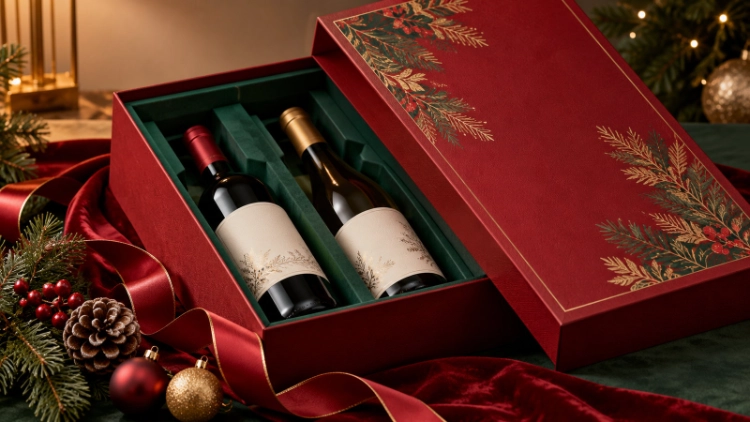
TopWinePack festive two-bottle wine gift set is a useful structural reference: it combines a magnetic double-door opening, a wine-red EVA insert for two bottles, gold foil stamping and embossing, and a matching red paper carry bag. Those details illustrate how the box, insert, decoration, and bag work as one set. They should not be treated as a universal specification for every Christmas project.
How Do Materials and Finishes Affect Seasonal Artwork?
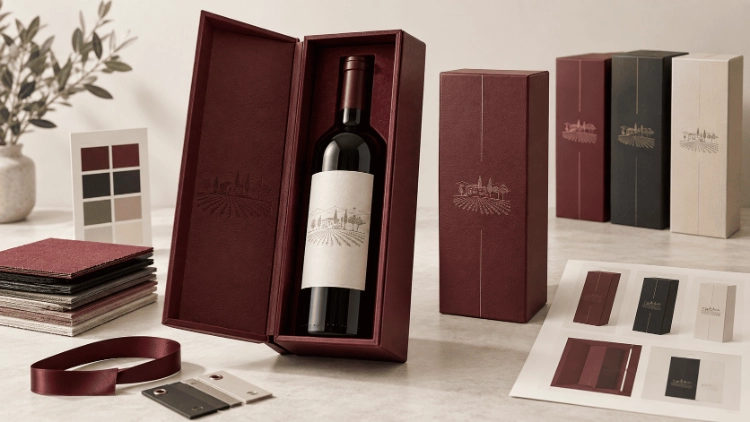
The same artwork can look different on white card, textured specialty paper, or a dark printed surface. Material selection therefore needs to happen early enough for the designer to prepare a realistic proof. A screen preview cannot show how paper texture, coating, and reflective finishes will look in production.
Choose the Surface for the Artwork
White or coated paper suits detailed illustrations and multicolor artwork. Dark or textured paper can support a restrained logo or metallic accent, although fine lines may lose definition on an uneven surface. Kraft-style paper has its own base color, so pale colors may not match a white-screen preview.
The board provides structure; the outer paper carries the print and finish. A premium surface cannot fix a poorly fitting box, and a sound structure does not guarantee color consistency. Approve the complete combination.
Use Decorative Finishes with a Clear Purpose
Foil stamping can highlight a wordmark, emblem, or seasonal detail. Embossing and debossing add relief; spot UV creates gloss in selected areas. Their effect depends on the surrounding surface and light. Too many finishes can crowd the design and complicate registration.
Mark foil, embossing, debossing, and spot UV clearly in the artwork file. Keep them clear of folds, glue seams, and panel joins. Check fine text and thin lines on a physical sample when finishes are combined.
How Should Seasonal Artwork Versions Be Managed?
Holiday projects may share one structure across different labels, greetings, languages, or annual artwork. Give each version a clear file name and revision record rather than relying on labels such as “final” or “final revised.”
Reuse the Dieline Only When the Structure Stays the Same
Reuse a dieline only when board size, opening style, insert, and assembly stay the same. A change from one bottle to two, the addition of a glass, or a new shaped tray requires a fresh check of the dieline and artwork placement.
El custom cardboard wine box range includes different presentation structures, from single- and multi-bottle formats to magnetic and other gift box designs. The relevant starting point is the format that fits the contents; seasonal artwork should be applied only after that structure has been selected.
Keep a Version Record for Every Design
Record the artwork name, language, bottle format, structure, paper, finish, and approved revision for each version. Mark shared and unique components so the right print file is paired with the right insert and finishing instructions.
Record color references with the artwork. If the box, paper bag, and card need to match, review the actual materials together because their surfaces may reproduce the same color differently. When several versions share one production run, confirm the quantity split before printed paper or finishing materials are prepared. If separate sleeves will be applied to a common box, specify whether they are supplied loose or fitted during assembly; that choice affects labeling, storage, and version matching.
Which Production Decisions Are Affected by Late Changes?
A copy change may need only an artwork update and proof. Changing bottle count, box depth, or opening structure can affect the dieline, insert, material use, and assembly. The schedule should distinguish these revisions.
Artwork Changes and Structural Changes
An artwork-only change may stay within the existing print area, but spelling, logo size, bleed, safe margins, and any barcode position still need checking before release.
A structural change needs a broader review. Greater depth can shift artwork against folds; a new insert can raise the bottle and reduce lid clearance; a handle can change reinforcement needs. A sample made before such a change may no longer represent the final product.
Plan Seasonal Versions Around the Actual Production Route
Production may involve structural development, proofing, printing, finishing, box forming, hand assembly, inspection, and packing. The route depends on the design. Foil and embossing need their own checks; a simple printed sleeve may not require the same setup.
TopWinePack OEM/ODM customization service covers box structures, materials, printing, finishing, and internal inserts. For a seasonal project, the practical request is to confirm which components can remain unchanged and which need new sampling before the artwork and production plan are finalized.
What Should Be Approved Before Manufacturing?
A blank sample checks dimensions, closure movement, insert fit, and assembly. A printed sample is needed to review artwork, color, foil, embossing, and other finishes.
Check the Complete Gift Set
Place the actual or representative bottle in the insert. Check its position, label direction, lid clearance, and insert stability. In a multi-item set, confirm that accessories have fixed spaces and cannot press against the bottle.
Review the box with its matching bag or other components. Check carrying comfort, closure alignment, and color consistency across different paper surfaces.
Release One Controlled Production Version
Before production, confirm the dieline, artwork revision, material, finish locations, insert layout, quantity by version, and packing method. Record approved changes in the production file and retain the approved sample for inspection.
For a project being developed with TopWinePack, a useful enquiry includes bottle dimensions, number of bottles, accessory list, preferred box style, artwork status, surface finishes, and the required delivery window.
Submit the Christmas wine box requirements for a project review once those details are ready; the structure and artwork can then be assessed together instead of being quoted from a visual reference alone.
Conclusión
A Christmas wine gift box is easier to produce when seasonal artwork is separated from structural requirements. Bottle count and accessories set the layout; the structure determines folds and opening; paper and finishes affect print results. Approving the assembled set gives production a clear reference for each version.
Preguntas frecuentes
Q1: Can an existing wine gift box structure be reused for a Christmas design?
A: Yes, if the bottle count, dimensions, insert, opening method, and assembly remain suitable. The artwork and finishes can then be revised within the existing dieline, subject to proofing.
Q2: Which finishes work well on custom Christmas wine gift boxes?
A: Foil stamping, embossing, debossing, and spot UV can all be considered, depending on the artwork and surface paper. A sample should confirm registration, legibility, and the appearance of the combined finishes.
Q3: What should be confirmed before a seasonal wine box enters production?
A: Confirm the final structure, insert fit, dieline, artwork revision, paper, finishing layers, quantity by version, and packing method. For a multi-piece gift set, review the assembled box with all intended contents.