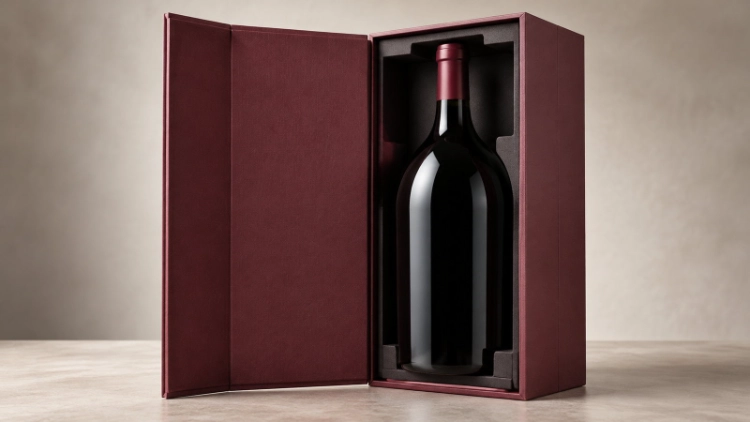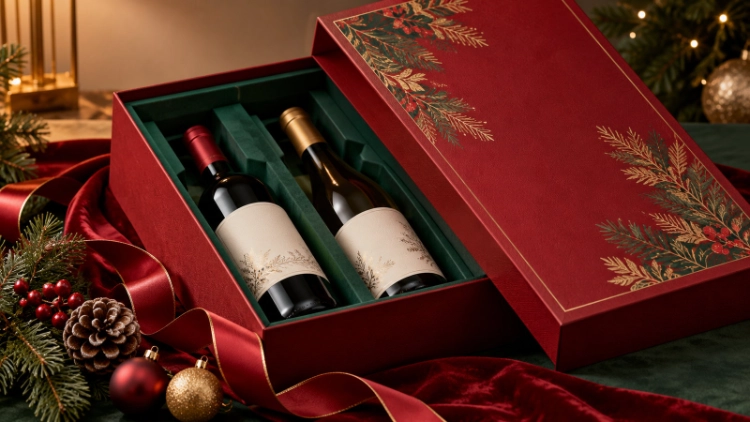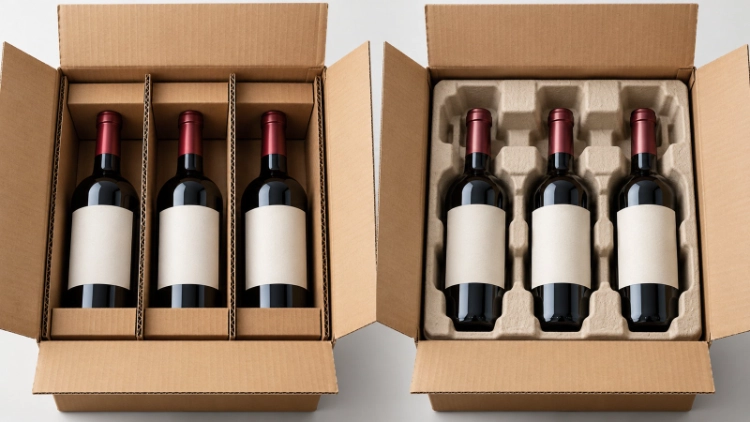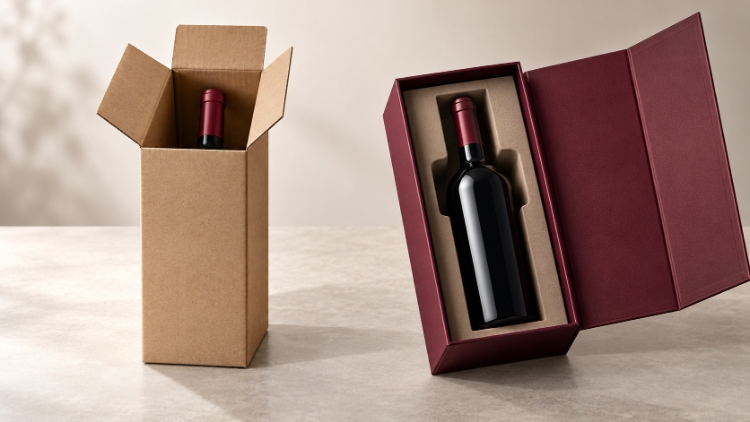

There are many considerations to be made when packaging a gift box containing wine bottles and accompanying glasses. Bottles require some degree of restraint, and so too will the glasses. It is also desirable that any additional items (corkscrew, decanter, etc.) can be readily stripped from the gift on receipt. By attempting to accommodate all of these elements within a single void, you risk compromising the ability to pack, transport and unpack the gift.
Therefore, if looking to commission a bespoke wine gift box, it will always be beneficial to consider all items forming the gift in conjunction with each other. This includes bottle and glass sizes, extra gift components, box aperture and method of carriage.
Buyer checkpoint: Confirm the complete item list, the position of every compartment, the opening sequence, and whether the filled box can be carried without movement before approving the outer box.
What Should a Wine Gift Box with Glasses Hold?
The first step is to define the complete contents of the package. A wine and glass set may include one or two bottles, two wine glasses, a corkscrew, a foil cutter, a pourer, a drip ring, chocolates, or printed gift materials. The contents affect the internal layout more than the exterior style does.
A bottle is usually the heaviest item and needs the strongest support. Glassware has more fragile contact points, while loose accessories can move during handling.
Plan the box as a group of controlled zones:
- Bottle compartments for the main product
- Glassware compartments with clearance around the bowl and stem
- Accessory compartments for tools or promotional items
- A lid or top panel that closes without pressing directly on fragile items
The arrangement should match the sales situation. A corporate gift may need a formal opening sequence, while a retail package may need faster packing and easier shelf display.
Which Measurements Should Be Taken Before Insert Design?
Measure the Bottle and Glass Separately
A single measurement for the whole set is not enough. Each bottle should be measured at its maximum diameter, total height, base, and shoulder area. Different wine bottles can have similar heights but different body widths. Sparkling wine bottles, Burgundy-style bottles, and heavier glass bottles may require different cells.
Glassware needs its own measurement record. Record the overall height, bowl diameter, stem length, foot diameter, and the widest point of the rim or bowl. If the glasses are placed upside down, the foot may become the main support point. If they are placed upright, the stem and base need more controlled protection.
The insert designer also needs to know how many items are packed in each box. A one-bottle set with two glasses uses a different layout from a two-bottle set with two glasses and several accessories. The final arrangement should be based on the actual combination rather than a general “wine gift set” template.
Check the Contact Points Around Fragile Items
Most packaging problems occur at contact points. The bottle should not press directly against a glass. A glass rim should not touch the box lid. The stem should not rest in a narrow slot that allows side-to-side movement.
Check the following areas during the design stage:
- Bottle shoulder against the divider
- Bottle base against the bottom insert
- Glass bowl against adjacent partitions
- Glass stem against the tray or slot
- Glass foot against the base panel
- Accessories against bottles or glassware
- Lid or magnetic flap against the upper edge of the contents
These checks show where the insert needs support and where it needs clearance. Adding material everywhere can make the package bulky, so support should be placed where movement and contact are most likely.
How Should Compartments Be Arranged Inside the Box?
Separate Bottles from Glassware
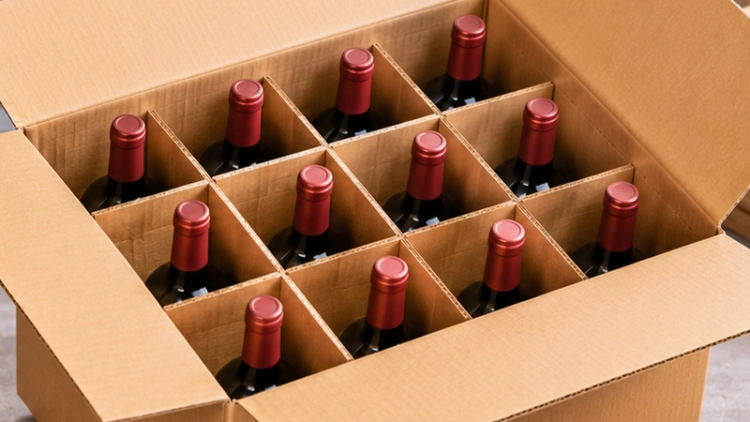
The bottles and glasses should have independent areas. A vertical divider, molded tray, or fitted paperboard structure can separate the heavier bottles from the more delicate glassware. The exact solution depends on the bottle count, box format, and presentation requirements.
For a two-bottle combination, the bottles may sit side by side while the glasses occupy a separate panel or upper compartment. Another layout may place the glasses between the bottles, but this requires careful control of width and vertical clearance. The design should be approved with actual products in place because small differences in bottle and glass dimensions can change the fit.
Give Each Glass a Stable Position
Glassware should not be left in a large empty space. Each glass needs a defined position so it does not slide when the box is lifted or placed down. Paperboard partitions, molded pulp, foam-covered trays, and other insert solutions can be considered according to the product requirements.
The insert also needs to remain stable inside the box. A loose tray can shift even if the glass itself is held securely. The base, side walls, and lid should work together to keep the complete structure in position.
Reserve a Dedicated Area for Accessories
Small wine tools should have their own space. A corkscrew, foil cutter, pourer, and drip ring can be placed in a side panel or compact accessory compartment. This prevents the tools from moving between the bottle and glassware areas.
Accessories also affect the opening sequence. If a customer must remove the tools before reaching the glasses, the package may feel inconvenient. If the tools are displayed first, they can become part of the presentation. The right choice depends on the gift experience and the packing process.
Which Box Structures Suit a Wine and Glass Gift Set?
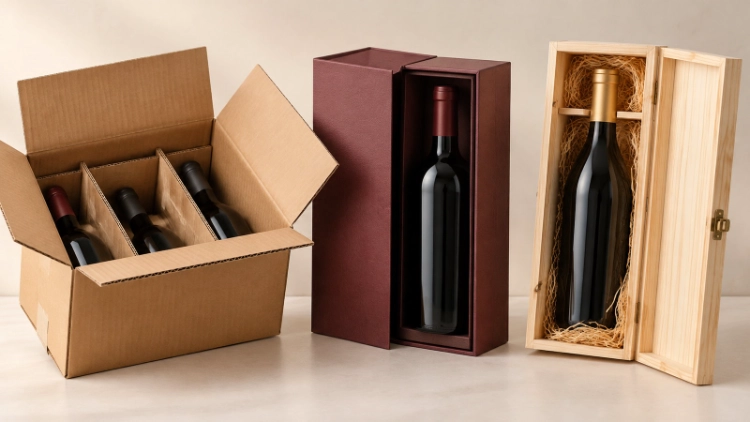
| Estructura de caja | Suitable use | Main design check |
| Two-bottle gift box | Corporate gifts and holiday sets | Bottle spacing and accessory placement |
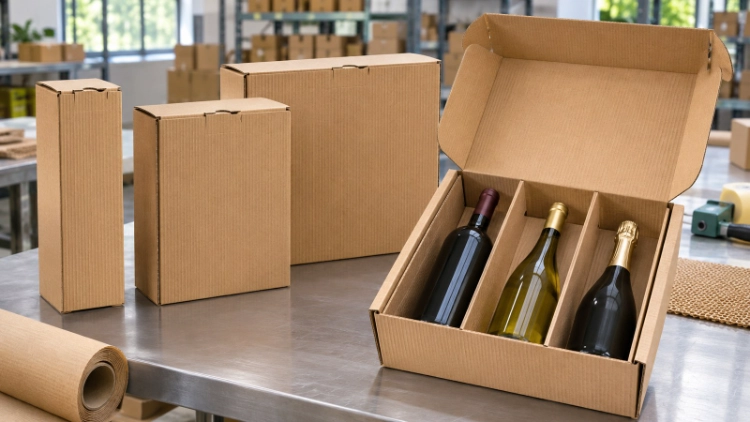
| Foldable cardboard box | Cost-sensitive storage and shipping | Folding strength and insert stability |
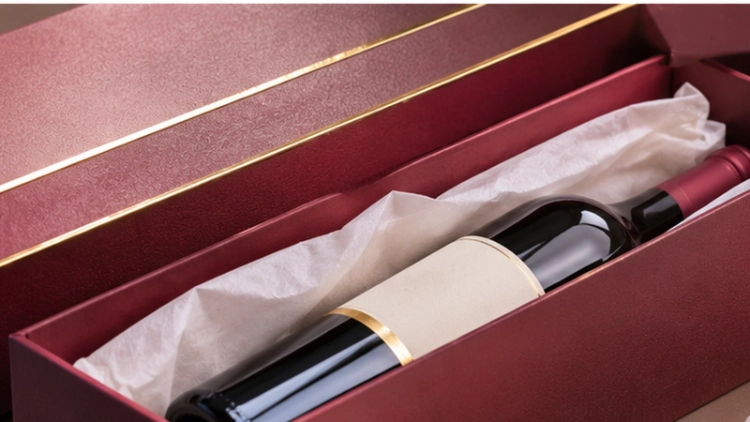
| Rigid gift box | Premium retail and presentation | Lid clearance and opening sequence |
| Box with handle | Events, retail carrying, and gifting | Weight balance and handle position |
| Multi-compartment gift box | Bottles, glasses, and several accessories | Independent support for each item |
A foldable cardboard structure can reduce storage volume and support more efficient logistics. A rigid wine box may create a stronger premium impression and provide a stable presentation surface. A box with a handle needs special attention to balance because the weight is concentrated around the bottle area.
The product format should follow the sales channel. Retail favors shelf appearance and easy handling; corporate gifts may need more elaborate compartments, while e-commerce packaging needs tighter control of movement.
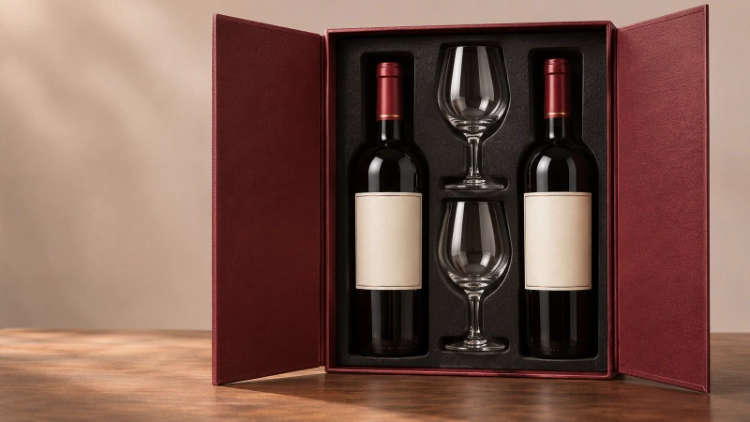
One current wine gift box with a wine glass set is specified for two wine bottles and two wine glasses. It uses a double-door rigid paperboard structure, magnetic closure, and a custom foam insert. The listed reference dimensions are 365 × 110 × 355 mm, with 1400 g grey cardboard and 157 g textured paper. These are product-specific values, not universal dimensions for every wine and glass combination.
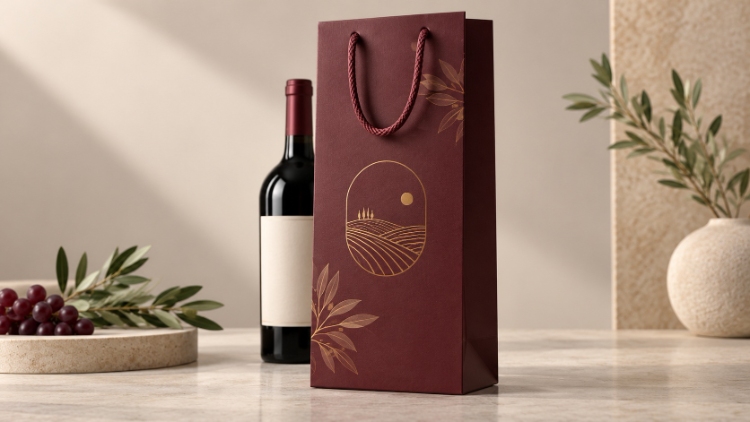
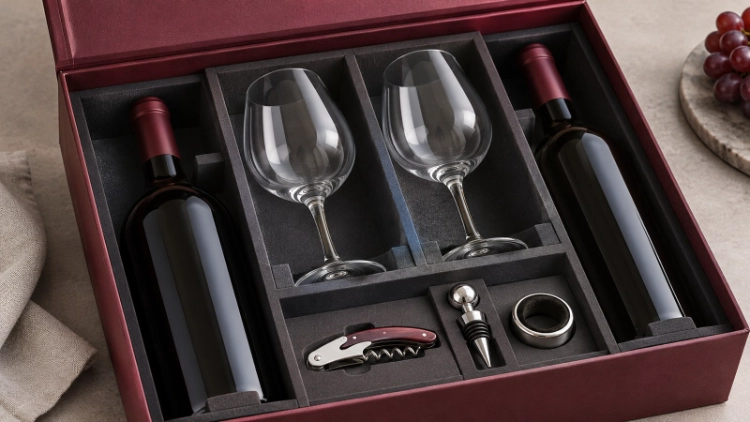
For a larger set, the custom wine gift box with multiple compartments uses a drawer-style structure, handle, and dedicated areas for bottles, glasses, and accessories. The product page lists custom sizes and single- or double-bottle capacity, so the final insert still needs to be matched to the buyer’s actual set.
How Can Insert Design Protect the Set Without Making It Difficult to Unpack?
Protection and presentation should be considered together. A package can be technically secure but frustrating if the recipient has to pull against tight inserts or remove several layers before reaching the contents.
The opening sequence should be tested with the real items:
- Open the box without touching the glasses.
- Remove the first visible item.
- Take out the accessories.
- Remove the glasses without catching the stems.
- Lift the bottles from their compartments.
- Check whether the insert stays in place after unpacking.
This sequence often reveals problems that are not visible in a flat drawing. A tray may be strong enough but too tight around the bottle. A glass compartment may protect the bowl but make the foot hard to grip. A decorative ribbon may cover a removal point.
The box should also remain balanced when carried. If the glassware is placed on one side and the bottles on the other, the handle position and base support need to reflect that weight distribution. The filled package should be carried, placed on a table, and opened several times before the structure is approved.
What Should Be Checked During a Full Sample Test?
A full sample test should use the actual bottle, glass, and accessory set. Substitute items can give a false impression when their dimensions differ.
Check these points:
- Every item fits the approved compartment.
- The bottle does not touch the glassware.
- The glasses do not move when the box is lifted.
- The lid closes without pressing on the contents.
- The insert does not rise or shift during handling.
- The box remains square after loading.
- The handle feels balanced with the full set.
- The contents can be removed without damaging the insert.
Photograph the approved sample closed, open, and partially unpacked so the packing team can reproduce the arrangement during bulk production.
How Can a Custom Wine Box Supplier Support Different Gift Sets?
A custom wine box supplier should be involved before the exterior artwork is finalized. The supplier can help match the box structure, insert layout, handle, closure, print, and finishing method to the actual contents.
Useful production questions include:
- Can the insert be adjusted for different bottle and glass sizes?
- Can the same outer structure support more than one gift set?
- Will the approved sample be retained for repeat orders?
- Can the box be supplied with a handle or magnetic closure?
- Which surface finishes suit the selected paperboard?
- How will the insert be packed and assembled during bulk production?
TopWinePack is the wine packaging brand under Jialan Package. Its product range includes custom wine boxes, wine shipping boxes, gift packaging, and structural customization. Buyers should provide the complete item list and actual product samples before final box dimensions are confirmed. A Servicio de empaquetado de vino personalizado can then be used to coordinate size, structure, printing, and finishing.
Conclusión
A successful wine gift box with glasses begins with the contents, not the artwork. Bottles, glassware, and accessories should each receive a defined position, with protection placed around the areas most likely to move or touch.
The final decision should be based on a full sample test. Check loading, carrying, opening, removal, and repeat packing before approving bulk production. For projects that need custom compartments, printed branding, or a combination of bottles and accessories, the complete product set should be supplied before production details are fixed.
Preguntas frecuentes
Can wine gift boxes hold both bottles and glasses?
Yes. The box needs separate compartments for the bottles and glassware, with enough clearance around the bowl, stem, rim, and base.
What insert is suitable for a wine and glass gift set?
The right insert depends on the product dimensions, box structure, shipping conditions, and presentation requirements. Paperboard partitions, molded pulp, foam, and fitted trays may all be considered after sample testing.
Can the compartments and box size be customized?
Yes. Custom wine boxes can be adjusted for bottle count, glass shape, accessories, box opening, handle position, printing, and finishing.