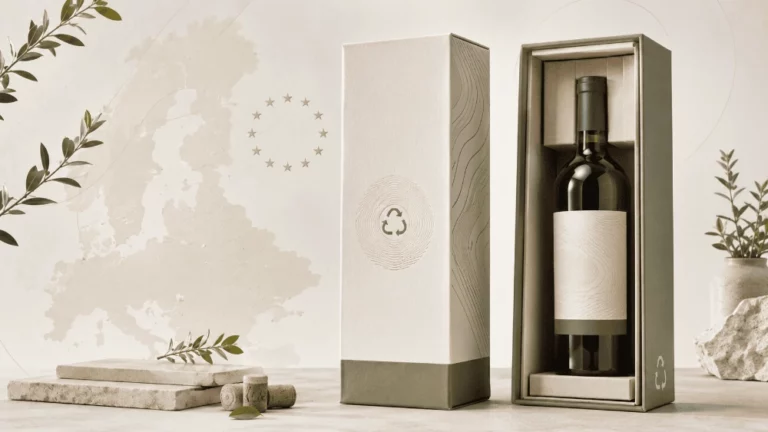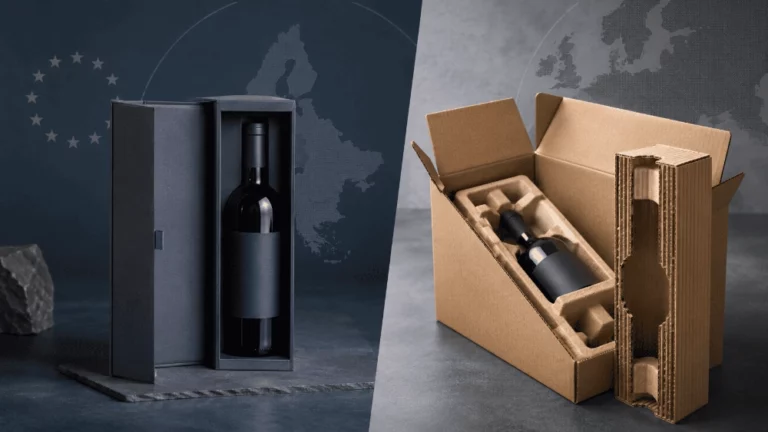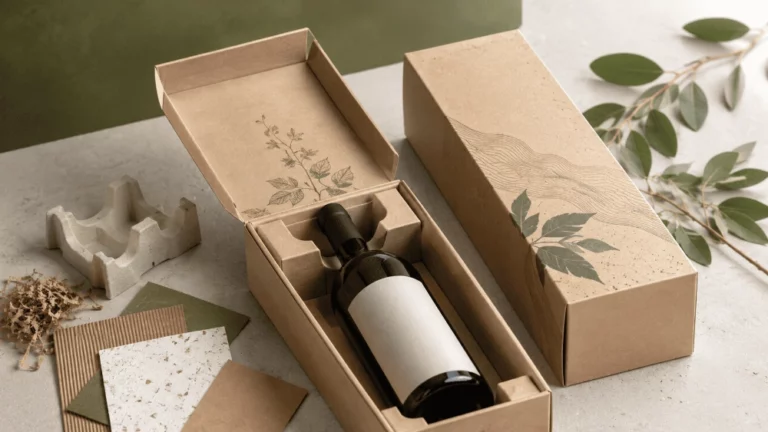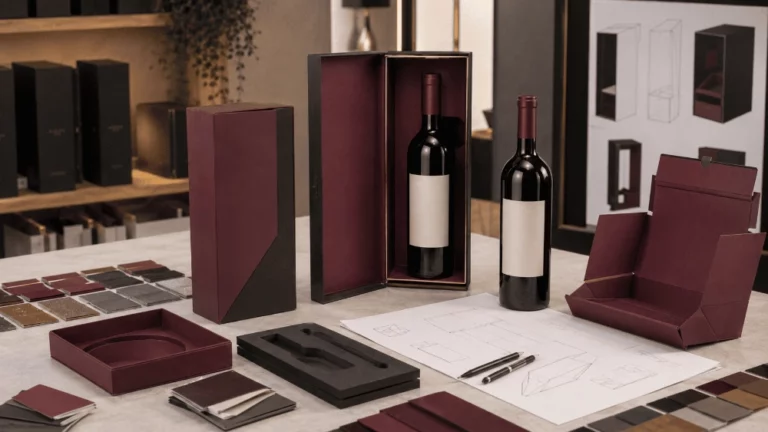

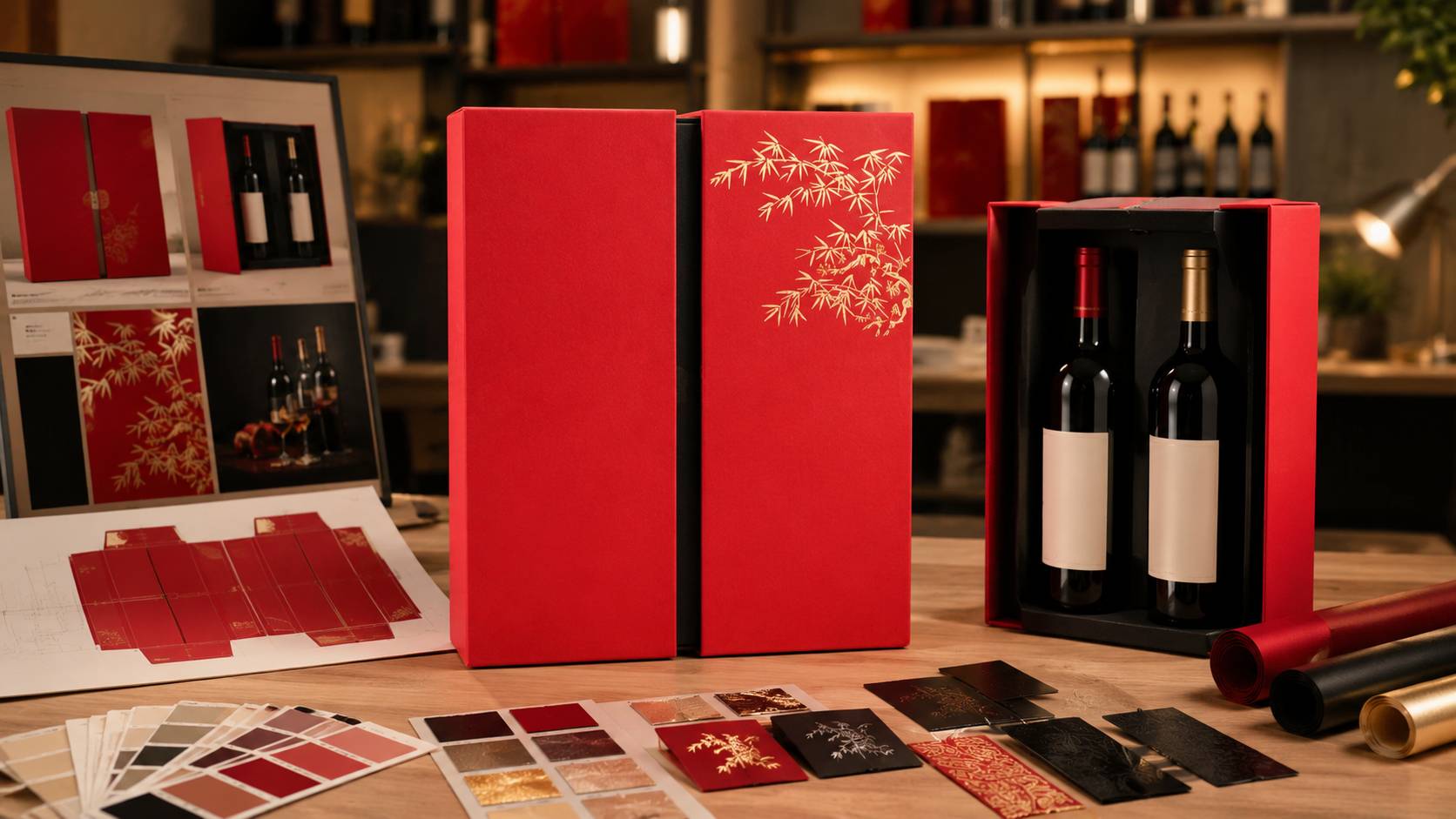
Eine Weinmarke kann ein edles Etikett, ein prägnantes Logo und eine ausdrucksstarke Farbpalette haben, doch der erste Probedruck der Weinkartonverpackung entspricht möglicherweise noch nicht den genehmigten Markenstandards. Ein Karton ist kein flaches Poster. Er hat Faltstellen, Paneele, Klebeflächen, Einlagen, Ecken und Oberflächen, die vom Betrachter abgewandt sind.
Die Produktion produktionsfertiger Weinkartonverpackungen beginnt mit dem Abgleich des Markendesigns mit den physischen Details. Eine individuelle Weinkartondatei muss der Fabrik genau mitteilen, was gedruckt, wo geschnitten, gefaltet und veredelt werden soll und welche Elemente nicht verändert werden dürfen. Das klingt technisch, ist aber für Käufer im Grunde eine Möglichkeit, das Markenbild zu schützen, bevor Geld in Werkzeugbau, Probedruck und Massenproduktion fließt.
Beginnen Sie mit der realen Verpackung, nicht mit dem Bildschirm-Layout.
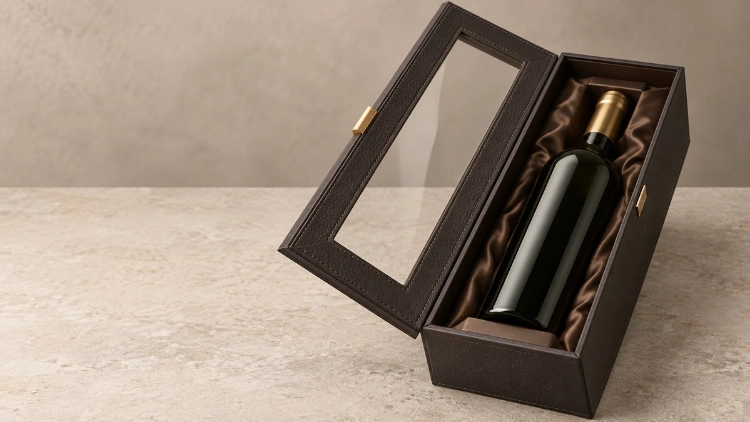
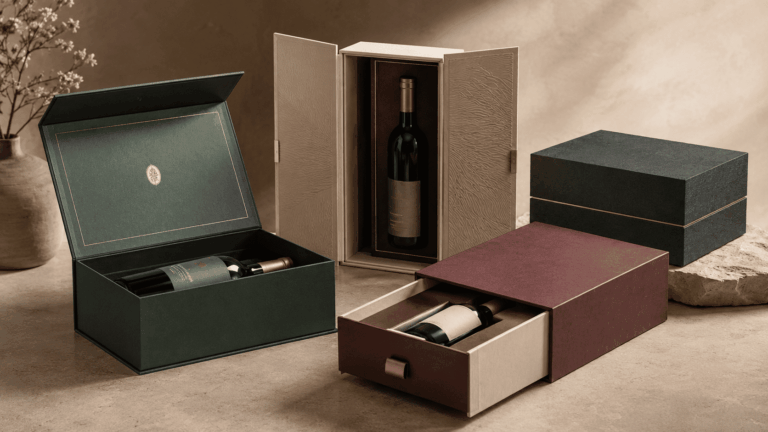
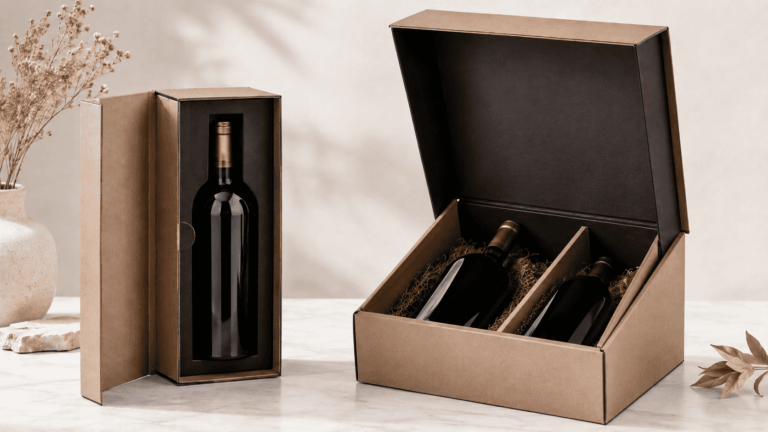
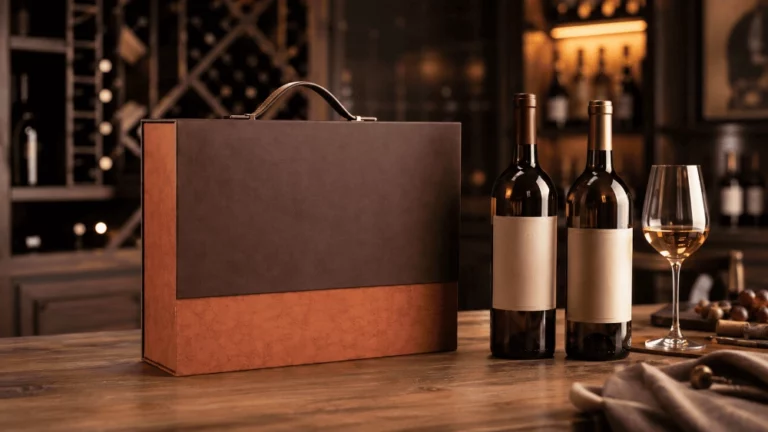
Die erste Entscheidung bezüglich des Designs betrifft die Struktur. Eine Faltschachtel für eine Flasche, eine stabile Schachtel für zwei Flaschen, eine magnetische Geschenkbox, eine Schubladenbox und eine Weinkiste mit Griff – jedes Design hat eine andere Funktion. Die Vorderseite kann die Markengeschichte erzählen. Der Deckel benötigt eventuell ein dezentes Logo. Eine Seitenwand kann Vintage-Details oder eine kurze Produktbeschreibung enthalten. Auch der Innenraum sollte, obwohl er größtenteils verdeckt ist, ein hochwertiges Erscheinungsbild vermitteln.
Individuell gestaltete Weinkartons gibt es in verschiedenen Ausführungen: mit festem Deckel und Boden, mit Magnetverschluss, als Schubladenbox, faltbar, mit Doppeltür, mit Sichtfenster oder mit Griff. Diese Formate sind zwar praktisch, schränken aber die Platzierung von Grafiken ein. Ein Logo, das zu nah an einer Faltkante platziert ist, mag in einer PDF-Datei korrekt aussehen, auf dem fertigen Karton jedoch unharmonisch wirken.
Bevor die finale Designarbeit beginnt, sollten Käufer Flaschengröße, Flaschenanzahl, Verschlussart, Einlegerichtung und Verwendungszweck festlegen. Verkaufsverpackungen müssen schnell erkennbar sein. Geschenkverpackungen benötigen einen optimalen Öffnungseffekt. Versandkartons benötigen einen besseren Schutz. Die Gestaltung wird einfacher, wenn die Struktur feststeht.
Platzieren Sie das Markenlogo auf der richtigen Stanzform der Weinkiste.
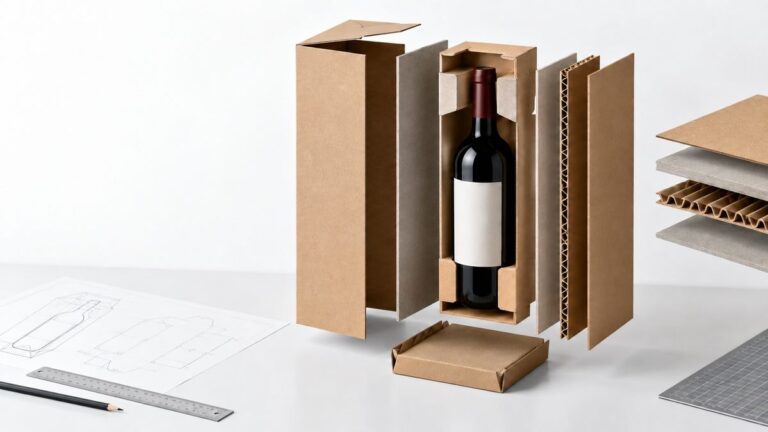
Die Stanzform einer Weinbox ist die flächige Darstellung der fertigen Box. Sie zeigt Schnittlinien, Faltlinien, Klebelaschen, Sicherheitszonen, Sichtfenster, Grifflöcher und die Kanten jeder sichtbaren Seite. Hier wird aus dem Design der Weinbox ein konkretes Verpackungselement.
Sicherheitszonen verdienen mehr Aufmerksamkeit als üblich. Logoränder, kleine Texte, QR-Codes, Importeurangaben und feine Illustrationen sollten nicht zu nah an Falz- oder Schnittkanten liegen. Hintergrundfarben und -muster benötigen einen Anschnitt über den Schnittrand hinaus, da geringfügige Schnittbewegungen in der Produktion üblich sind. Ohne Anschnitt kann ein sauberes Siebdruckdesign auf der fertigen Verpackung einen blassen Rand aufweisen.
Die Ausrichtung der einzelnen Elemente ist eine weitere häufige Fehlerquelle bei der Gestaltung. Ein Wappen kann auf der Vorderseite korrekt lesbar sein, auf der Deckelklappe jedoch verkehrt herum erscheinen. Ein Muster kann in der flachen Stanzform korrekt ausgerichtet sein und beim Falten der Schachtel optisch unterbrochen werden. Daher sollte ein individuell gestalteter Weinkarton sowohl in flacher als auch in zusammengebauter Ansicht geprüft werden, bevor er in den Korrekturabzug geht.
Druckdateien vorbereiten, die ein Verpackungsteam verwenden kann
Für den druckfertigen Weinkarton in individueller Qualität sind saubere Dateien unerlässlich. Logos müssen gestochen scharf sein. Bilder benötigen eine ausreichende Auflösung für die Endgröße. Schriften sollten gemäß den Vorgaben der Druckerei bereitgestellt oder in Pfade umgewandelt werden. Druckfertige Dateien sollten verknüpfte oder eingebettete Elemente, ausreichend Beschnittzugabe, korrekte Exporteinstellungen und einen abgeschlossenen Preflight-Check vor der Ausgabe enthalten.
Die Farbwahl sollte frühzeitig besprochen werden. Burgunderrot wirkt auf dem Bildschirm anders als auf Kraftpapier, Spezialpapier, gestrichenem Karton oder Papier mit Lederstruktur. Eine matte Laminierung kann die Haptik abmildern. Eine glänzende Oberfläche kann den Kontrast verstärken. Sonderfarben, CMYK, Heißfolienprägung, Reliefdruck, partieller UV-Lack und Laminierung sollten in der Datei klar getrennt und nicht in einem einzigen Bild versteckt werden.
Kleine Details können große Verzögerungen verursachen. Ein winziger QR-Code über einer Faltkante lässt sich möglicherweise schlecht scannen. Dünne Goldlinien haften unter Umständen nicht gut, wenn die Folienoberfläche zu empfindlich ist. Feine Serifenschrift kann nach dem Druck auf strukturiertem Untergrund verlaufen. Dies sind keine Designfehler, sondern Produktionsfragen, die vor der Freigabe des Korrekturabzugs geklärt werden müssen.
Wählen Sie die passenden Grafiken zu Material und Oberfläche.
Eine bedruckte Weinkiste vermittelt ihre Botschaft sowohl durch das Material als auch durch die Grafik. Gängige Materialien für Weinkisten sind Graupappe mit Spezialpapier, Kraftpapier, weißer Karton, Gold- oder Silberkarton, beflocktes Papier, Papier mit Lederstruktur, fester Karton und Wellpappe. Jede Oberfläche beeinflusst die Wirkung von Farbe, Textur und Optik.
Kraftpapier und ungestrichenes Papier verleihen Grafiken einen wärmeren, natürlicheren Charakter. Gestrichenes Papier und laminierte, stabile Kartonagen sorgen für klarere und schärfere Farben. Heißfolienprägung erzielt die besten Ergebnisse, wenn das Logo oder die Linienzeichnung genügend Freiraum hat. Für Prägungen sind Formen erforderlich, die Druck standhalten, ohne dass Details verloren gehen. Spot-UV-Lackierung sollte etwas hervorheben, das es wert ist, berührt oder gesehen zu werden, und nicht nur leere Flächen dekorieren.
Es ist verlockend, bei der Gestaltung von Weinkartonverpackungen alle erdenklichen Premium-Ausführungen zu verwenden. Das macht das Projekt jedoch meist schwerer kontrollierbar. Eine bessere Frage wäre: Welchen Nutzen hat diese Ausführung für den Käufer? Sie kann die Wiedererkennbarkeit im Regal verbessern, den Geschenkcharakter verstärken, eine limitierte Auflage kennzeichnen oder die Aufmerksamkeit auf das Logo lenken. Trifft keines dieser Ziele zu, verursacht sie lediglich zusätzliche Kosten und erhöht das Risiko bei der Korrektur.
Nutzen Sie Korrekturlesen, um Probleme frühzeitig zu erkennen, solange sie noch klein sind.
Beim Proofing von Weinkartons werden viele versteckte Probleme sichtbar. Ein digitaler Proof hilft bei der Positionierung der Paneele und der Reihenfolge der Druckvorlage. Ein leeres Strukturmuster prüft die Passform der Flaschen, die Position der Einlage, den Tragekomfort, das Öffnungsgefühl und die Stabilität des Kartons. Ein gedrucktes Muster zeigt Farbe, Oberfläche, Logogröße und Materialverhalten auf eine Weise, die eine PDF-Datei nicht darstellen kann.
Ein praxisorientierter Produktionsablauf umfasst in der Regel Beratung und Designbestätigung, Plattenherstellung, Proofing, Druck, Laminierung, Kartonherstellung, manuelle Nachbearbeitung, Qualitätskontrolle und Verpackung. Diese Reihenfolge ist wichtig, da sie aufzeigt, ab welchem Punkt Risiken schwerer zu beheben sind. Sind Platten, Stanzformen oder Weiterverarbeitungswerkzeuge vorbereitet, kann selbst eine kleine Änderung am Design schwerwiegende Folgen haben.
Die Qualitätskontrolle sollte im zusammengebauten Zustand erfolgen. Prüfen Sie zuerst die Vorderansicht, dann die Seitenwände, den Deckel, den Sitz der Innenschale, den Verschluss und alle Stellen, die beim Öffnen reiben. Wenn sich die Weinflasche im Karton bewegt, liegt das Problem nicht nur am Design. Die Konstruktion oder die Einlage müssen möglicherweise vor der Produktion noch einmal angepasst werden.
Wie werden diese Artwork-Prüfungen bei einem Geschenkset mit zwei Flaschen angewendet?
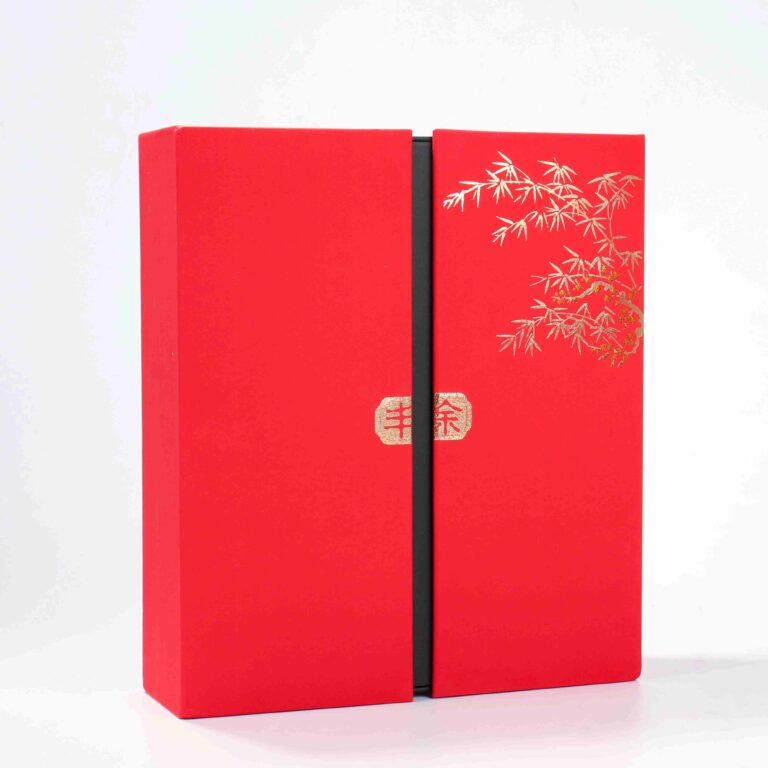
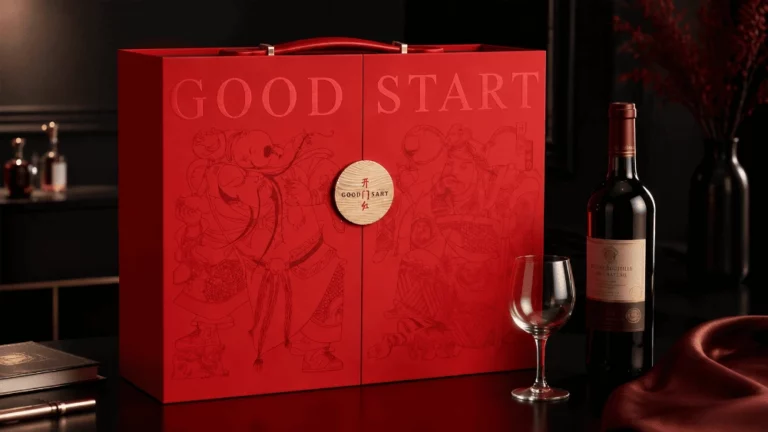
A Individuell gestaltete Geschenkbox für zwei Flaschen Rotwein mit Tasche Dies ist eine wichtige technische Überprüfung, da sich das Artwork nicht auf einer einzigen flachen Frontplatte befindet. Eine Doppeltürplatte muss nach der Montage der Box links- und rechtssymmetrisch sein, und zwar nicht nur in der Stanzlinie. Wenn das Logo die mittlere Öffnungsnaht kreuzt, muss die Trennung gewollt aussehen und nach der manuellen Bearbeitung fluchtend bleiben. Box und Beutel benötigen zudem ein stimmiges Farbverhältnis, wobei Logogröße und -position für jede Oberfläche individuell angepasst und nicht skaliert kopiert werden. Heißfolienprägung, Reliefprägung und partielle UV-Lackierung sollten in separaten Dateiebenen liegen, damit die Produktion die einzelnen Veredelungen identifizieren kann. Der Flascheneinsatz erfordert eine weitere Überprüfung: Flaschenausrichtung, Öffnungsansicht und Artwork-Ausrichtung müssen beim Präsentieren des Geschenksets harmonisch zusammenpassen.
Entwickeln Sie eine Übergabe, die Produktionsunsicherheiten reduziert
Die Übergabe einer produktionsfertigen Weinbox sollte klar und eindeutig erfolgen. Dateiname, Stanzform, Grafikversion, Boxgröße, Flaschengröße, Material, Druckverfahren, Veredelungshinweise, Einlegerart, Musterfreigabe und Menge müssen auf der gesamten Verpackung übereinstimmen. Ändert sich auch nur ein Punkt, muss das gesamte Set erneut geprüft werden.
Versionskontrolle ist eine wichtige Produktionssicherung. Dateien mit Namen wie „final“, „final-new“ und „final-revised“ bergen die Gefahr von Fehlern. Ein saubererer Ansatz ist ein einziges freigegebenes Grafikpaket mit der bestätigten Stanzform, verknüpften Bildern, Schrifthinweisen, Finishing-Layern und einer druckfertigen PDF-Datei. Das Verpackungsteam sollte nicht raten müssen, welche Datei die Produktion steuert.
Für Käufer individueller Weinkartons ist ein kurzes Entscheidungsformular hilfreich: Flaschengröße, Kartonstruktur, Materialpräferenz, Markenfarben, Logodateien, gewünschte Oberflächenveredelung, Lieferzeit, Menge und Hinweise zur Marktkonformität. Mit diesen Informationen können wir die Designrichtung, die Musteranforderungen und den Produktionsablauf schneller und mit weniger Verzögerungen durch die Genehmigung besprechen.
Unsere kundenspezifische Weinverpackung Die Serviceseite bietet einen praktischen Ausgangspunkt für die Abstimmung der Dateiübergabe mit dem kundenspezifischen Prozess.
Ein weiterer praktischer Aspekt gehört zur Übergabe: Welche Teile sind bereits festgelegt und welche noch offen? Ein Einkäufer vergleicht möglicherweise noch zwei Papierstrukturen oder zwei Folienfarben, während Stanzform, Flaschenpassung und Einlegerichtung schon freigegeben sein können. Durch die klare Kennzeichnung dieser Entscheidungen wird verhindert, dass eine spätere Farbdiskussion den gesamten Prozess erneut aufrollen muss. Außerdem stellt dies sicher, dass Vertrieb, Design und Produktion bei der Weiterbearbeitung des Auftrags auf derselben Version arbeiten.
Sind Sie bereit, das Design Ihrer Weinkiste zu begutachten?
Eine hochwertige, individuell gestaltete Weinbox beginnt mit einem Design, das die Form der Box berücksichtigt. Bestätigen Sie den Boxtyp, platzieren Sie das Design auf der finalen Stanzform, prüfen Sie die Druckeinstellungen, trennen Sie die einzelnen Schichten und geben Sie bei Bedarf einen physischen Probedruck frei. Das Ergebnis ist nicht nur eine optisch ansprechendere Weinbox, sondern auch ein reibungsloserer Prozess von der Markenentwicklung bis zur Produktion.
Für ein individuelles Weinkistenprojekt mit Stanzformprüfung, Druck, Bemusterung und Produktionsunterstützung senden Sie bitte die Grafikdateien und Flaschendetails an TopWinePack bietet Unterstützung bei individuellen Weinverpackungen.
FAQ (häufig gestellte Fragen)
F: Welche Dateien werden üblicherweise für den individuellen Druck von Weinkartons benötigt?
Ein sauberes Grafikpaket enthält üblicherweise bearbeitbare Vektorgrafiken, Logodateien, verknüpfte Bilder, Schriftanweisungen oder in Pfade umgewandelte Schriften, die freigegebene Stanzform, Finishing-Ebenen und ein druckfertiges PDF. Das genaue Format sollte den Produktionsvorgaben des Verpackungsteams entsprechen.
F: Sollte das Design der Weinkiste anhand eines 3D-Modells oder eines physischen Musters freigegeben werden?
Beide sind nützlich, erfüllen aber unterschiedliche Aufgaben. Ein 3D-Modell dient der Überprüfung der Platzierung und des allgemeinen Erscheinungsbilds. Ein physisches Muster hingegen prüft Struktur, Material, Verarbeitung, Flaschenpassung und das tatsächliche Öffnungsgefühl. Farbkritische oder Premium-Projekte erfordern in der Regel den physischen Schritt.
F: Was sind die häufigsten Ursachen für Verzögerungen bei der Gestaltung vor der Produktion der Weinkartons?
Häufige Ursachen sind veraltete Stanzformen, fehlender Anschnitt, Logos zu nah an Falzlinien, niedrig auflösende Bilder, unklare Drucklagen, fehlende Schriften und kurzfristige Strukturänderungen. Eine abschließende Vorabprüfung vor dem Proofing deckt viele dieser Probleme frühzeitig auf.