
Custom wine box lead time is not one production number. A complete project may include specification confirmation, artwork and structure preparation, sampling, revision, material preparation, mass production, quality inspection, packing, and delivery.
Each stage can move efficiently when the required information is fixed. The schedule can extend when the structure, artwork, material, or finishing changes after development has already started.
For B2B packaging teams, the useful question is not only, “How many days does production take?” It is, “How much time should the whole project reserve from the initial brief to the required arrival date?” This guide separates the main stages and explains how to plan custom packaging lead time without relying on one factory-production figure.
What Does Wine Box Lead Time Actually Include?
A practical wine box production timeline usually follows a sequence such as:
Brief and specification → artwork and structure confirmation → sample → revision and approval → material preparation → mass production → quality inspection → packing → delivery
The factory-production stage is only one part of that sequence. If a launch date is fixed, build the schedule backward from the required arrival date. Production lead time may begin after the sample, artwork, materials, and order details are approved, while total project lead time includes earlier development and later transportation.
This distinction is important because a factory may complete production within the planned manufacturing window while the total packaging project still requires substantially more time.
How Long Does the Sampling Stage Take?
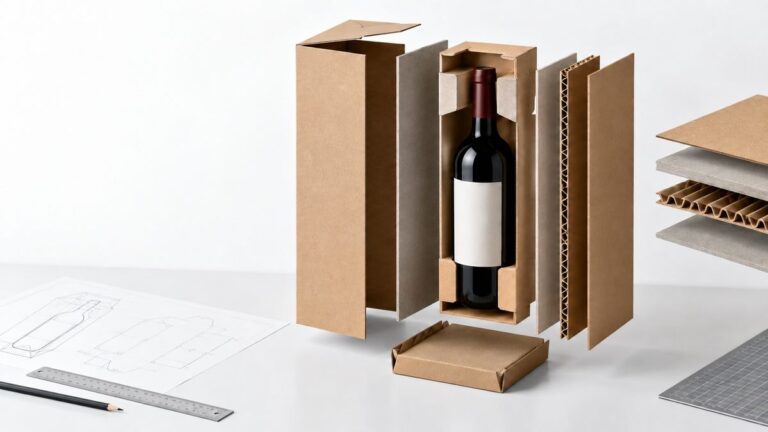
Sampling converts specifications and artwork into a package that the project team can inspect physically. This stage is where structural fit, color, finishing, and assembly issues should be identified before mass production.
Structural Samples
A structural sample focuses on physical construction.
The project team checks bottle dimensions, box proportions, insert position, opening behavior, closure alignment, handle placement, and assembly. This type of sample is useful when the box structure is new or when a bottle, glass, tool set, or other accessory requires a precise internal layout. The purpose is to confirm whether the packaging works correctly before the project commits to full printed production.
Printed and Finished Samples
A printed sample adds artwork, paper, color, lamination, foil, embossing, spot UV, or other specified surface treatments. It is used when the visual result needs approval in addition to the structure.
For many custom wine box projects, sample production may take about 3–7 working days, depending on complexity, while more involved structures or finishing requirements may require a longer sampling cycle. Teams preparing a project can use the custom wine box samples guide to organize bottle data, dielines, artwork, materials, finishing requirements, and review criteria before development starts.
Revision Cycles
The first sample does not always become the approved production sample.
A change to bottle fit, insert structure, artwork, Pantone reference, foil position, surface paper, or closure design may require another sample round. Revision time depends on the type and number of changes. For this reason, a realistic wine box lead time should include approval space instead of assuming that the first sample will move directly into mass production.
What Happens Between Sample Approval and Mass Production?
Sample approval is a major milestone, but it does not mean production starts immediately.
The project first needs to be converted into a fixed production specification. This normally includes the approved dieline, artwork version, material, printing method, finishing, insert, order quantity, packing method, and approved sample or color reference.
Materials may then need to be prepared, printing plates or related tooling may need to be arranged where required, and the order needs to be placed into the production schedule.
Late changes become more disruptive at this stage. An artwork adjustment that would have been simple before sampling may require new files, new preparation, or another proof after approval. A structural change can affect the dieline, insert, material use, and assembly process. Treat sample approval as a specification-freeze point rather than as a general design checkpoint.
What Determines Wine Box Production Time?
For many custom projects, a 15–30 day production window can serve as a general planning reference after the main specifications are confirmed, while the actual schedule depends on quantity, structure, materials, and finishing requirements.
Box Structure and Assembly Complexity
A simple folding structure and a rigid gift box do not pass through production in the same way.
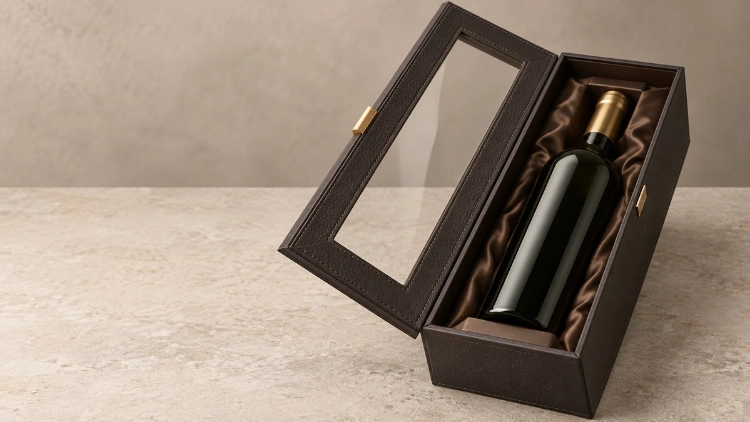
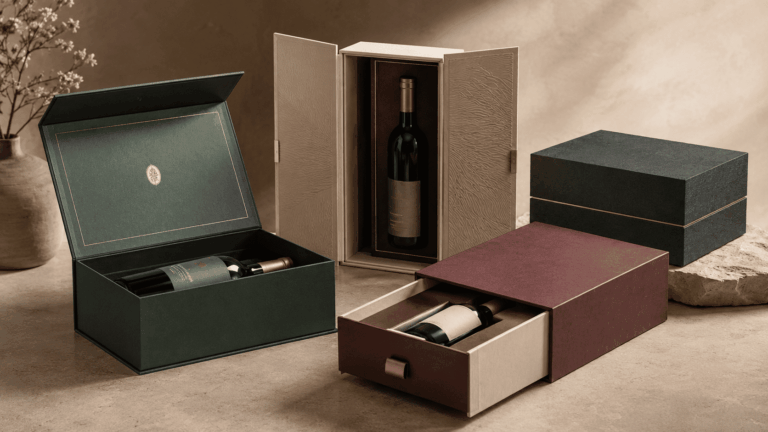
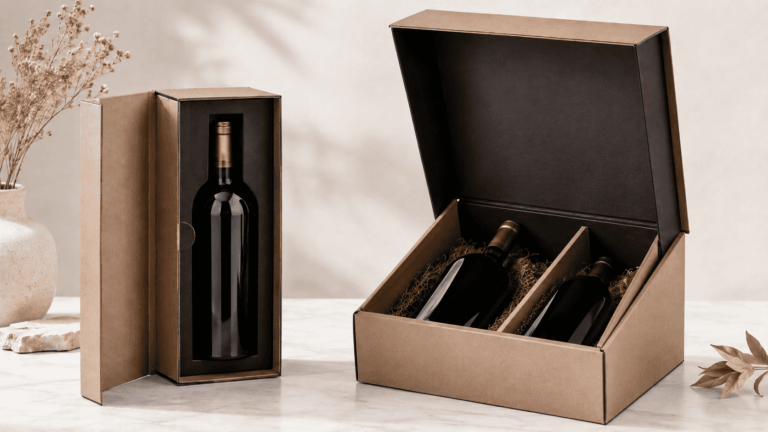
Magnetic closures, drawer structures, double-door boxes, fitted inserts, handles, and manually assembled elements introduce additional production and inspection steps. Two boxes may have similar external dimensions but require very different production schedules because one has a straightforward construction while the other combines several components. For timeline planning, structure should therefore be evaluated by manufacturing complexity rather than by size alone.
Printing and Finishing Requirements
Printing also influences production planning.
CMYK printing, Pantone spot colors, foil stamping, embossing, lamination, spot UV, and other decorative processes can require separate preparation and inspection stages. A package that combines several finishing techniques may need more process coordination than a box using a simple printed surface. If accurate brand color or decorative finishing is important, these requirements should be confirmed before the project enters production rather than adjusted during the manufacturing stage.
Order Quantity and SKU Count
Quantity affects machine time, material preparation, assembly, inspection, and packing.
SKU count can create another layer of complexity. Several box sizes, colorways, artworks, bottle formats, or inserts require more production changes and more quality-control checkpoints than one standardized format. For this reason, the total number of versions should be confirmed early. A large order with one design may sometimes be simpler to manage than a smaller project divided into several customized variants.
Which Buyer Decisions Most Often Delay a Wine Box Project?
Many delays begin before the factory floor.
Common causes include incomplete bottle dimensions, an unapproved dieline, continuing artwork changes, unclear color references, late insert adjustments, new finishing requirements, repeated sample revisions, and slow internal approval.
Each critical item should have one confirmed version. Bottle data, structure, artwork, material, color, finishing, quantity, and packing requirements should all reach a clear final status before mass production.
Late decisions do not affect only one stage. Changing the bottle can require a new insert or box dimension. Changing artwork can affect printing preparation. Adding foil or embossing may require new files and tooling. Changing surface paper can influence both appearance and color. The project schedule should therefore focus on the decisions that affect several downstream processes.
What Happens During Mass Production and Quality Control?
Once the specification is fixed, production can move through printing, lamination, box making, hand assembly where required, inspection, and packing. Each stage depends on the quality of the previous stage, so early errors can become more difficult to correct later.
Printing, Lamination, and Box Making
Printing converts the approved artwork into production sheets.
Where required, lamination or other surface treatments are applied before the printed material is converted into the selected box structure. Color, registration, and surface condition should be checked early because problems become harder to correct once the sheets move into later finishing and assembly stages.
Hand Assembly and Finishing
Some rigid wine boxes require additional operations for wrapping, magnets, handles, inserts, closures, ribbons, or decorative components.
More manual steps create more points where alignment and consistency need to be checked. This is one reason the approved sample is important: it provides a physical reference for production teams rather than leaving the assembly standard open to interpretation.
Inspection and Packing
Finished packaging should be checked against the agreed specification before shipment.
Relevant points may include structural stability, material condition, printing, finishing, closure consistency, insert fit, cleanliness, and packing. The production route for custom wine boxes typically includes design confirmation, proofing, printing, lamination, box making, handwork where required, inspection, and packing.
For teams that need to align planning with factory execution, the kundenspezifischer Weinverpackungsprozess shows how custom projects move from design confirmation and proofing through printing, box making, inspection, and packing.
Is Production Lead Time the Same as Delivery Time?
No. Factory completion and delivery are separate milestones.
Production lead time ends when the order has completed the required manufacturing, inspection, and packing stages. Delivery begins after dispatch and depends on transport method, destination, booking conditions, customs procedures, and local logistics.
International projects therefore need a required arrival date rather than only a requested factory completion date. A generic shipping figure is not a reliable basis for every order. Sea freight, air freight, and express delivery have different cost and scheduling characteristics. The suitable route depends on the destination, packed volume, project urgency, and logistics arrangement. These details should be confirmed when the actual shipment information is available.
How Far in Advance Should Buyers Start a Custom Wine Box Project?
The best approach is to work backward from the required arrival date.
Reserve time separately for design confirmation, sampling, revision, material preparation, production, inspection, packing, and delivery. A proven box structure with finished artwork, standard materials, and one SKU may move through approvals more directly. A new structure with a custom insert, special paper, several finishes, multiple SKUs, or extensive revisions requires more planning space.
The required arrival date should also reflect the commercial purpose of the packaging. A seasonal launch, retail program, exhibition, corporate gifting project, or promotional campaign usually has less flexibility than an open-ended packaging refresh. In those cases, approval deadlines should be set for each earlier stage rather than leaving the entire project tied to one final production date.
How Can Buyers Keep a Wine Box Project on Schedule?
Start with a complete project brief.
Confirm the bottle dimensions or physical bottle sample, target quantity, box structure, insert requirements, artwork status, color references, finishing, sample scope, packing method, and required arrival date.
Then identify who has authority to approve the sample and final specification. Consolidated feedback from purchasing, design, marketing, and management reduces contradictory revisions and gives the production team one clear instruction.
For custom packaging projects, TopWinePack supports the process from project confirmation and sampling through production, inspection, and packing. We focus on custom wine packaging projects, so the production schedule can be reviewed against the actual structure, material, artwork, and finishing requirements of the project.
If the project already has a required launch or delivery date, send us your project timeline together with the quantity, structure, bottle information, artwork status, and finishing requirements. This gives the project team a stronger basis for reviewing whether the proposed schedule is realistic.
Schlussfolgerung
A reliable wine box lead time is built from separate stages rather than one factory-production number.
Sampling, revisions, specification freeze, material preparation, mass production, inspection, packing, and delivery all affect the final arrival date.
For B2B packaging teams, factory production time should therefore be separated from total project lead time. TopWinePack’s general customization period of about 15–30 days can serve as a production reference after the main details are confirmed, while sampling, revisions, and delivery should be planned separately.
Clear specifications, consolidated approvals, and a defined arrival date reduce avoidable changes after production preparation begins and make the overall timeline easier to manage.
Häufig gestellte Fragen
Q1: How long does custom wine box production usually take?
A1: For many custom wine box projects, a 15–30 day production window can serve as a general planning reference once the main specifications are confirmed. The full project can take longer when sampling, revisions, approval, packing, and delivery are included.
Q2: Does sample production count toward the total lead time?
A2: Yes. Sampling happens before mass production and may include structural review, printing, finishing, and revision. A realistic schedule should reserve separate time for sample production and approval.
Q3: What can delay a custom wine box order?
A3: Common causes include incomplete bottle data, artwork revisions, structural changes, special materials, finishing changes, multiple SKUs, repeated sample rounds, and delayed approval. Fixing the main specifications before mass production reduces these risks.