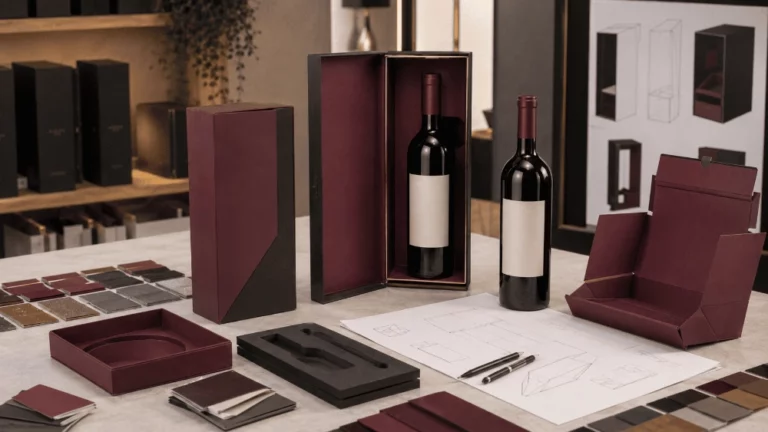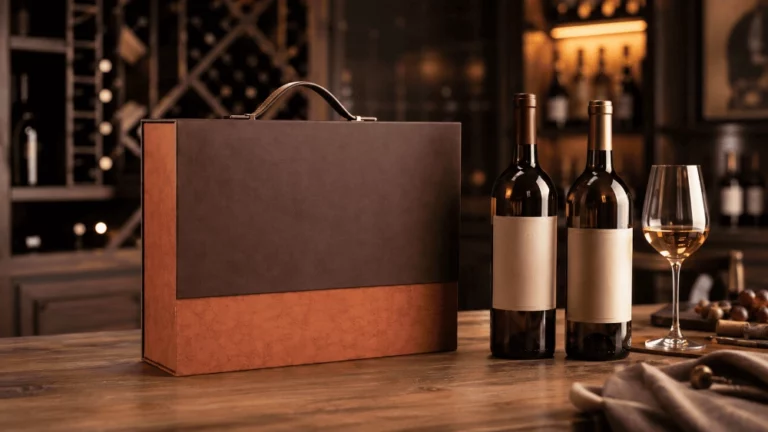

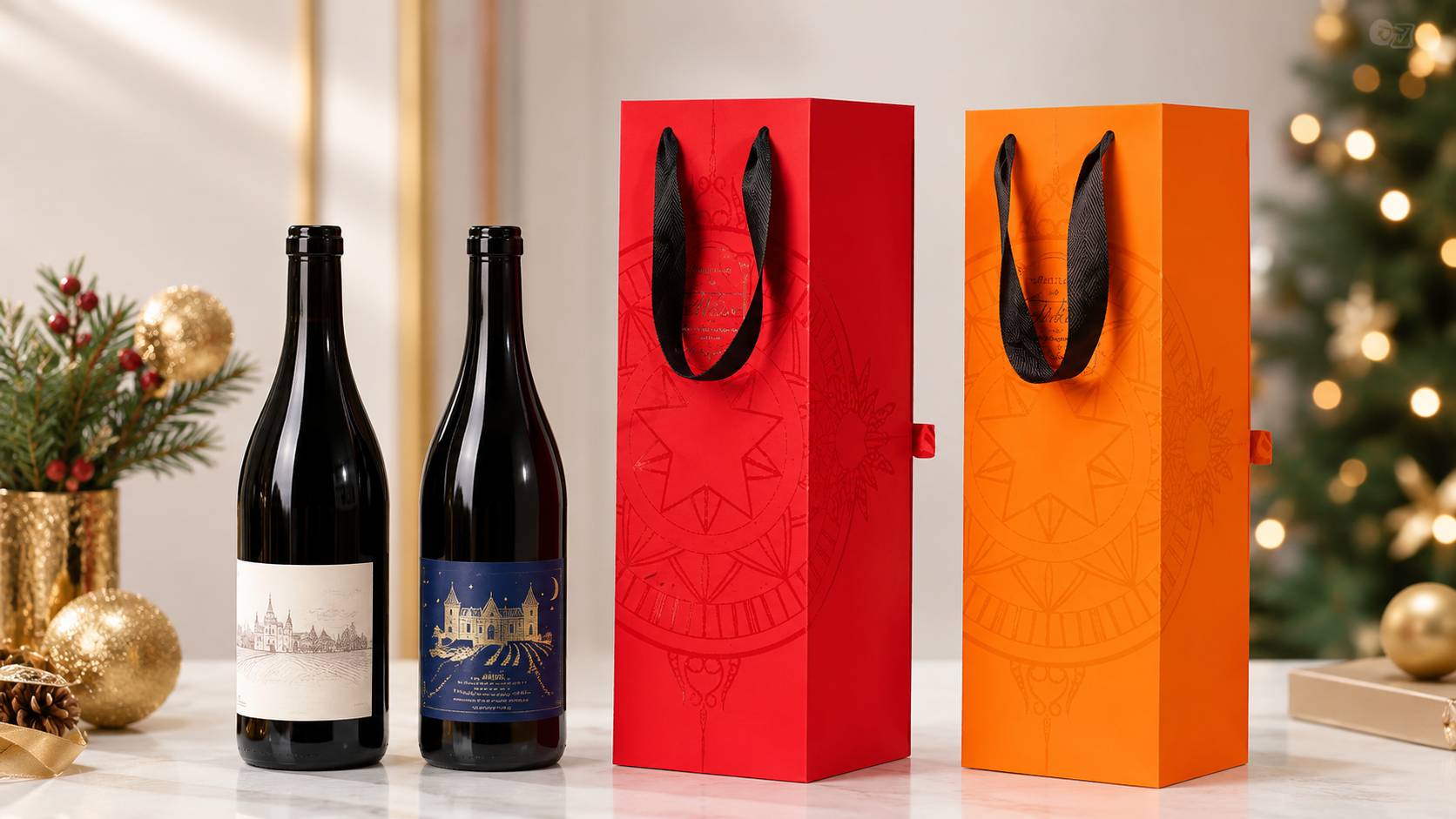
Las cajas de cartón personalizadas para vino pueden aumentar el valor percibido de una botella si se planifican cuidadosamente su estructura, textura del papel, acabado, asa y uso previsto. Para las marcas de vino, las empresas de regalos y los minoristas, el objetivo no es añadir decoración sin límites, sino lograr que la caja tenga un aspecto refinado, sea segura para transportar y refuerce la imagen de la marca.
Este artículo presenta seis técnicas prácticas para mejorar las cajas de cartón para vino: estructura plegable, mecanismo de apertura, materiales texturizados, acabados controlados, diseño de asas y presentación adaptada a cada situación. Es importante probar cada técnica con la botella real antes de la producción, ya que una caja de vino es tanto un elemento de exhibición como un embalaje protector.
Técnica 1: Utilice estructuras plegables para mejorar el almacenamiento y la exhibición.
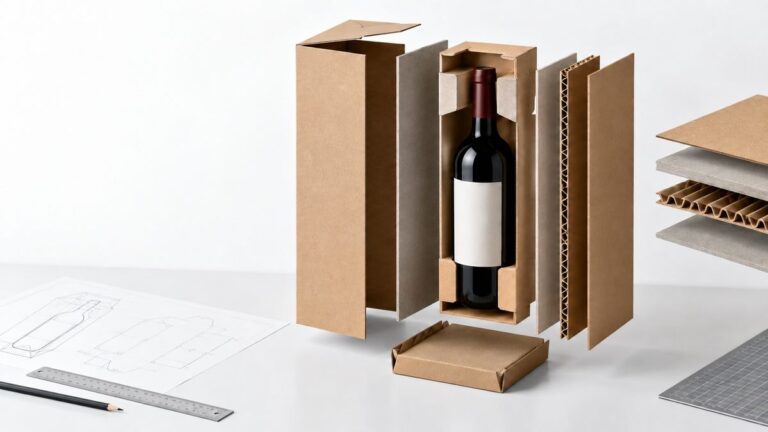
Las estructuras plegables son útiles cuando un proyecto personalizado requiere una apariencia de alta calidad, pero también un almacenamiento más sencillo antes del montaje. Un formato plegable de una sola pieza o empaquetado plano puede reducir el volumen de cajas vacías y facilitar la planificación de proyectos estacionales.
Mantén limpios los pliegues.
La caja debe mantener su rigidez tras el plegado. Los pliegues deben abrirse con facilidad, sin rasgar el papel. Las esquinas deben formar un ángulo limpio. Si los paneles no se alinean correctamente, la caja puede parecer suelta, incluso si el diseño es atractivo.
Relaciona la estructura con la botella.
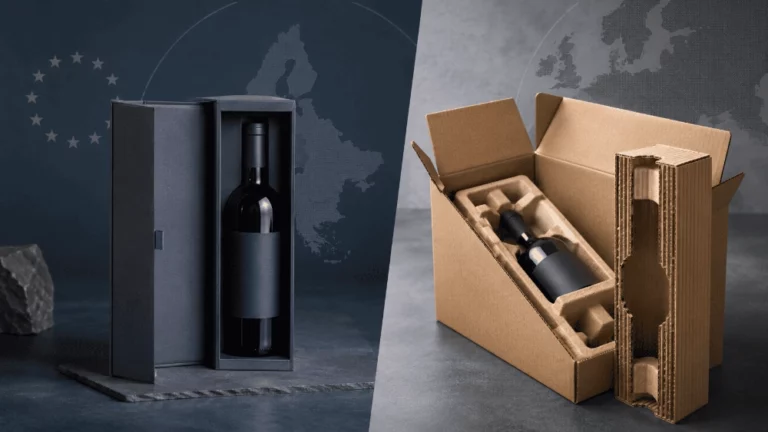
Se debe comprobar que una caja de cartón plegable para vino se ajuste al tamaño y peso reales de la botella. La base, el espacio para el cuello y los paneles laterales deben mantener la botella estable. Los compradores que comparan diferentes formatos pueden revisar la Colección de cajas de cartón para vino para ver cómo difieren en su presentación las estructuras plegables y rígidas.
Técnica 2: Añadir movimiento de apertura para fortalecer la experiencia del regalo.
Una caja de vino puede parecer más valiosa cuando el proceso de apertura es claro y controlado. La forma en que se abre la caja influye en cómo el destinatario ve la botella por primera vez.
Utilice el movimiento como parte de la pantalla.
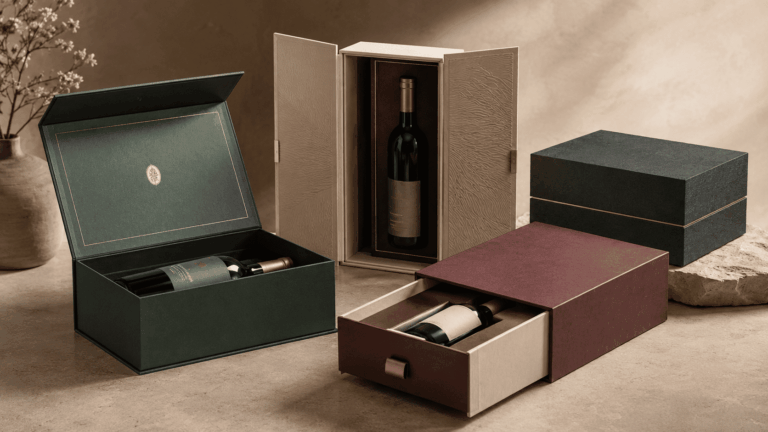
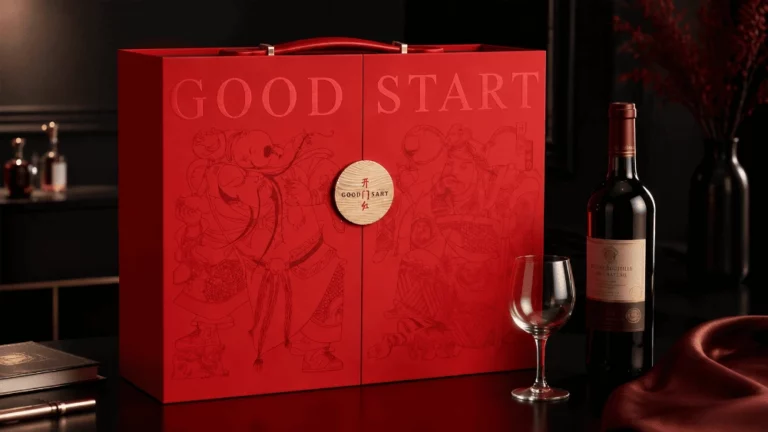
Las estructuras de doble puerta, tipo libro o tipo cajón pueden hacer que un diseño de empaque de vino personalizado se vea más completo. Estos formatos van más allá de simplemente cubrir la botella. Guían la mirada, enmarcan la etiqueta y crean un momento de regalo más formal.
Evite movimientos complejos sin propósito.
Una estructura no debe complicarse solo por el efecto visual. Si una tapa está rígida, un cajón se atasca o una puerta no cierra bien, el envase pierde valor. El diseño del embalaje de una caja de vino debe facilitar la presentación de la botella, no dificultar su manejo.
Técnica 3: Utilizar materiales texturizados para aumentar la profundidad visual.
La textura del material suele modificar el diseño del empaque más rápidamente que la impresión adicional. Una estructura simple puede lucir más refinada cuando el papel tiene la superficie, el tono y el gramaje adecuados.
Elige la textura según el carácter de la marca.
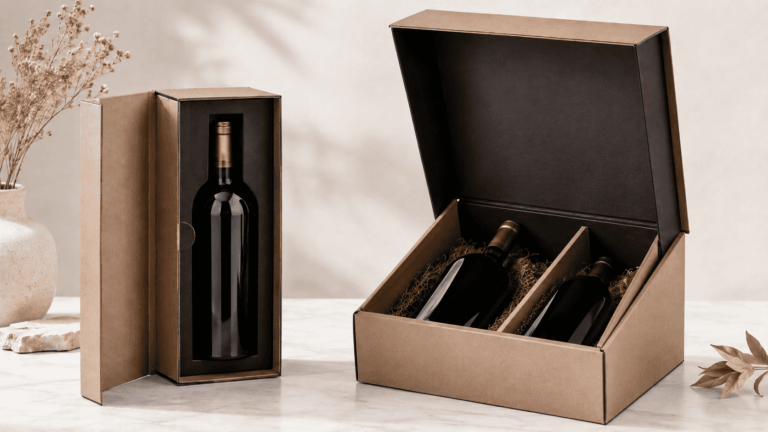
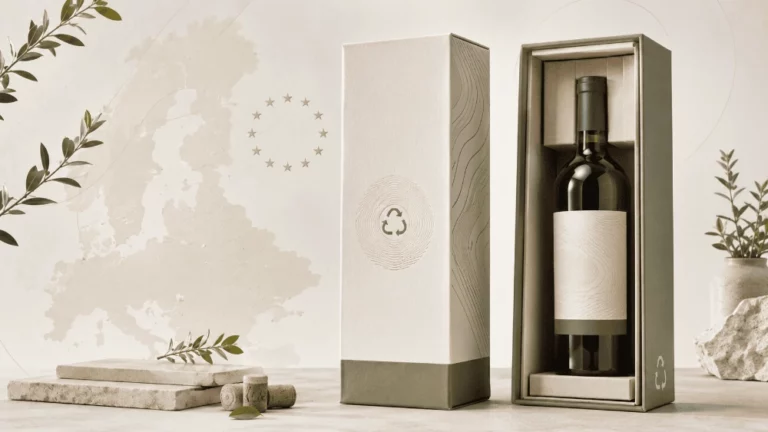
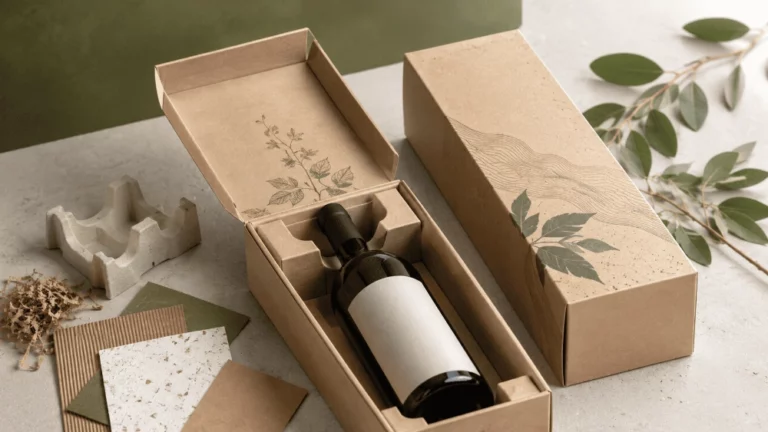
El papel con textura de madera puede realzar un estilo vintage o inspirado en una bodega. El papel kraft se adapta a marcas que buscan productos naturales o ecológicos. El papel estucado puede ser mejor para una impresión a color nítida. Los papeles especiales pueden ayudar a que las cajas de embalaje de lujo personalizadas para vino creen una impresión táctil más impactante.
El material debe armonizar con la etiqueta del vino y la escena a la que se dirige. Si la etiqueta ya tiene colores vivos y muchos detalles, la caja podría necesitar un papel de superficie más sobria.
Crea contraste entre el exterior y el interior.
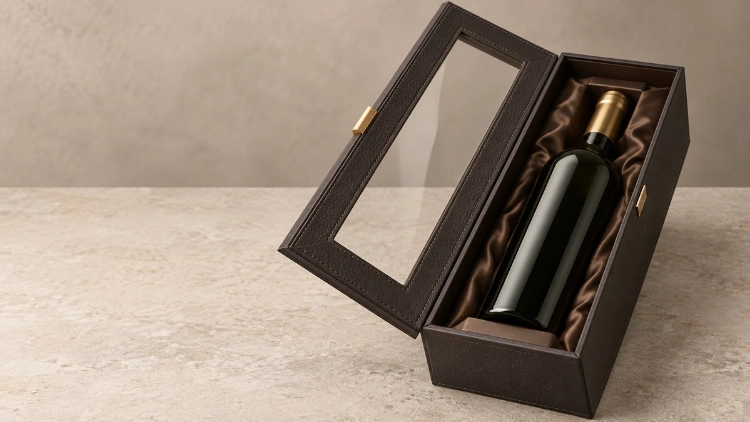
Un papel exterior de textura cálida combina bien con un forro interior más claro. Un exterior oscuro resalta el interior dorado o color champán al abrir la caja. Este contraste entre el interior y el exterior ayuda a que la botella destaque sin necesidad de decorar toda la caja.
Técnica 4: Aplicar técnicas de acabado con mayor control.
El acabado puede mejorar el reconocimiento de la marca, pero debe planificarse con moderación. Demasiados efectos en una misma caja pueden recargar el diseño y dificultar su lectura.
Coloca la lámina donde sostenga el logotipo.
El estampado en lámina metálica funciona bien para logotipos, bordes, diseños vintage y pequeñas áreas de resaltado. Es más efectivo cuando el área circundante permanece limpia. En el caso de las cajas de cartón para vino, un área de estampado en lámina metálica controlada suele lucir más elegante que una gran superficie metálica.
Utilice barniz UV, relieve o grabado en bajo relieve para obtener detalles táctiles.
El recubrimiento UV, el relieve y el bajo relieve permiten añadir profundidad sin alterar la estructura general. Estos procesos funcionan mejor cuando la superficie del papel permite apreciar detalles finos. Una muestra física debería confirmar que el acabado es nítido, uniforme y consistente bajo iluminación normal.
Técnica 5: Tratar el asa como parte del diseño del envase.
El asa influye tanto en la apariencia como en la funcionalidad. No debe elegirse al final como un simple accesorio. En el caso de los empaques de regalo, el asa puede dar un toque final a la caja y facilitar su presentación.
Seleccione el material del mango según el tono del diseño.
Las asas de cinta suelen ser ideales para cajas de regalo elegantes. Las asas de cuerda pueden funcionar para proyectos festivos o informales. Las asas de poliuretano (PU) pueden crear una impresión de lujo más marcada cuando la caja requiere una apariencia más robusta. El color del asa debe armonizar con el logotipo, el papel o el forro interior.
Prueba el asa con una botella llena.
El rendimiento al transportar la muestra cambia una vez que la botella está dentro. Un asa que parece adecuada en una muestra vacía puede presionar contra el panel lateral o la zona de pliegue después de cargarla. Se debe levantar la muestra varias veces con la botella dentro. La base, la pared lateral y el punto de fijación del asa deben permanecer firmes.
Técnica 6: Adapta el diseño de la caja al escenario de la marca.
Una caja más resistente no siempre es la más compleja. El diseño adecuado depende de dónde se exhibirá el vino y cómo lo utilizará el comprador.
El embalaje para la venta al por menor necesita una vista frontal clara.
Para su exhibición en tiendas, el panel frontal debe facilitar la lectura de la marca. El tamaño del logotipo, el contraste de color y la forma de la caja deben contribuir a que el paquete se mantenga erguido y luzca ordenado. Los detalles sutiles pueden añadir valor, pero no deben desviar la atención del mensaje principal.
Los proyectos de regalos necesitan una presentación completa.
Los regalos corporativos, los vinos de boda y los estuches de vino para ocasiones especiales suelen requerir un toque más festivo. El forro interior, el mecanismo de apertura, el estilo del asa y el acabado deben armonizar. Una caja que se abre con elegancia y realza la botella transmitirá una sensación de mayor calidad que una caja que solo utiliza papel de primera calidad.
¿Cómo puede una caja de vino de cartón plegable de estilo vintage combinar estas técnicas?
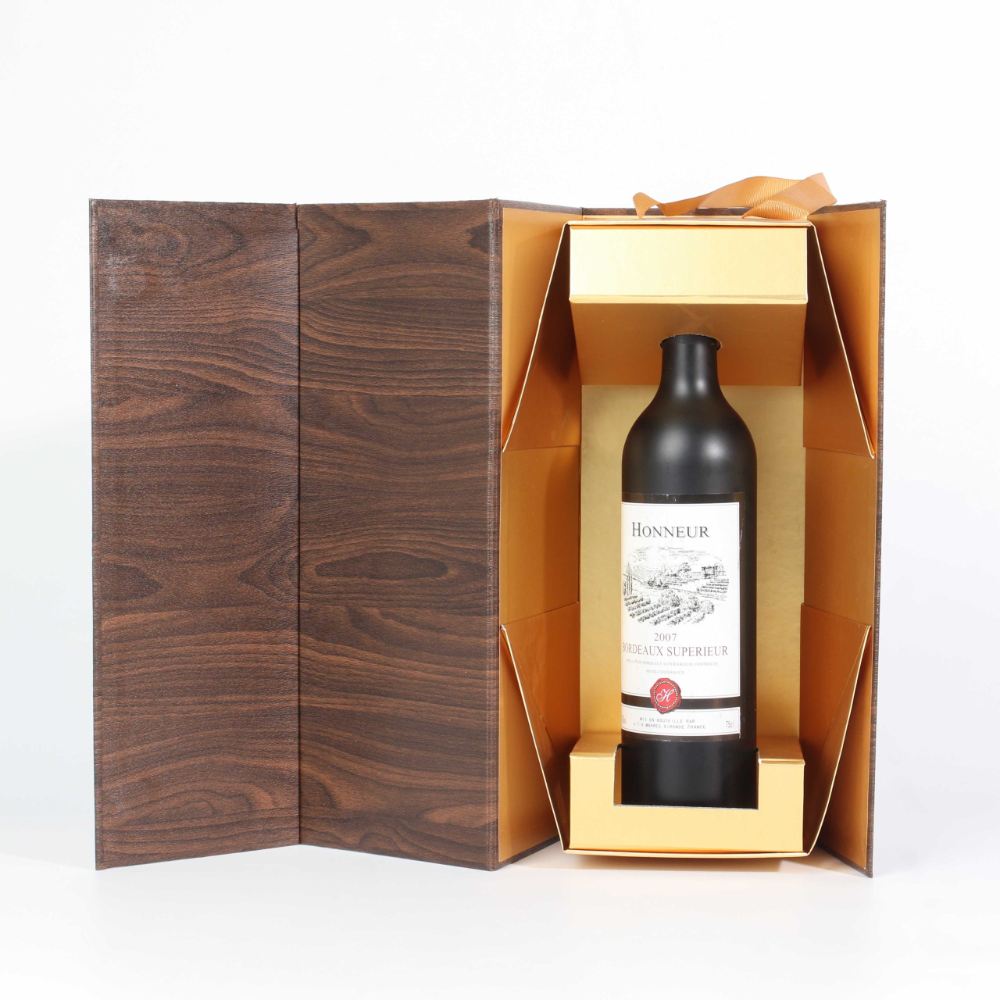
Un ejemplo de producto ayuda a mostrar cómo las seis técnicas pueden funcionar en un solo paquete. Alta calidad Vintage plegable caja de vino de cartón personalizado con manija de cinta Es una referencia útil para las marcas que desean una caja de vino de papel con un estilo de regalo más refinado.
Esta caja para vino utiliza papel con textura de vetas de madera de estilo retro y cartulina dorada texturizada de alta gama. Además, cuenta con un diseño plegable de una sola pieza, una estructura plegable de doble puerta y un asa de cinta. Estos detalles combinan estructura, textura, mecanismo de apertura y funcionalidad en un solo diseño. El producto está pensado para vino tinto, champán, regalos corporativos, exhibiciones en tiendas, bodas y celebraciones navideñas.
La clave está en no copiar todos los elementos. Los compradores deben decidir qué técnica se adapta mejor a su botella, al tono de su marca y al entorno de venta. Una textura vintage puede funcionar bien para un vino tinto clásico, mientras que un papel más limpio y un logotipo más pequeño pueden ser más apropiados para una marca moderna.
¿Qué deben comprobar los compradores antes de la producción final?
Antes de la producción final, se debe revisar cada técnica de elevación como parte del paquete completo. La caja debe contener la botella de forma segura, presentar la marca con claridad y ser práctica para el embalaje y el envío.
Los compradores deben revisar tres aspectos. Primero, la botella debe encajar perfectamente sin moverse. Segundo, el papel, el acabado y el asa deben estar a la altura del precio de la marca. Tercero, el diseño debe permitir futuras versiones, como ediciones vintage, estuches para ocasiones especiales o diferentes formatos de botella.
TopWinePack trabaja con cajas de vino personalizadas y formatos de embalaje de vino relacionados, para que los compradores puedan revisar la estructura, el material y la presentación como un solo proyecto. Para cajas de vino de cartón personalizadas con estructuras plegables, asas de cinta, texturas vintage o presentación de regalo premium, sEnvía el tamaño de tu botella, el diseño, la cantidad y los detalles de la aplicación a TopWinePack. para un debate centrado en el embalaje.
Preguntas frecuentes
P: ¿Cuál es la técnica más importante para elevar las cajas de cartón para vino?
A: La estructura es la prioridad principal. Si la caja no puede sujetar la botella de forma segura o abrirse sin problemas, un papel de primera calidad y un buen acabado no resolverán el problema fundamental.
P: ¿Son adecuadas las cajas de cartón plegables para vino para proyectos de regalo?
R: Sí. Las cajas de cartón plegables para vino pueden servir para regalos si se comprueba adecuadamente la calidad del pliegue, la estabilidad de la botella, el papel de la superficie y la resistencia del asa.
P: ¿Qué opciones de acabado funcionan bien para el diseño de envases de vino personalizados?
A: El estampado en caliente, el recubrimiento UV, el relieve, el bajo relieve y la laminación pueden funcionar bien cuando coinciden con la superficie del papel, el estilo de la marca y la escala del diseño.