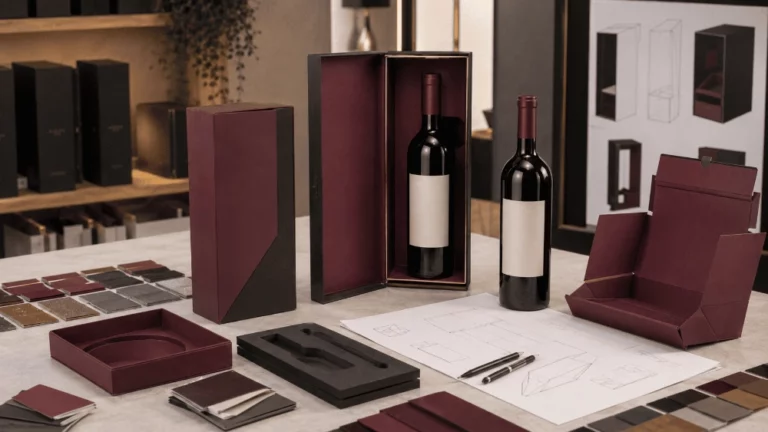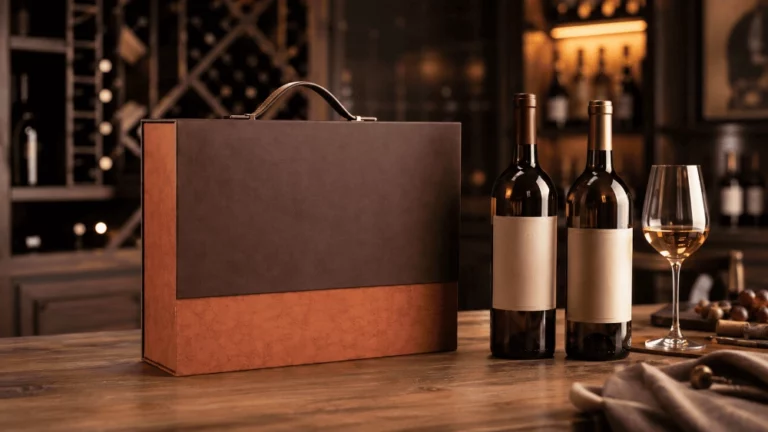

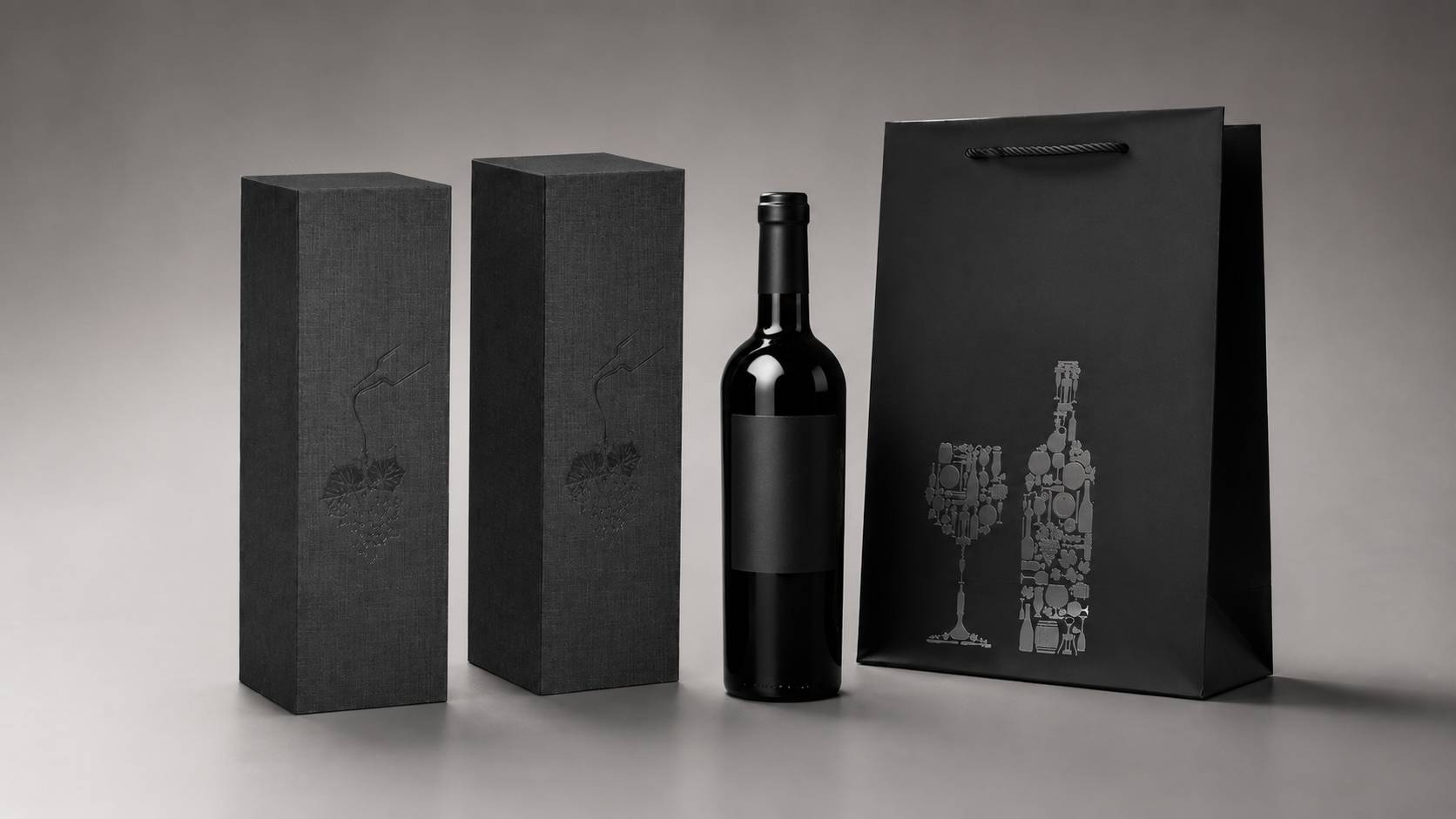
A wine box insert is not a decorative afterthought. It controls how the bottle sits, how the package moves during handling, and how the product appears when the lid opens. For B2B buyers, a poor insert can cause label damage, bottle movement, slow packing, and inconsistent presentation even when the outer box looks refined.
The correct insert depends on bottle geometry, filled weight, sales channel, accessory layout, and the role of the outer structure. A retail box, corporate gift set, and limited-edition presentation box may need different levels of restraint and surface finish. Custom wine packaging design should therefore begin with the bottle and packing process rather than the insert material alone.
What should a wine box insert do?
A useful insert must protect the product, support efficient packing, and present the bottle at the intended level.
Control bottle movement
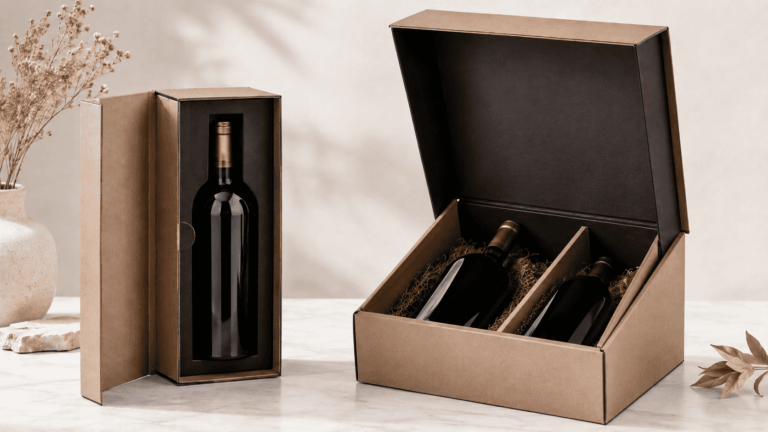
The insert should limit movement at the bottle base, body, shoulder, or neck. A loose cavity may allow the bottle to strike the lid or side wall. In a two-bottle box, weak separation can also create glass-to-glass contact.
The fit should remain secure without excessive pressure. Packing staff must be able to place and remove the bottle without forcing it into the cavity.
Protect labels and closures
Pressure near a paper label may create scuffing or edge lift. A narrow neck opening may interfere with wax seals, foil capsules, or decorative closures. Buyers should mark label positions and closure dimensions on the technical drawing so these areas remain clear during wine box packaging design.
Support the required presentation
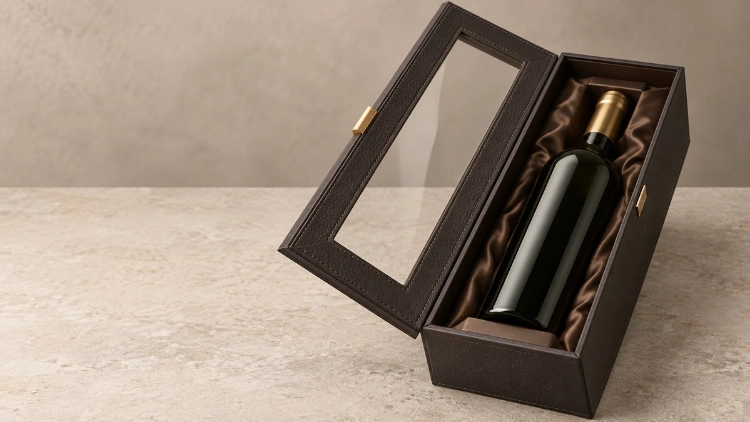
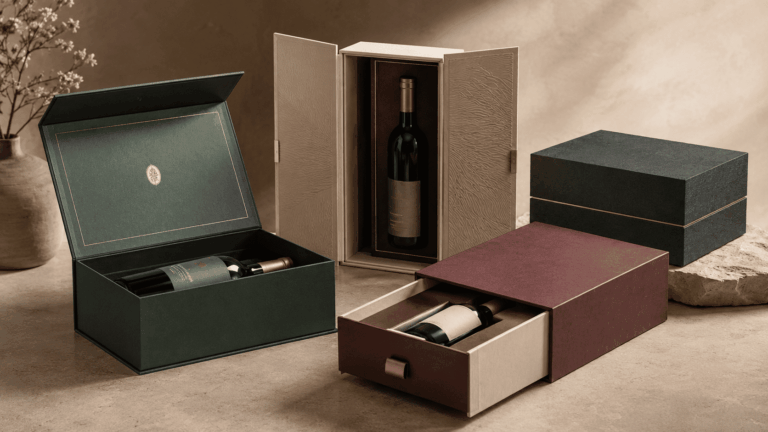
The insert is visible when the box opens. Its color, texture, and cutout shape should suit the product level. Plain paperboard can support a clean retail presentation, while covered foam or a fitted lining may suit premium wine packaging. Appearance still needs accurate bottle control.
Which insert materials suit different wine projects?
No single material fits every project. Buyers should compare protection, appearance, assembly, disposal, and cost before choosing.
Paperboard partitions
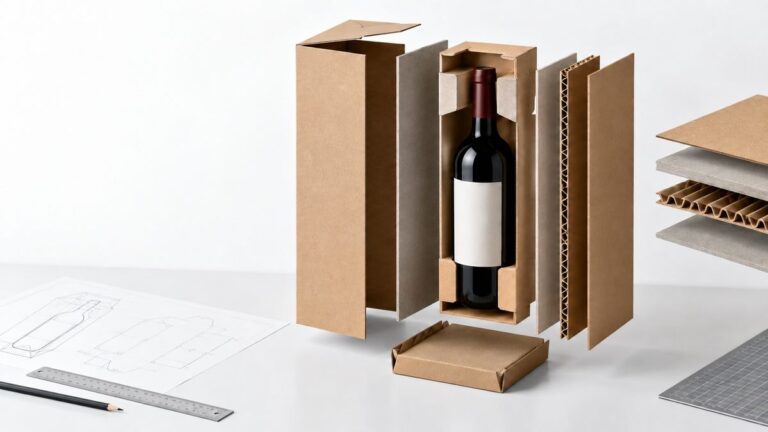
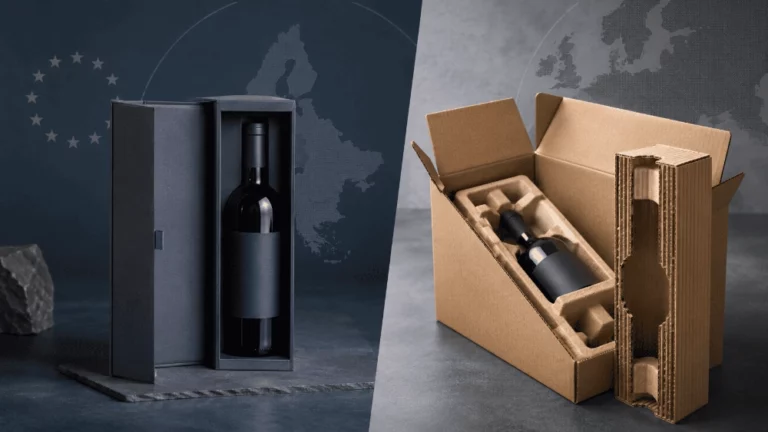
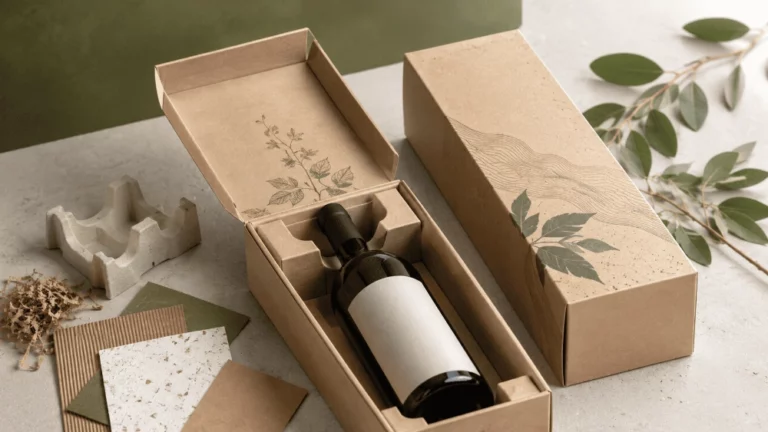
Paperboard partitions are common in cardboard wine boxes because they are light and compatible with folding structures. They can separate bottles, support the neck, or create an accessory compartment.
Performance depends on board strength, fold accuracy, and how the partition locks into the outer box. Buyers should check whether the base needs reinforcement and whether the divider stays upright after repeated handling.
Molded pulp inserts
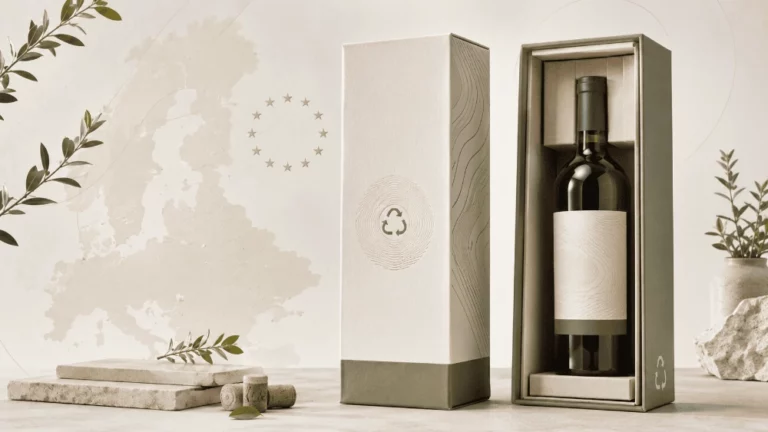
Molded pulp can suit projects that aim to reduce mixed materials. It can hold the bottle at several points and support a paper-based appearance, making it relevant to sustainable wine packaging.
Key checks include mold accuracy, edge quality, surface roughness, odor, and moisture stability. Coatings and adhesives must also be confirmed before making recycling claims.
EVA foam inserts
EVA foam is useful for unusual bottles, accessory sets, or complex layouts. It can create controlled cavities for a bottle, corkscrew, stopper, glass, or other components.
Specify foam density, compression recovery, cutting tolerance, surface covering, and odor requirements. A very soft foam may compress under a heavy bottle, while a tight cut may slow packing or damage the label.
Flocked and velvet-lined inserts
Flocked and velvet-lined inserts can create a refined surface for gift packaging. Quality checks should cover fabric adhesion, shedding, wrinkles, edge finishing, and odor. Dark linings show dust and adhesive marks more clearly, so samples should be reviewed under normal retail lighting.
How do bottle specifications determine insert design?
Material selection only becomes meaningful after the bottle data is fixed. A correct wine box size must be based on the real bottle.
Measure the filled bottle
The brief should include bottle height, maximum diameter, shoulder width, neck diameter, closure dimensions, label position, and filled weight. Filled weight matters because it changes the load on the base and the compression of soft materials.
Treat standard sizes as a starting point
A standard wine box size may suit many 750 ml bottles, but nominal capacity does not define shape. Burgundy, Bordeaux, sparkling, and spirits bottles differ in shoulder form and body diameter.
One insert can serve several bottles only when their critical dimensions and support points remain compatible.
Plan multi-bottle spacing
Double- and triple-bottle boxes require bottle clearance, divider strength, balanced weight, and enough lid space. A central partition may separate the bottle bodies while still allowing the necks to move. The final structure should be tested in its intended carrying position.
Position accessories deliberately
Wine tools should not be placed in unused space. A loose corkscrew or stopper can scratch the bottle. Accessories need dedicated holding points that do not interfere with the main cavity. This is particularly important in custom wine packaging design for corporate gifts.
How should buyers test inserts before production?
A sample review should confirm function, appearance, and packing efficiency. Digital drawings cannot show how the insert behaves under the weight of a filled bottle.
Review contact points
Before sampling, mark where the insert touches the base, body, shoulder, and neck. Confirm cavity depth, finger access, label clearance, and opening direction. The insert must also fit the outer box without shifting or pressing the bottle against the lid.
Use the actual filled bottle
Place the production bottle in the sample, close the box, carry it by the intended handle, and open it again. Check for movement, pressure marks, torn paper, compressed lining, and changes in closure alignment.
For multi-bottle packs, confirm that the bottles remain separated during gentle tilting. Testing should reproduce the expected handling route rather than rely on one universal standard.
Check packing speed
Ask the packing team to assemble and load several samples. Note whether the insert opens correctly, corners catch, or accessories move. A simpler structure with reliable placement may perform better than a complex insert that needs repeated correction.
Approve a reference sample
The approved sample should record material, dimensions, color, surface covering, cavity position, adhesive method, and assembly sequence. It becomes the physical standard for production inspection.
How do inserts affect cost and sustainability?
Insert cost includes material, tooling, cutting, covering, hand assembly, packing time, storage, and rejected parts.
Paperboard may require die cutting and folding. Molded pulp may need a dedicated mold. EVA can require cutting, lamination, and surface covering. Buyers should compare these process steps with the protection and presentation they add.
A single-material structure may be easier to separate after use, but the complete construction still matters. Coatings, films, magnets, adhesives, textiles, and foam can change end-of-life handling. Sustainability claims should reflect the actual material combination.
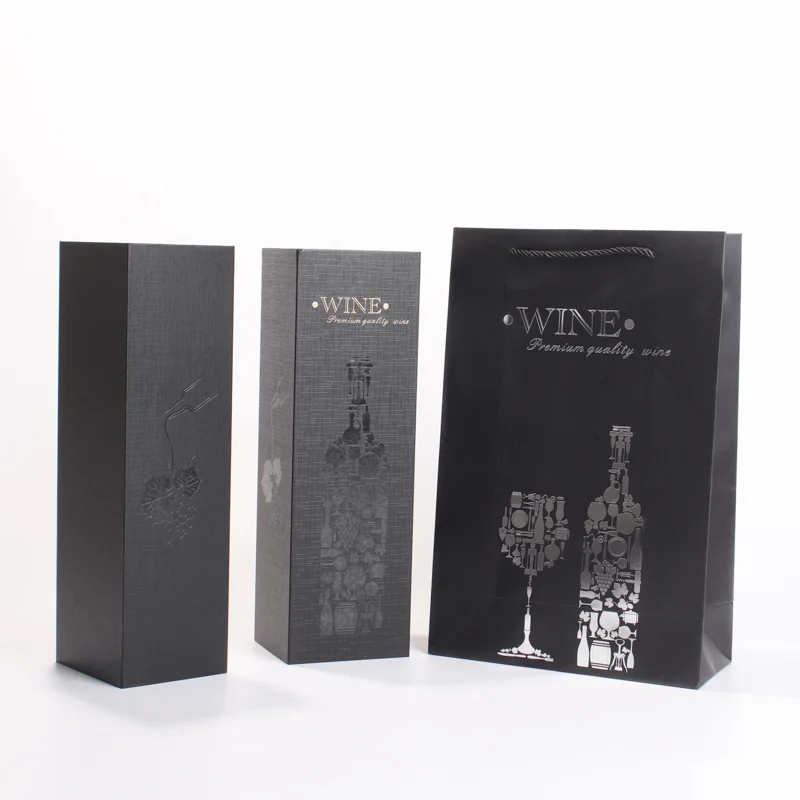
How does a fitted lining work in a custom gift box?
A product example shows how the insert, outer box, and carrying format should be reviewed together.
The Lined Flap-Top Wine Gift Box Set combines a rigid cardboard structure with a black surface, silver foil details, and a matching kraft paper carry bag. It is designed to hold a standard 750 ml wine bottle, while the fitted inner lining helps keep the bottle stable inside the box.
The lining material should still be confirmed during quotation and sampling. Buyers need to check thickness, contact points, adhesion, odor, and compatibility with the production bottle. The matching bag also requires a loaded carrying check.
At TopWinePack, we work with custom box structures, printing, finishing, and internal layouts for wine and spirits projects. The practical priority is to match the insert to the real bottle, channel, and packing method rather than apply one structure to every project.
What information should buyers include in an insert brief?
A complete brief reduces revision time and gives the packaging team a reliable basis for sampling.
Bottle information
Provide dimensions, filled weight, label position, closure details, bottle photographs, and a physical sample where possible. State whether one insert must fit several bottles.
Packaging information
Define the outer box style, opening direction, preferred insert material, accessory count, color direction, surface finish, and sales channel. Note whether the package will be carried, displayed open, or packed in an e-commerce carton.
Project information
Include expected quantity, sample requirements, target schedule, inspection priorities, and carton packing method. For a new design, the custom packaging process can begin with these specifications before the physical sample is approved.
Final thoughts
The best wine box insert is not automatically the softest, thickest, or most expensive option. It is the structure that holds the actual bottle correctly, protects sensitive surfaces, supports the intended presentation, and remains practical during packing.
Buyers should evaluate material, contact points, bottle data, production consistency, and the complete packing route. A disciplined wine box packaging design process produces more reliable cardboard wine boxes and reduces revisions after sampling.
To review the insert direction for a current project, send the bottle and packaging requirements to our team.
FAQ
Q: What is the best insert material for a custom wine box?
A: There is no universal best material. Paperboard, molded pulp, EVA, and lined inserts serve different protection, appearance, cost, and sustainability requirements. The choice should follow the bottle and sales channel.
Q: Can one insert fit several 750 ml wine bottles?
A: It may be possible when the bottles share similar height, maximum diameter, shoulder shape, and closure dimensions. Each bottle should still be tested in the physical sample.
Q: Should buyers send an actual bottle for sampling?
A: A physical production bottle is strongly recommended, especially for unusual shapes, heavy bottles, textured labels, or special closures. Accurate dimensions and filled weight should accompany the sample.