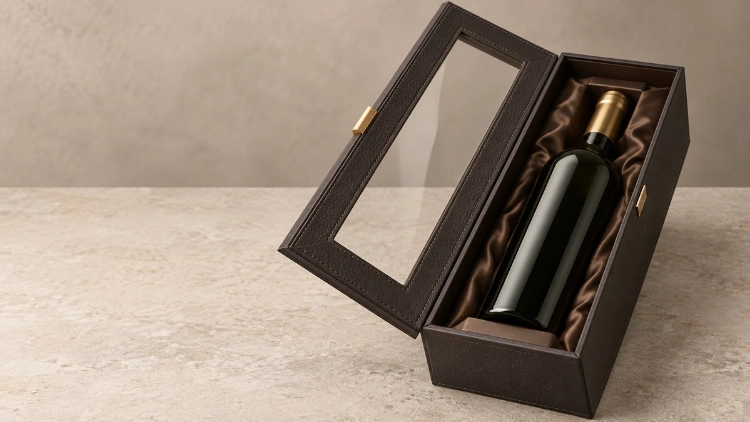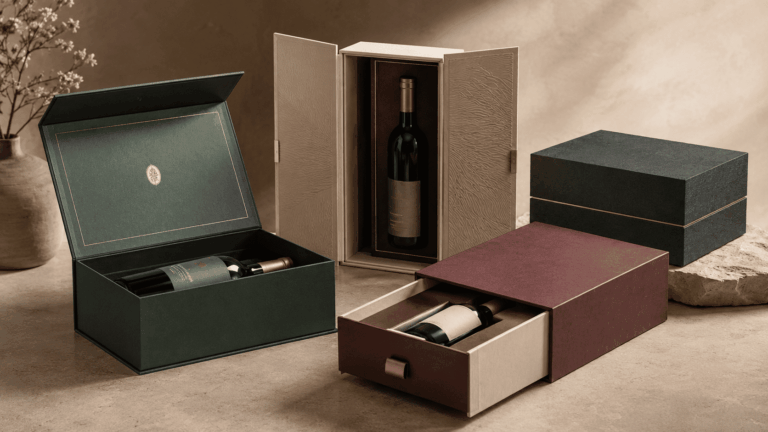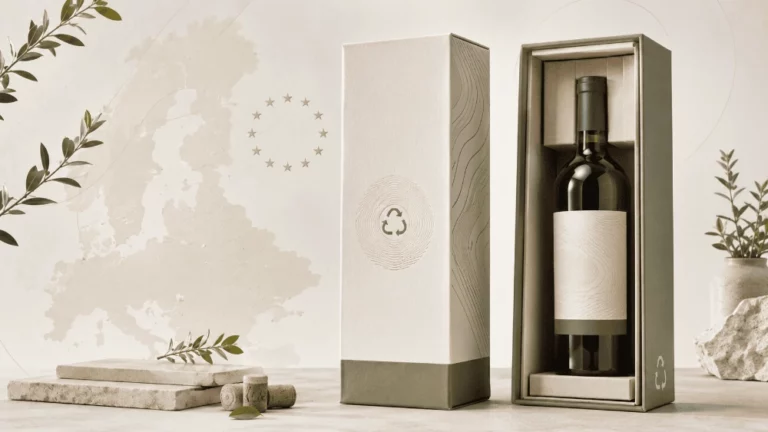

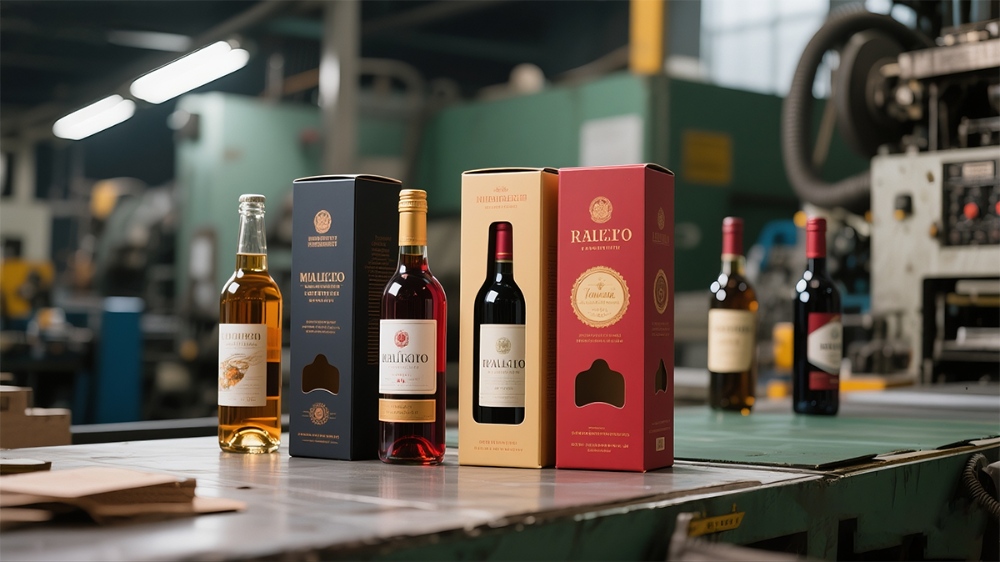
Packaging within the modern alcoholic beverage sector now does far more than simply protect glass. It acts as a critical interface for the user experience. Whether a bottle sits on a physical retail shelf or appears in a digital storefront, purchasing decisions frequently occur in mere seconds. Consequently, the visual impact of cardboard enclosures exerts a direct influence on buyer behavior, effectively serving as an extension of the brand’s identity. Sustainability now dictates market requirements. Brands are rapidly shifting toward structural designs that incorporate lightweight cardboard alongside higher percentages of recycled paper.
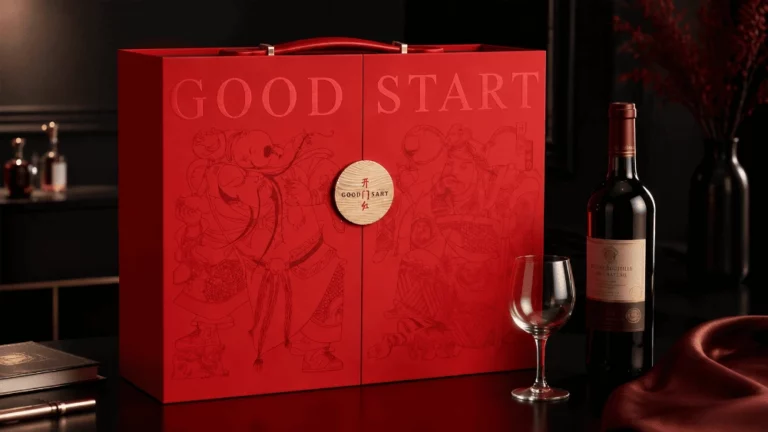
Naturally, structural demands vary significantly depending on the beverage profile. Tall, slender red wine bottles necessitate strict engineering focused on stability and shock resistance. Heavy champagne bottles present a different challenge. Safety takes absolute precedence here, dictating the use of reinforced hard-shell double-layer architectures complete with bottom trays designed specifically for secure bottle locking.
Acknowledging these commercial shifts remains essential for maintaining market competitiveness. Customizing Wine Boxes in China presents a highly effective operational strategy to address these evolving demands. This manufacturing approach allows clients to strike an exact balance between high-end presentation, rigorous cost efficiency, and dependable volume production. Established as a professional packaging manufacturer in 2014, our facility operates the dedicated TopWinePack brand specifically to meet these contemporary commercial requirements. We partner closely with global wine producers, commercial retailers, and established brand owners, delivering tailored custom wine boxes engineered to elevate the finished product.
Evaluating an Partner: Core Manufacturing Metrics
Moving from concept to physical reality requires selecting a manufacturing partner capable of industrial-scale execution. Sourcing customized enclosures goes far beyond simply requesting a quote. For procurement teams, production capability ultimately dictates project success. Evaluating a facility requires looking at hard infrastructure data rather than marketing claims.
A reliable partner should operate at a considerable scale. First, look for a baseline infrastructure with a scale capable of ensuring large enterprise projects are delivered on time and remain stable. Second, workforce expertise directly impacts output stability. Operations managed by a team of professionals can safely maintain a consistent monthly output. Ensuring the partner focuses strictly on OEM/ODM wine packaging, rather than generalized paper goods, allows the factory to execute precise technical adjustments. Operating through a factory-direct model eliminates unnecessary intermediary expenses. Brands can then strategically reallocate these saved resources toward premium finishing processes, such as hot foil stamping, spot UV coating, or deep embossing.
Structural Selection: Aligning Material with Retail and Logistics
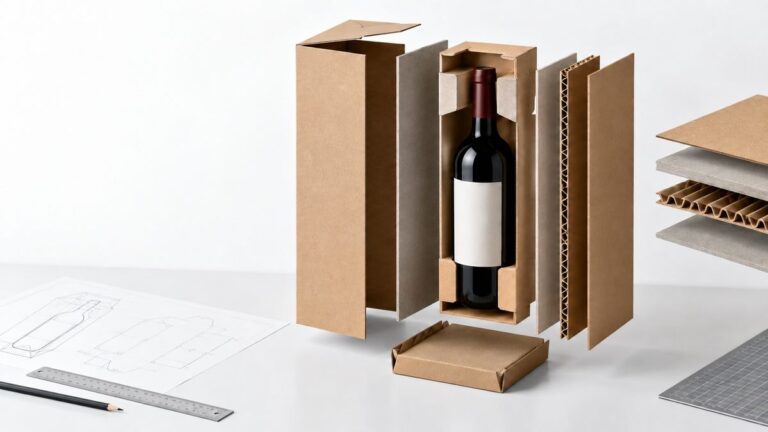
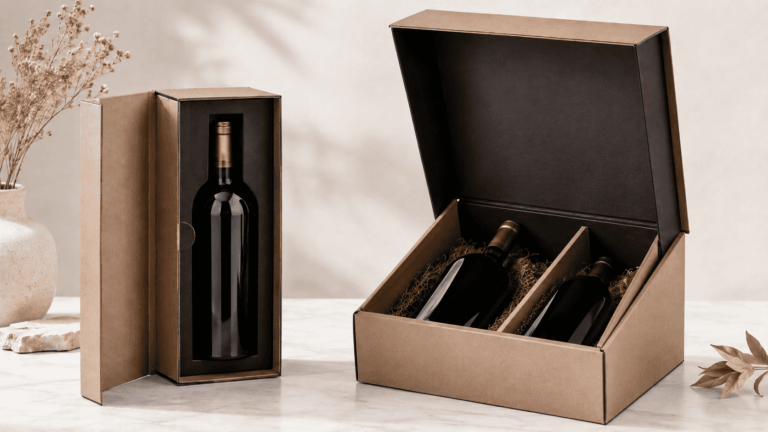
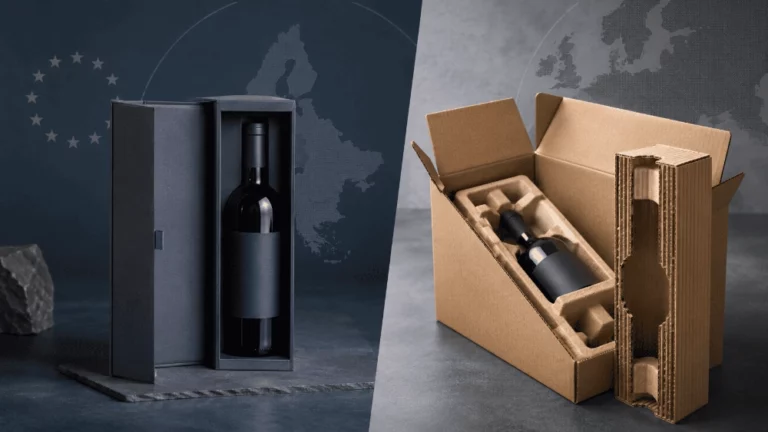
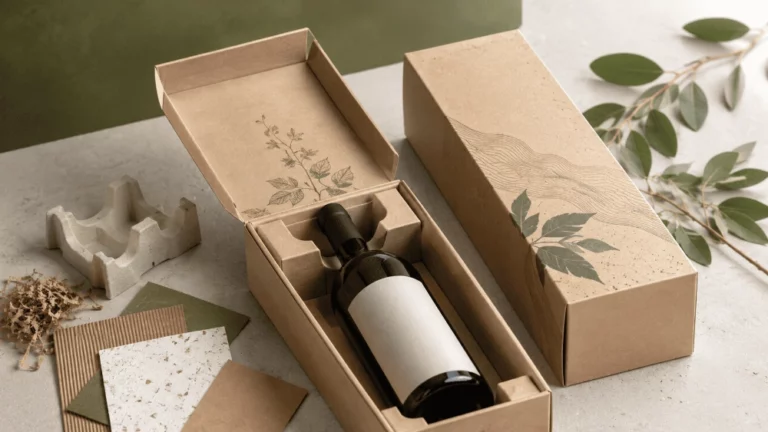
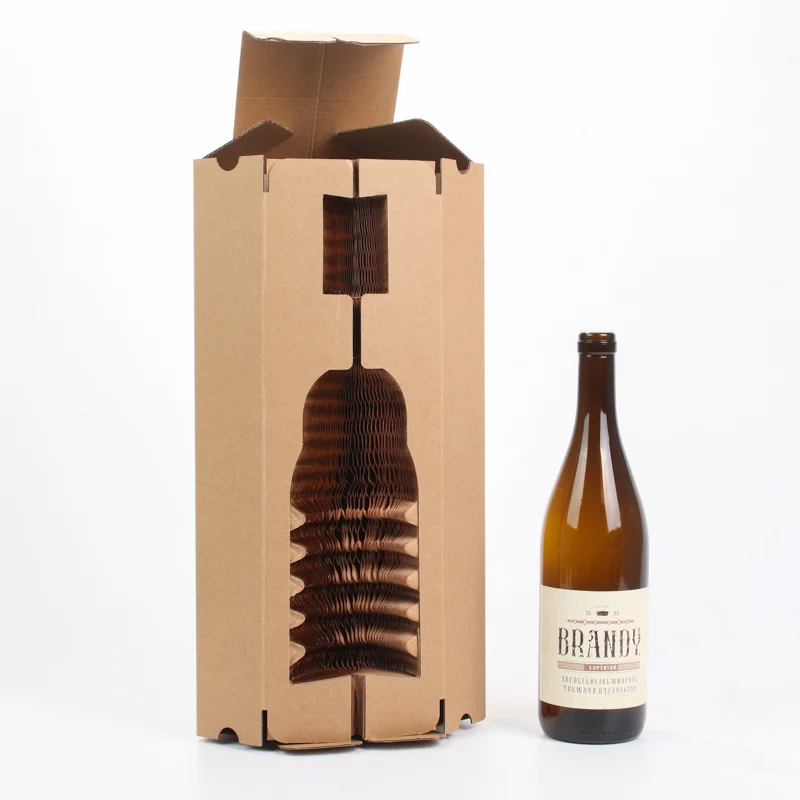
Selecting the correct physical architecture represents a major technical decision. The design must survive complex global transit routes while projecting luxury. When addressing individual retail displays or rigorous e-commerce distribution channels, buyers should strongly consider structures similar to our High quality custom corrugated cardboard wine boxes for single bottles.
This specific format leverages industrial-grade corrugated frameworks integrated with high-resolution color printing technologies. The resulting architecture is exceptionally compression-resistant. It guarantees absolute safety during pallet stacking and long-distance maritime transit. Because the base materials possess inherent physical durability, the final unit remains highly reusable, often transitioning into a sophisticated decorative fixture for home environments. Furthermore, integrating fully recyclable substrates ensures the final unit complies flawlessly with the eco-friendly mandates now enforced by international regulatory bodies. To survive online distribution logistics, these custom single bottle wine boxes require specialized shock-resistant internal mechanics. Precise inner cushioning layouts must be deployed specifically to eliminate lateral movement.
Establishing Mandatory Quality Benchmarks
Visual appeal means nothing if the box fails during transit. True quality stems from a rigid, measurable formula. Engineering integrity represents the absolute foundation. Established industrial standards dictate a strict load-bearing ratio. The box must support a minimum of twice the actual weight of the liquid payload. To achieve this, the base architecture must incorporate either a reinforced bottom plate or a specialized double-layer foundation.
Procurement managers must mandate specific material parameters. Virgin grey board with a minimum weight of 1200g should serve as the baseline. Recycled greyboard variants possess a documented tendency to collapse under standard stacking pressure. They should be systematically rejected.
Before authorizing mass production, brand owners must verify that their chosen design survives severe physical stress testing:
- Drop Test Protocols: The unit must survive a 1.2-meter fall from six varying angles, confirming the internal suspension system protects the glass.
- Stacking Resistance: Replicating a fully loaded shipping container, the box must endure a 40kg top-load for 24 hours without structural buckling.
- Surface Integrity: Finishing techniques must be inspected for edge bleed or flaking. The tolerance for visual defects here is effectively zero.
Regulatory compliance is just as critical for cross-border trade. Facilities must hold active FSC, BSCI, ISO 9001, and EUDR certifications. This administrative infrastructure guarantees that outgoing shipments comply seamlessly with complex global trade regulations and environmental directives.
Executing the Customization Roadmap
Manufacturing complex enclosures requires a structured, phase-based operational methodology. Procurement teams should follow a strict timeline to eliminate costly revisions.
Phase 1: Technical Alignment and Prototyping Project initiation requires a structured online consultation to supply exact dimensional requirements and strict material preferences. After establishing this alignment, plate making and structural proofing begin. Producing physical prototypes generally spans three to seven working days. Procurement teams should demand blank structural dummies for physical load testing alongside fully printed iterations to ensure absolute visual alignment.
Phase 2: Mass Production and Logistics Control Formal approval of the physical prototype triggers the mass manufacturing sequence. This phase involves high-speed automated printing, precise machine lamination, and structural folding. International freight introduces substantial physical risk. To mitigate this, logistics protocols must mandate the application of heavy-duty corner protectors on all master cartons. Deploying internal waterproof barrier bags drastically limits potential damage resulting from maritime humidity.
We provide end-to-end customization workflows to guide clients through this exact process. Industry procurement professionals are encouraged to review our complete manufacturing infrastructure at TopWinePack. Please contact us directly to schedule a technical consultation regarding the optimization of your current brand presentation.
FAQ
Q: Do you offer custom wine box services and specialized logo printing?
A: Absolutely. Our facility focuses entirely on custom paper gift packaging, delivering comprehensive OEM/ODM solutions. Engineering teams will precisely configure dimensions, structural mechanics, lithographic printing, brand logos, core materials, and internal accessories to formulate a distinctly proprietary brand enclosure.
Q: What is the standard minimum order quantity for production runs?
A: Baseline volume requirements typically begin at 500 units. However, this threshold fluctuates based on the specific architectural style and the complexity of the requested printing techniques. We readily accommodate physical sample runs for localized trial initiatives, allowing clients to validate the engineering prior to authorizing a large-scale manufacturing contract.
Q: Are sample productions available for review prior to mass manufacturing?
A: Yes. Our prototyping department supplies blank structural dummies intended for rigorous load-bearing tests, alongside fully rendered iterations for final aesthetic approval. Generating these physical prototypes generally takes between three and seven business days, a timeframe heavily dependent on the exact geometric complexity of the design.