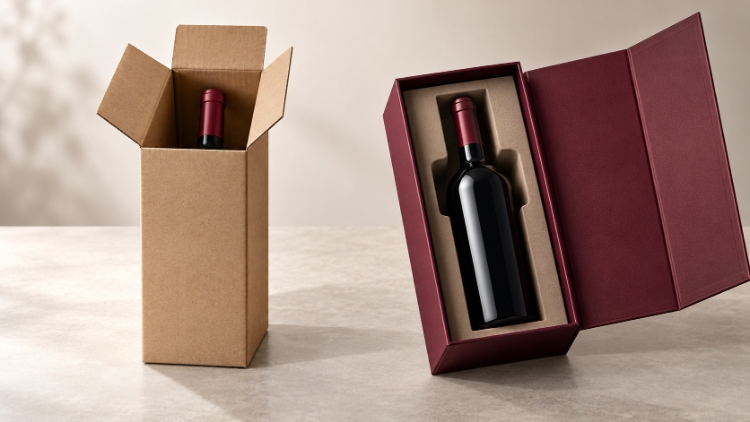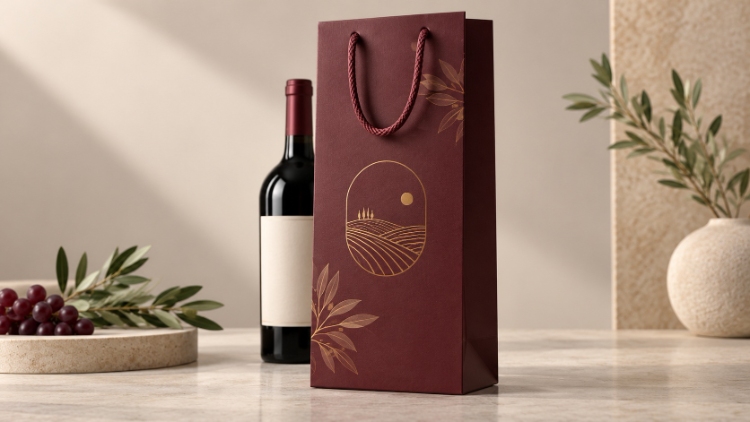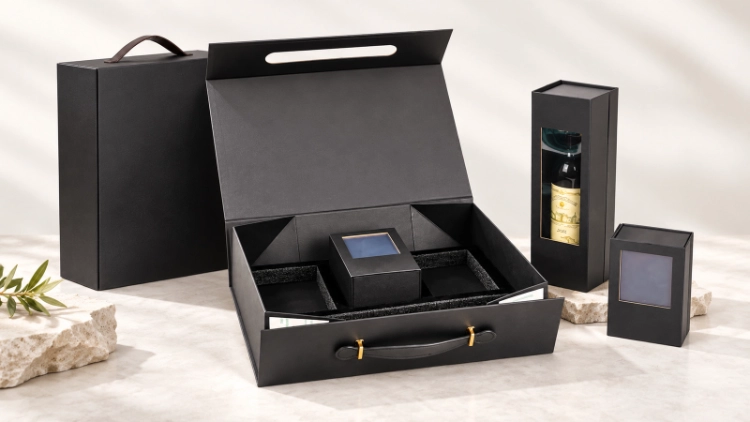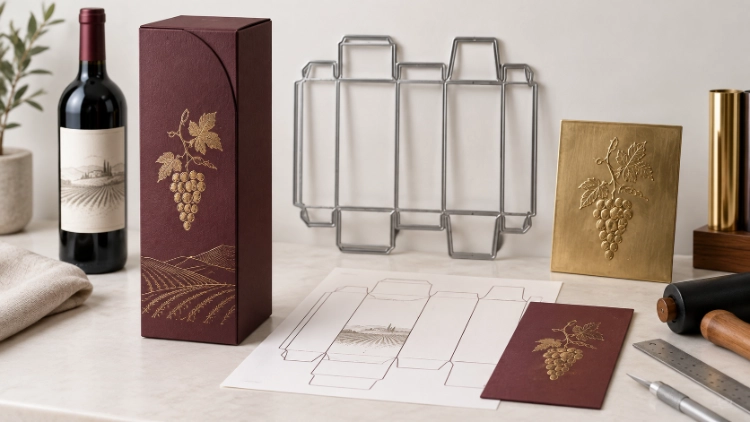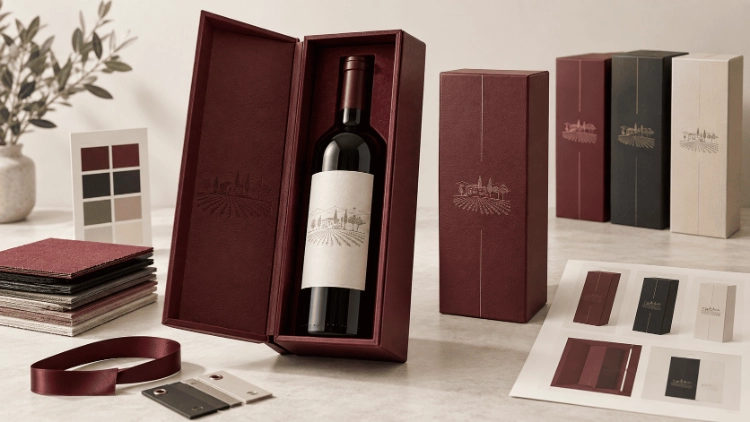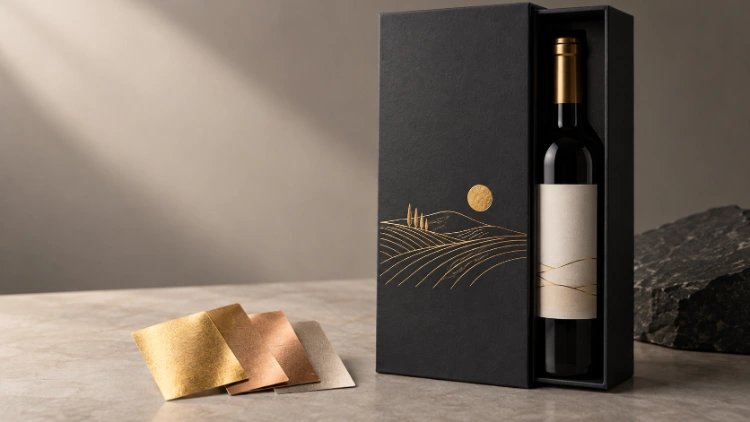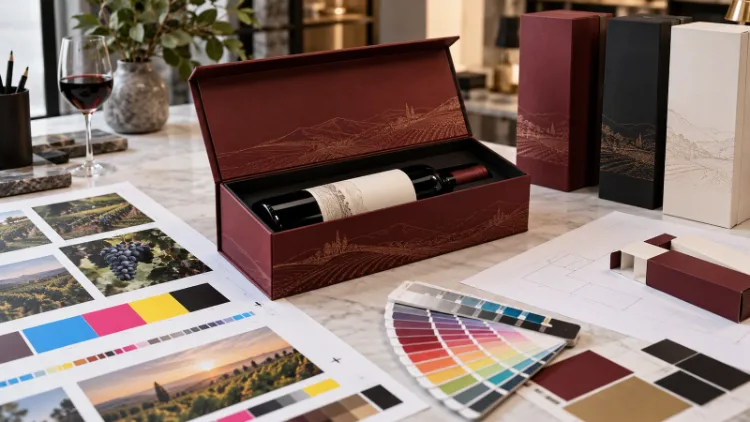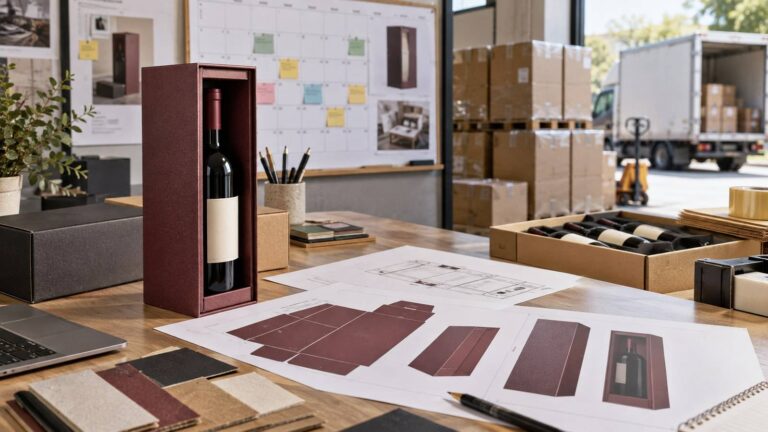

In a rigid wine box, greyboard carries the load, but the outer wrap creates most of what the customer sees and touches. That distinction matters during specification. A paper that looks attractive as a flat sheet can behave quite differently once it is wrapped around board, folded over an edge, printed, laminated, or stamped with foil.
For a custom project, surface paper should be selected as part of the box system rather than as a decorative afterthought. The right wrap has to work with the structure, artwork, finishing plan, and repeat-production requirements.
What Does Surface Paper Do on a Rigid Wine Box?
Rigid packaging separates structural strength from the visible surface. The inner board provides stiffness. The wrap paper covers that board and becomes the printed or textured exterior.
Surface Paper and Structural Board Have Different Jobs
Greyboard should not be judged by the same criteria as the exterior wrap. Board thickness, density, and construction affect rigidity. Surface paper affects color, tactile feel, print appearance, and the way edges and corners look after wrapping.
A box can be structurally sound but still look poor if the wrap is wrinkled, scuffed, poorly aligned, or unsuitable for the chosen finish. An attractive paper cannot compensate for weak structure underneath.
Wrapping Performance Matters at Edges and Corners
A rigid box is not simply a printed sheet glued to a flat panel. The paper must turn around edges, meet at corners, and stay clean where several layers overlap. Thick, stiff, heavily textured, or coated papers may behave differently during that process.
Buyers should look beyond the center of the lid. Corners, wrapped edges, hinge areas, and inside turn-ins often reveal whether the paper suits the construction. Dark or solid-color wraps make exposed fibers and uneven seams especially visible.
How Does Coated Paper Perform on Rigid Wine Boxes?
Coated paper is often selected when the artwork depends on crisp graphics, controlled solid colors, or detailed printing. Its smoother surface can support fine image reproduction, but the final choice still needs to fit the planned lamination and wrapping process.
Printing and Color Reproduction
A smoother coated surface usually gives printed elements a cleaner edge. Fine text, detailed line art, photographs, and large color areas can appear more defined than on a rougher sheet. That does not mean every coated paper will print identically. Whiteness, coating type, gloss level, and the printing process still affect the result.
For brand-sensitive work, it is better to approve color on the actual stock rather than rely only on a digital proof. The same artwork can look different if a project moves from bright white coated paper to a warmer or darker substrate.
Lamination and Surface Protection
Coated papers are often paired with matte or gloss lamination when the project needs a controlled surface appearance or extra resistance to handling marks. Lamination changes the visual result as well. Matte films can mute reflection, while gloss films make highlights stronger.
The decision should be made before sample approval because lamination can change the appearance of the printed surface.
When Does Kraft or Uncoated Paper Make More Sense?
Kraft and uncoated papers are useful when the project calls for a more natural surface, a softer print character, or visible paper texture. They are not simply lower-finish alternatives to coated stock. Their base color and absorbency create a different design condition.
Natural Tone Changes Printed Color
Kraft paper is not a neutral white background. Its brown or warm tone interacts with ink, especially in light areas and pale brand colors. White elements may need a different production approach, and some colors will appear less saturated than they do on white stock.
The paper swatch should be reviewed with the artwork because the sheet itself becomes part of the final palette.
Texture, Folding, and Edge Appearance
Uncoated fibers create a softer tactile surface, but they can also make wrapped edges look different from smooth coated paper. The effect may suit a restrained or natural design, yet it should be checked around corners and turn-ins where the paper is under more stress.
The box sample matters more than the loose sheet. A paper can feel excellent in a sample book yet show cracking or rough edge coverage after conversion.
What Makes Textured and Specialty Paper Different?
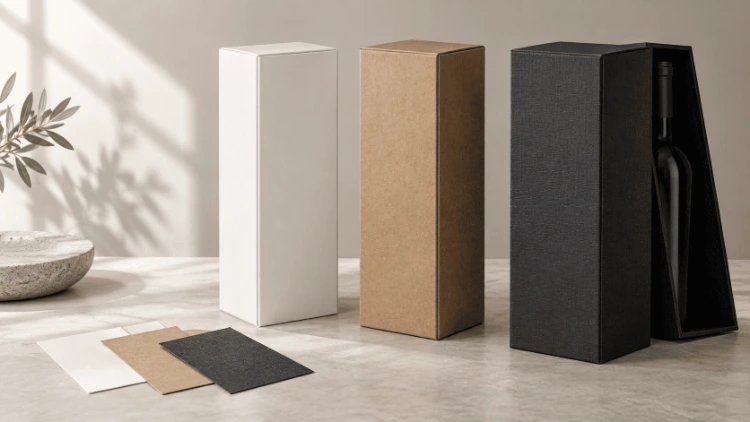
Specialty paper allows a rigid wine box to gain character without relying only on printed graphics. Linen-like surfaces, leather-style textures, metallic sheets, embossed patterns, and other tactile papers can become part of the brand presentation.
For custom rigid wine boxes, structural board and exterior surface paper should be specified separately because they serve different production functions. Available surface choices can include specialty paper, kraft paper, metallic card, flocked paper, and leather-textured paper, depending on the structure and design requirement.
Visual Texture and Physical Texture Are Not the Same
A printed pattern can imitate leather, linen, or wood grain visually, but the surface remains physically flat. An embossed or textured paper changes the way the box feels in the hand and how light moves across the surface.
Fine text, small logos, and reflective finishes can behave differently on a heavily textured sheet, so the paper should be judged both at normal viewing distance and close up.
Texture Can Become a Production Constraint
Heavy texture can interrupt very fine printed lines or make small foil details harder to keep crisp. Deep surface patterns may also affect glue contact or create slight variation where the wrap turns over a corner.
The result depends on the specific sheet and process. The finer the artwork, the more important it is to test it on the actual paper before production.
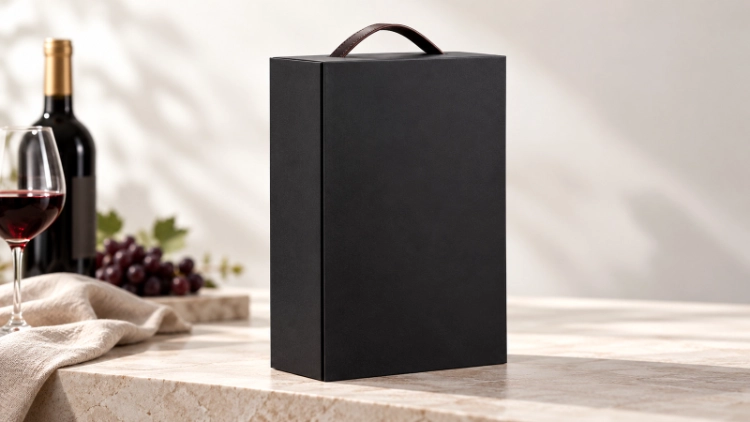
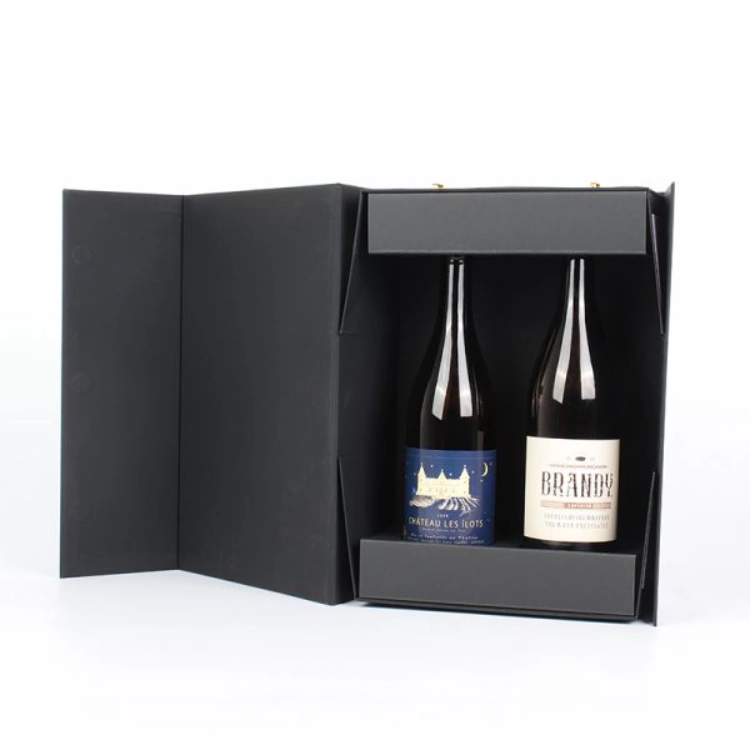
A current example is the Black Double Cardboard Wine Bottle Gift Box Custom With Logo, which combines rigid greyboard with a textured outer paper in a foldable double-bottle format. It illustrates how structural board and surface paper can be selected as separate parts of one custom box specification. The underlying product specification identifies 1200g gray cardboard with texture paper.
How Does Surface Paper Affect Printing and Color?
Surface paper changes how ink sits and reflects light. Smooth bright papers usually reproduce detail more predictably than dark or strongly textured sheets, although results still vary by grade.
Dark wraps can reduce contrast in subtle graphics. Kraft can warm the overall color balance. Rough or felt-marked sheets may soften fine edges. Metallic or pearlescent papers reflect light differently from standard white stocks.
Color approval should happen on the selected paper when the project has a defined brand color or large solid area. A digital proof cannot fully represent tone, texture, or reflectivity.
Which Papers Work Better With Foil, Embossing, and Lamination?
Finishing compatibility should be considered before the wrap is fixed. Smooth papers often make fine foil edges easier to define, while textured papers may need larger details or additional sampling. Embossing also depends on the paper’s surface, weight, and ability to accept deformation without unwanted cracking.
Lamination is another compatibility question. Some specialty papers are chosen specifically for their natural texture, so covering them with film may remove the tactile character that justified the material in the first place.
Hot foil, embossing, lithographic printing, and lamination are not equally suitable for every paper grade. Compatibility should be checked on the selected stock before the final sample is approved.
What Should Buyers Check on a Surface Paper Sample?
A surface-paper review should include more than color. Inspect the finished sample where wrapping work is most visible.
Check the paper color under normal and strong light. Look at the corners for lifting, exposed fibers, or uneven overlap. Inspect wrapped edges for cracking or white lines. Run a finger across textured areas and confirm that the tactile effect is consistent from panel to panel.
Printed details should remain legible, and foil or embossed areas should have clean boundaries. If the surface is laminated, check for bubbles, trapped particles, scuffing, or edge lift. Dark wraps deserve special attention because glue marks and abrasions are easier to see.
When comparing custom structures, the cardboard wine box range provides examples of rigid and foldable formats where surface material, structure, and finishing need to work together.
What Should Be Written Into the Final Paper Specification?
The production specification should identify the paper clearly enough for sampling and repeat production. Record the paper type, color or reference, texture, confirmed grammage where relevant, coating or lamination, print method, and any foil or embossing requirements.
If the project depends on a particular tactile effect, keep an approved physical sample. A description such as “black textured paper” is too broad for a repeat order because several papers can fit that phrase while looking and behaving differently.
For custom wine packaging projects, TopWinePack can coordinate structure, surface material, printing, and finishing within one specification. Our custom wine packaging process also allows material and sample decisions to be confirmed before mass production. The project materials support customization across size, structure, printing, material, and related accessories.
If the paper choice is still open, review your surface paper options with our team using the box structure, artwork, target finish, and required tactile effect as the starting point.
Conclusion
Rigid box wrapping paper has to do several jobs at once. It must wrap cleanly, carry the artwork, support the chosen finish, and remain suitable for repeat production.
Coated paper suits smooth, detailed printing. Kraft and uncoated papers create a softer visual character, while textured and specialty papers need closer testing when the design includes fine print, foil, embossing, or complex corners.
The strongest material decision is therefore not the sheet that looks best by itself. It is the one that still works after printing, wrapping, finishing, and final assembly.
FAQs
Q: What paper is commonly used to wrap rigid wine boxes?
A: Coated paper, uncoated paper, kraft, and specialty textured papers can all be used. The suitable choice depends on the box structure, artwork, color requirement, finishing, and the desired tactile effect.
Q: Is textured paper suitable for foil stamping?
A: It can be, but the result depends on the paper texture, foil detail, and production setup. Fine foil lines usually need closer testing on heavily textured stock, so a physical sample should be approved before mass production.
Q: Should surface paper be approved before the printed sample?
A: The surface paper should be selected before final printed-sample approval because the paper affects color, texture, wrapping, and finishing. Changing the paper after print approval can change the final appearance.