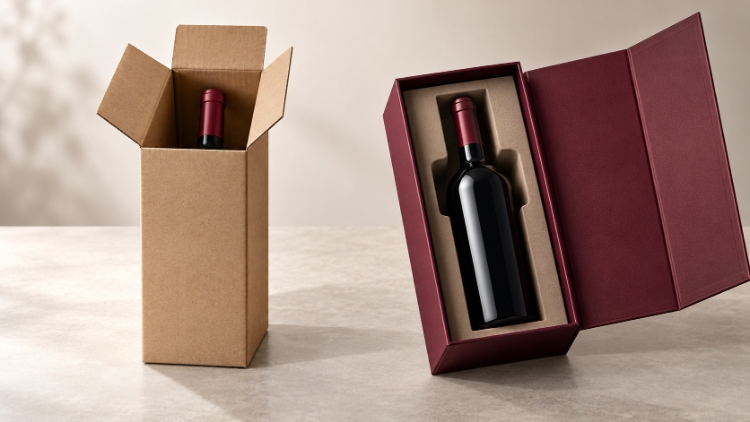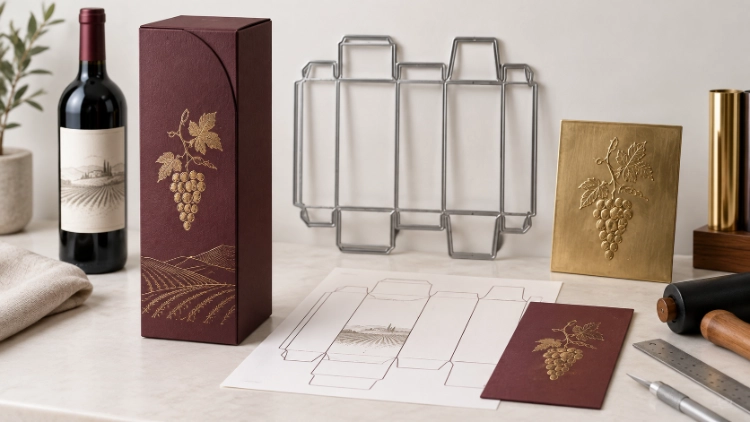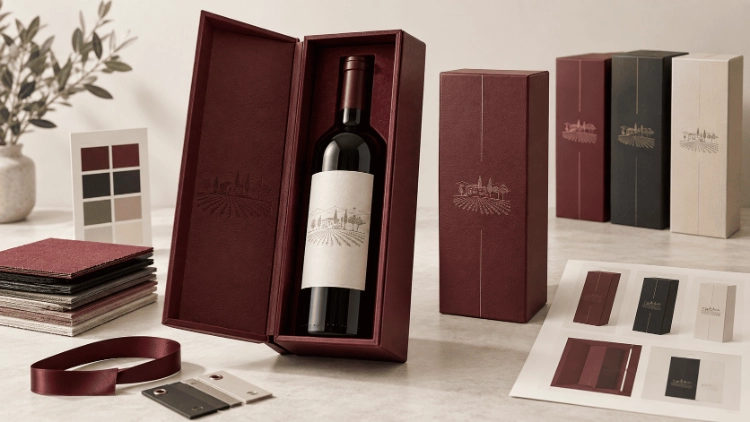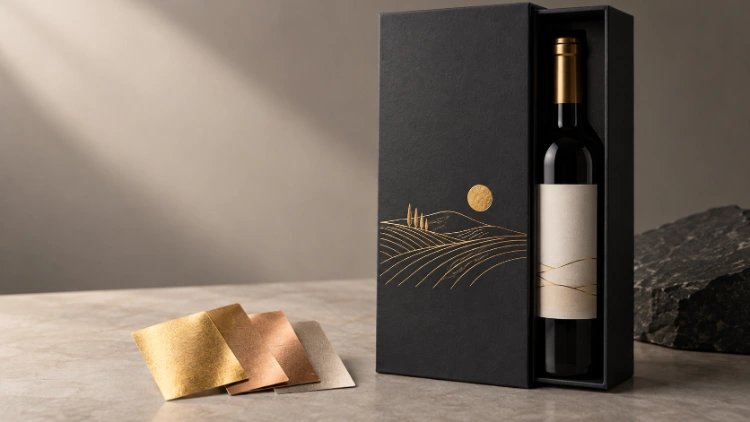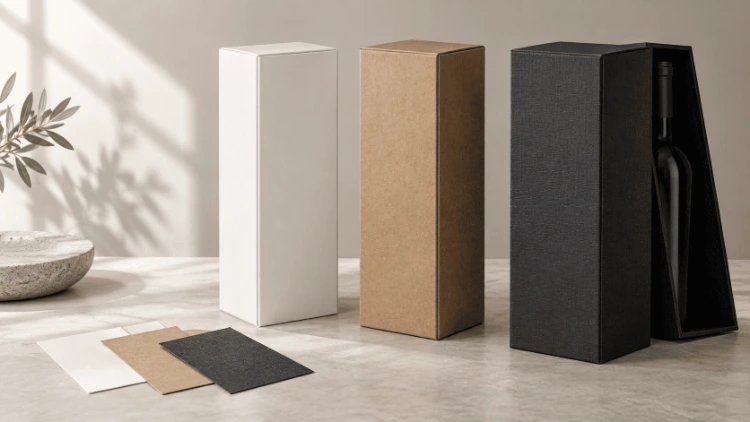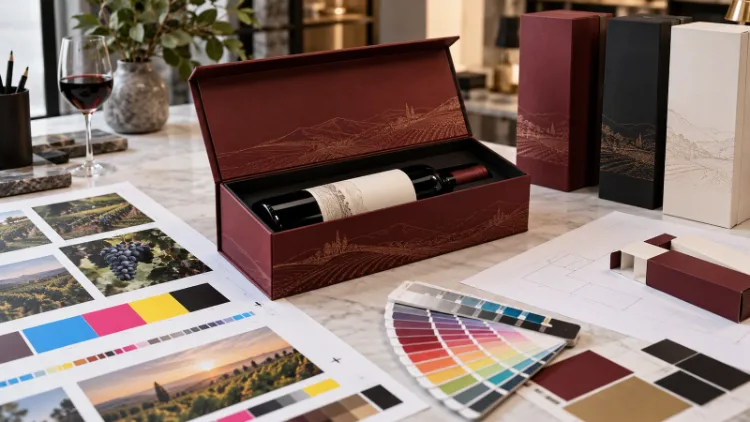

A broad-shouldered whiskey bottle, a tall vodka bottle, and a limited-edition brandy bottle with a sculpted stopper cannot rely on the same internal supports. Custom spirits packaging boxes need to account for where each bottle carries its weight, where it might move, and which details must remain untouched.
The insert controls bottle position; the lining manages the immediate contact surface and presentation. Their roles are related, but they are not interchangeable. A good interior supports the glass without rubbing the label or pressing against an elaborate closure.
Why Does Bottle Design Affect Spirits Packaging Protection?
Whiskey, brandy, vodka, and specialty spirits frequently use distinctive glass profiles. A square base may create pressure at its corners, while a tapered shoulder leaves less predictable space for upper support. A heavy stopper may sit close to the lid even when the bottle base fits the cavity.
Materials, opening styles, and decorative finishes all influence custom liquor box packaging, but internal protection begins with the bottle’s actual shape and contact points. The critical question is what happens once the closed gift box is lifted, moved, and opened again.
Which Bottle Measurements Matter Before the Internal Design Is Set?
A capacity label is not enough for tooling or insert preparation. The packaging team needs the dimensions of the complete, filled bottle, including the stopper, cap, and any decorative features extending beyond the glass.
Base, Body, and Shoulder Profile
Measure the maximum width and depth, including corners and any raised glass details. For an asymmetrical bottle, note where that maximum occurs. A rounded brandy bottle may touch a narrow support at only a small area, while a square whiskey bottle can catch on an undersized cut-out.
If the insert reaches the shoulder, check its position against the actual curve. Excessively close contact makes packing difficult; too much space may let the bottle lean.
Neck, Closure, and Filled Weight
Record overall height with the actual stopper or cap fitted, plus the closure’s widest point. If the closure has a decorative top, avoid relying on it as the primary vertical restraint unless that contact is specifically designed and tested. Leave space for the lid and any surface covering without compressing the closure unintentionally.
Filled weight should include the bottle and liquid, not merely the empty glass. This affects bottom support, the position of side restraints, and how readily the bottle moves when the package changes orientation.
How Do Internal Inserts and Linings Protect the Bottle?
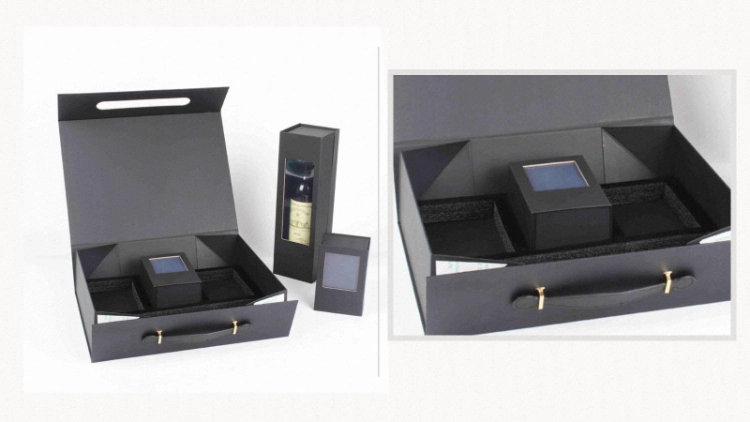
An insert is principally a positioning component. It defines a cavity and limits movement. An internal lining is the contact or presentation surface, which may cover an insert or the inside of the box. They may work together, but they should not be treated as equivalent protection systems.
Shaped Foam and EVA Inserts
Foam cavities can follow an irregular bottle outline and provide separate recesses for accessories. EVA is one option for shaped support. Material firmness, cavity depth, and contact location matter more than the material name: excessive compression beneath a heavy base or pressure on a raised label can undermine an otherwise neat fit.
Velvet, Flocked, and Fabric Contact Surfaces
Velvet and flocked coverings can soften the appearance and feel of an insert. They do not automatically make the package impact-resistant. Check whether seams, fibers, adhesive residues, or wrinkles touch printed labels and decorative glass. A lining that looks smooth when empty may rub once the bottle shifts.
Paperboard and Molded Pulp Supports
Paperboard cradles and molded pulp components may help locate the bottle or separate accessories. Their edges and bearing areas must suit the actual glass profile. Any hard contact near an embossed detail should be reconsidered before approving the interior.
How Should Internal Support Match Different Spirits Bottle Shapes?
The bottle profile changes the support plan. Rather than treating whiskey, vodka, or brandy as fixed packaging categories, start with the actual glass and closure on the filling line. Three common shapes illustrate the differences.
| Bottle profile | Likely trouble spot | Interior design check |
| Broad, square bottle | Heavy base and projecting corners | Base bearing area and side clearance |
| Tall, narrow bottle | Leaning or rocking | Lower cradle and upper lateral restraint |
| Curved bottle with elaborate stopper | Uneven shoulder contact and lid pressure | Curved support points and closure clearance |
Broad-Shouldered Whiskey Bottles
Many rectangular whiskey bottles carry considerable weight in thick glass near the base. A cavity that grips only the upper body may let that weight settle unevenly, particularly when the box is picked up. Check the base cradle first, then the clearance around corners and shoulders. If the front label extends close to a glass edge, keep the supporting cut-out away from the printed area.
Tall Vodka Bottles
A tall, narrow bottle may fit the box footprint yet rock when the package tilts. Lower support alone can leave too much movement at the neck. Adding suitable lateral control higher on the body may help, provided it does not obstruct the label or make bottle removal awkward. Where several bottle heights share an outer box, the upper restraint needs checking for each version.
Decorative Brandy and Limited-Edition Bottles
Rounded shoulders, embossed glass, and sculpted stoppers create less obvious contact points. A tightly fitted ring may press against a curved surface instead of holding it evenly. Keep load-bearing support on stable glass areas, then confirm that the stopper clears the closed lid and any lining. Decorative closures should not accidentally become the component stopping upward movement.
Gift sets with glasses or small accessories add another concern: those pieces need independent holding positions, not spare space beside the bottle. Once the interior works, the outer format can be chosen from suitable custom wine box designs.
How Can the Box Prevent Movement Without Damaging the Label?
The aim is restraint without excessive pressure. An over-tight cavity may mark the glass decoration or make removal difficult; an oversized one leaves room for repeated rubbing.
Place Support Away From Vulnerable Details
Identify label edges, foil decoration, embossing, and projecting glass features on the real bottle. A support that works on bare glass might catch a premium paper label. Shift the contact toward sound areas of the base or body and check the lining after the bottle has been moved and removed.
Leave Room for Packing and Removal
Finger access is part of protection. If the insert holds a bottle so deeply that staff must pull against the neck or stopper to remove it, the grip recess or support shape needs revision. Give glasses and small accessories separate cavities so they cannot move into the bottle space.
How Should Buyers Verify Fit and Protection Before Production?
Test the actual filled bottle in an assembled sample made with the intended insert and lining. Close the lid, lift the gift box, set it down, and inspect it after controlled tilting appropriate to normal handling. These checks reveal fit problems; they do not replace any transport qualification required for the distribution route.
For a broad whiskey bottle, look for compressed support beneath one corner or fresh marks near the shoulder. A tall vodka bottle should remain upright without repeated contact near the neck. With a sculpted stopper, close and reopen the lid to check for pressure marks and clearance. In every case, remove and replace the bottle several times; the lining and label should still be clean.
If one outer box is used for several variants, approve each bottle-and-insert combination separately. A successful fit with one stopper height does not confirm the others.
What Belongs in a Custom Spirits Packaging Specification?
A workable brief starts with the bottle sample or dimensional drawing, including its maximum profile, stopper size, filled weight, and label position. Mark the intended contact and no-contact areas; include accessories and any bottle variants sharing the same outer box.
State the insert and lining construction, opening direction, removal space, and sample acceptance checks. The brief should distinguish gift presentation from shipping performance. An inner box that fits beautifully may still need a protective outer carton and distribution testing.
Coordinating the Bottle, Interior, and Gift Presentation
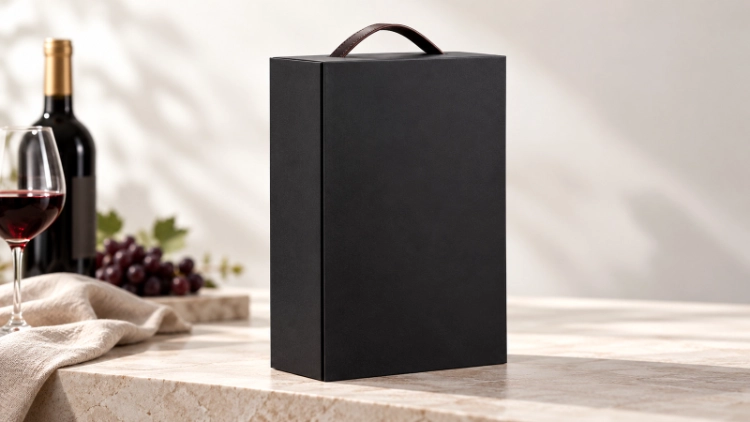
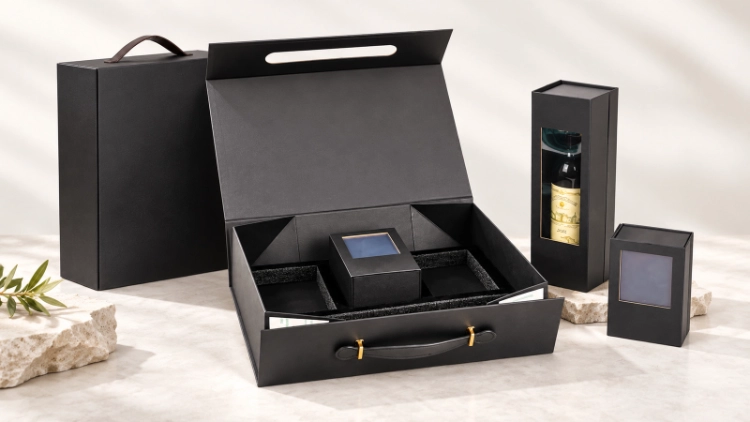
The Luxury Custom Wine Gift Box Set with Handle and Multiple Compartments combines a drawer-style outer box, foam insert, and separate spaces for bottles, glasses, and accessories. It is a useful example of compartment planning; the insert geometry still needs to be matched to each spirits bottle rather than assumed to fit every shape.
For a custom project, TopWinePack can develop the outer format and internal components alongside printing and presentation requirements. Velvet or flocked coverings may suit the intended finish, but the support beneath them must match the filled bottle and its vulnerable details.
To move from a packaging concept to a workable interior, share the bottle dimensions and lining requirements with the intended gift-box layout, accessory list, and handling needs. That makes it possible to review the correct support points before final sample approval.
Conclusion
Effective premium packaging for spirits begins with the bottle itself. A broad shoulder, heavy base, delicate label, or oversized stopper can change where the interior needs support and where clearance matters more. Inserts should hold the bottle without making packing or removal difficult; linings should provide a suitable contact surface without rubbing delicate decoration. A physical sample with the actual filled bottle remains the most useful way to check those decisions before production.
FAQs
Q: Which internal lining is suitable for premium spirits packaging?
A: Velvet or flocked surfaces may suit a gift-oriented presentation, but the lining alone does not provide all the necessary protection. The underlying foam, paperboard, or other insert should first support the bottle correctly. Check the finished contact surface for lint, rubbing, and adhesion issues.
Q: How can custom spirits packaging boxes protect irregular bottle shapes?
A: Shaped supports can limit movement while leaving sensitive labels and decorative stoppers clear of unnecessary pressure. Fit should be confirmed with a physical sample.
Q: Should packaging inserts be tested with the actual liquor bottle?
A: Yes, particularly when the bottle has a broad shoulder, heavy base, unusual label, or oversized closure. The real bottle reveals fit, handling, and removal issues that a generic drawing may miss. Transport tests, when required, should be selected for the packed configuration and distribution route.