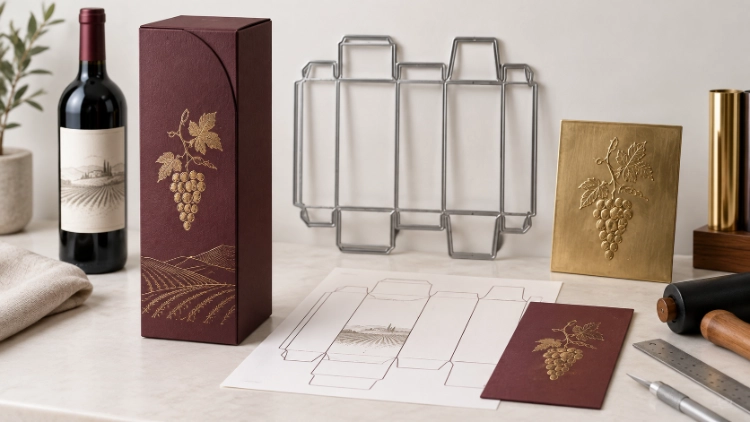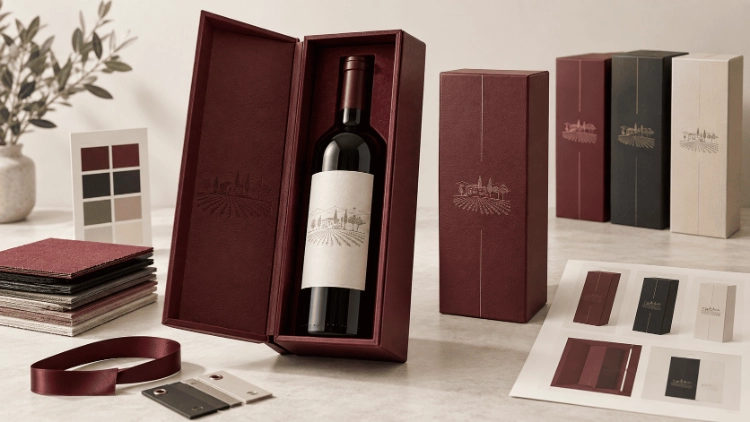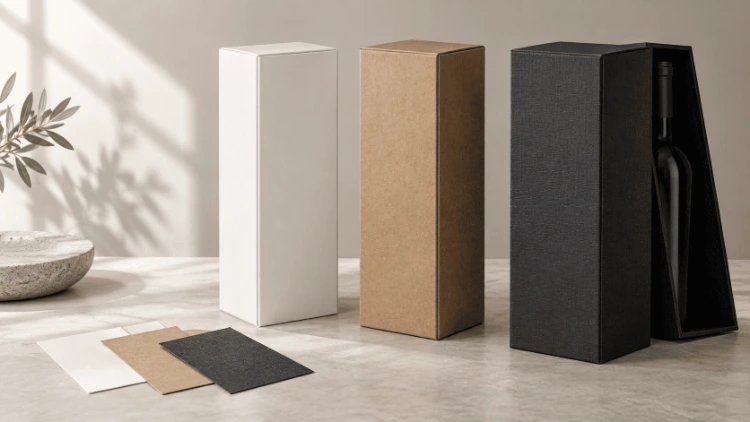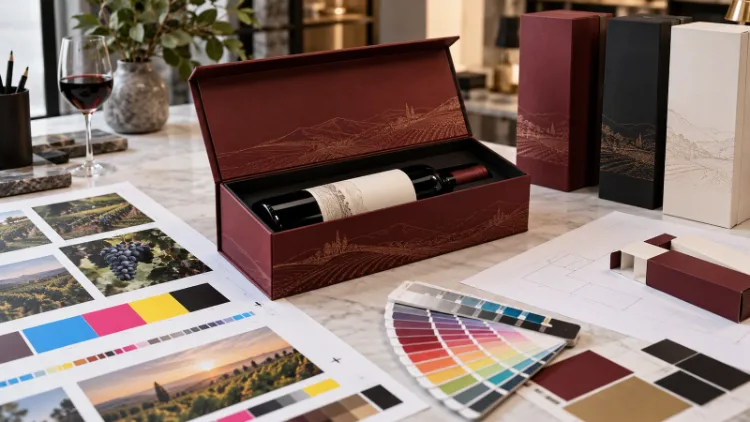

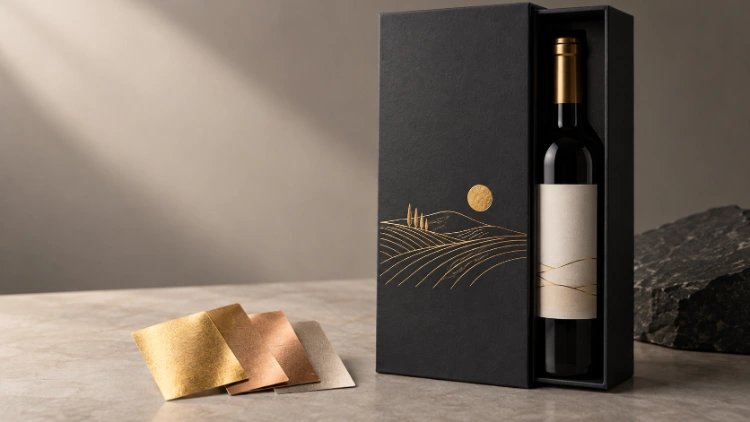
A foil logo may look simple in a design file, but the production result depends on more than choosing gold or silver. The paper surface, foil reference, artwork detail, stamping die, registration, and sample approval all affect the finished mark.
For a custom wine box, foil stamping should be specified as a production process rather than added at the end. A small logo, thin border, and large metallic panel place different demands on the paper and tooling, so the foil should be defined and tested early.
What Happens During Foil Stamping on a Wine Box?
Hot foil stamping transfers a thin decorative layer onto the packaging surface through controlled heat and pressure using a prepared stamping die or plate. The process is separate from conventional ink printing, which is why foil artwork and print artwork need to be controlled independently.
What the Foil Layer Does
Foil creates a reflective surface that standard process ink cannot reproduce in the same way. Gold and silver can isolate a logo or line detail against dark paper without covering the entire box.
The foil itself does not create depth. If a project also requires a raised or recessed effect, embossing or debossing becomes a separate structural finishing step. The two processes can be combined, but they should be specified clearly so the production team knows which areas are metallic, raised, recessed, or simply printed.
Why the Substrate Matters
Foil is transferred onto the surface already selected for the box. A smooth paper can support fine edges and small details more easily than a deeply textured sheet. Rough fibers or embossed textures may interrupt contact between the foil, stamping tool, and paper.
Textured paper can still work, but the artwork may need larger details or a physical test before approval. Surface material and foil design should be reviewed together.
Which Foil Type and Color Should Be Specified?
“Gold foil” is not a complete production specification. Metallic appearance varies by tone, brightness, reflectivity, and surface character. Silver can also range from a bright mirror-like effect to a more restrained metallic finish.
When the metallic appearance matters, use a physical reference or clearly identified foil code. A screen image cannot reproduce metallic reflection reliably.
Gold and Silver Are Not One Standard Shade
Two gold foils can look noticeably different beside the same burgundy paper. One may appear warm and yellow, another paler, and another closer to champagne or copper. The same applies to silver, where brightness and reflectivity can change the overall impression.
The foil should therefore be selected in relation to the surface paper and printed colors. A warm gold that works on cream paper may not create the same balance on cool black or blue stock.
Why a Physical Foil Sample Matters
A foil swatch helps during selection, but the finished sample is more useful because it includes the actual paper, artwork size, and surrounding design.
Review the sample under more than one lighting condition. Metallic areas react strongly to light, so a foil that looks subtle from one angle may appear much brighter from another.
How Should Foil Artwork Be Prepared?
Foil artwork needs a clear production file. The stamping area should not be left ambiguous inside the general print design, especially when the box also contains CMYK or Pantone artwork.
Separate Foil From Printed Artwork
A separate foil layer and vector artwork usually give prepress a clearer production file, especially when foil must register closely with printed graphics or embossing.
The production team needs to know exactly which shapes will be stamped and which will be printed. This matters most when foil sits close to text, borders, or other graphics. Clear separation also makes later artwork revisions easier to identify.
Keep Fine Lines and Small Text Realistic
Fine foil detail is possible, but the practical limit depends on the stamping tool, foil, paper surface, artwork, and production setup. A minimum line width copied from another project should not be treated as a universal rule.
Small serif text, narrow gaps, and complex line art deserve attention. If the design depends on them, test the artwork at final size rather than relying on an enlarged screen proof.
How Does Paper Surface Affect Foil Stamping?
The same foil artwork can behave differently after the paper changes. Surface smoothness, texture depth, coating, and compressibility all influence transfer and edge definition.
Smooth Paper
Smooth paper usually provides more continuous contact across the stamping area. That makes it suitable for small logos, fine borders, and artwork where clean metallic edges are important.
The paper still needs testing with the final finish because lamination, coating, or printed layers can change how the surface responds.
Textured Paper
Texture introduces small height differences under the stamping area. On a mild texture, the result may remain clean. On a deeper pattern, very fine foil elements may appear broken or less even.
Increasing pressure is not always the answer because excessive pressure may mark the surface. Testing the artwork and simplifying detail may be more effective on heavily textured paper.
Many textured and embossed paper grades can accept hot foil, but compatibility remains grade-specific. A successful result on one textured stock should not be assumed for another.
Where Should Foil Be Used on a Wine Box?
Foil works best when its role is defined. It can highlight a logo, border, icon, line drawing, product name, or selected graphic element. Large foil areas are possible, but they create different production considerations from a small mark.
A fine logo concentrates the challenge in edge definition and registration. A large metallic panel places more attention on uniform transfer and surface condition. If foil is combined with embossing, the alignment between the metallic area and relief becomes another inspection point.
The decision should follow the artwork rather than a rule that more foil creates a more premium result. Often, a smaller metallic area gives the detail a clearer purpose.
What Can Cause Foil Stamping Defects?
Visible defects usually point to a mismatch between artwork, paper, tooling, or production conditions.
Incomplete transfer leaves gaps in a solid metallic area. Rough edges make a logo look less precise. Misregistration becomes obvious when foil is intended to align with printed graphics or embossing. Fine details can fill in or disappear, while heavily textured stock may produce uneven transfer.
Foil can also scuff, crack, or lift when the surface and later handling are unsuitable. These issues belong in sample and production checks, not only in artwork review.
During finished-box inspection, check foil edges for roughness or loss, lamination for bubbles or exposed edges, embossed areas for consistent depth, and mounted surfaces for wrinkles or misalignment. These checks align with the project’s documented finishing-control items for hot stamping, lamination, embossing, mounting, and gluing.
What Should Buyers Check on a Foil Sample?
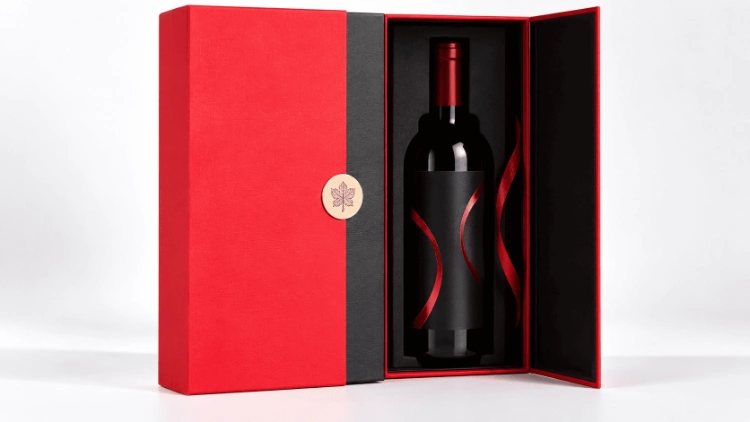
Start with the foil color. Confirm that it matches the approved reference and works with the selected paper. Then check position, edge definition, coverage, and registration.
Look at the logo from several angles. Metallic surfaces can hide small transfer gaps under direct light and reveal them under softer light. Check fine corners, narrow strokes, and areas where foil meets print.
If embossing is involved, inspect the relationship between the metallic area and the raised or recessed detail. The two should read as one intentional element rather than two slightly misaligned processes.
A useful product example is the Two-Bottle Red Wine Gift Box with bag, which uses gold foil stamping together with embossing. TopWinePack project materials also support hot stamping and embossing as available surface treatments for wine-box production.
How Should Foil Be Controlled During Mass Production?
The approved sample should become the working reference for the production run. It establishes the expected foil color, position, coverage, and relationship with the surrounding artwork.
Use first-piece inspection before the full run continues, then check later pieces for registration drift, incomplete transfer, rough edges, or surface changes. For repeat orders, retain the approved sample and foil reference.
When reviewing custom structures, the cardboard wine box range includes formats where surface paper, rigid construction, and decorative finishing must be coordinated before mass production.
What Should Be Written Into the Final Foil Specification?
The foil specification should identify the foil reference, artwork location, coverage, substrate, and any relationship with embossing, debossing, printing, or lamination. Record the approved sample when it is the acceptance reference.
The foil layer should match the final dieline and final artwork version. If the logo moves after the stamping die has been prepared, the tooling may no longer match the approved design. The same concern applies if a box size changes and the foil position was tied to a specific panel dimension.
At TopWinePack, we coordinate custom wine box structure, printing, surface finishing, and sample confirmation within the same project.
Our custom wine packaging solutions include custom wine-box formats with decorative surface treatments such as hot stamping and embossing, depending on the selected structure and design.
If the artwork already includes a metallic logo or decorative foil area, send the project details for a foil-production review before final sample approval. The paper, artwork scale, foil reference, and related finishing can then be checked together.
Conclusion
Successful foil stamping depends on the artwork, paper, tooling, and production control, not only on the metallic color selected.
Smooth papers generally give fine foil details an easier surface to work with. Textured papers can also produce strong results, but they may need more testing. Small logos and large metallic areas create different production risks, so they should not be specified in the same way.
For a custom wine box, the most reliable approach is to treat foil as part of the production specification from the start. That gives the sample and mass-production checks a clear reference.
FAQs
Q: Can foil stamping be used on textured paper?
A: Yes, but the result depends on the texture depth, artwork detail, foil, and production setup. Fine lines or small text may need additional testing on strongly textured paper before mass production.
Q: Does foil artwork need a separate file or layer?
A: It should be clearly separated from normal printed artwork, preferably as a dedicated vector layer or production file. This makes the stamping area unambiguous and helps control registration with nearby print or embossing.
Q: Why can foil look different between samples and mass production?
A: Changes in paper, foil reference, registration, transfer conditions, or surface finishing can affect the result. Keeping the approved sample and confirmed material references gives production a clearer standard to follow.