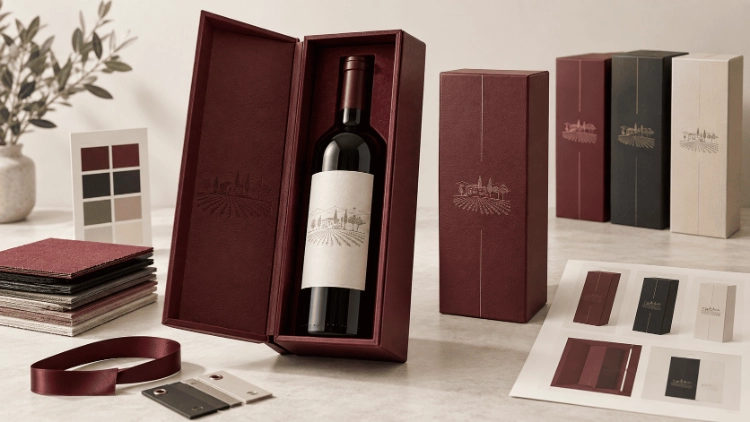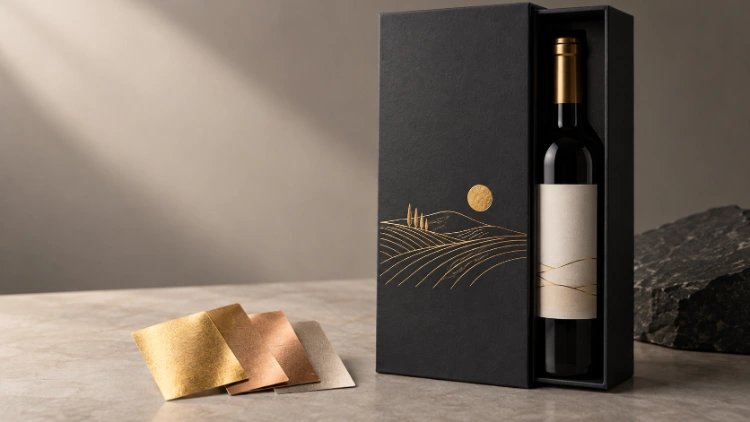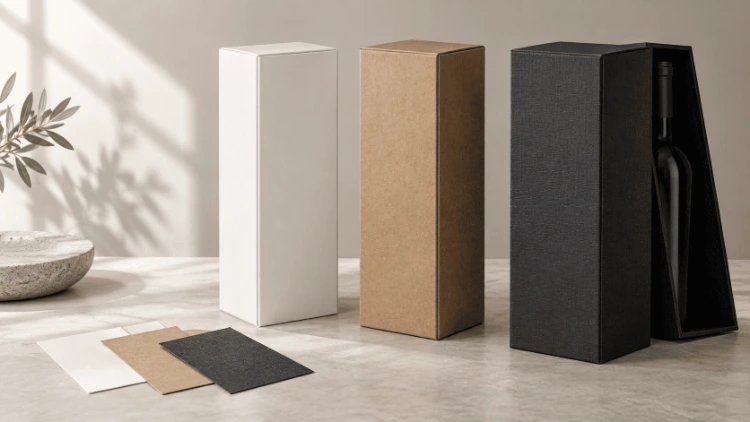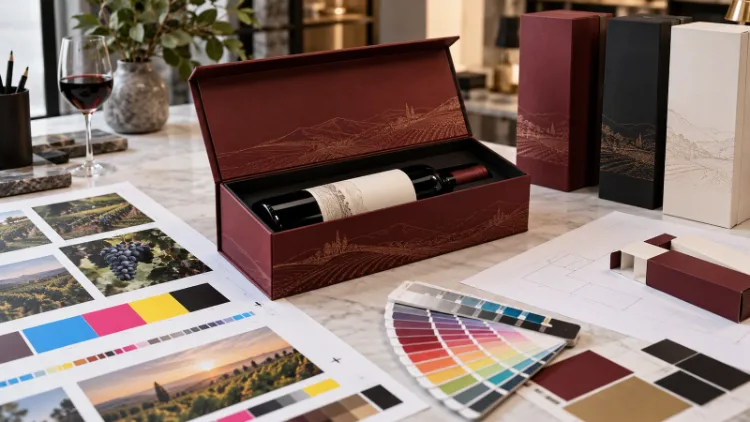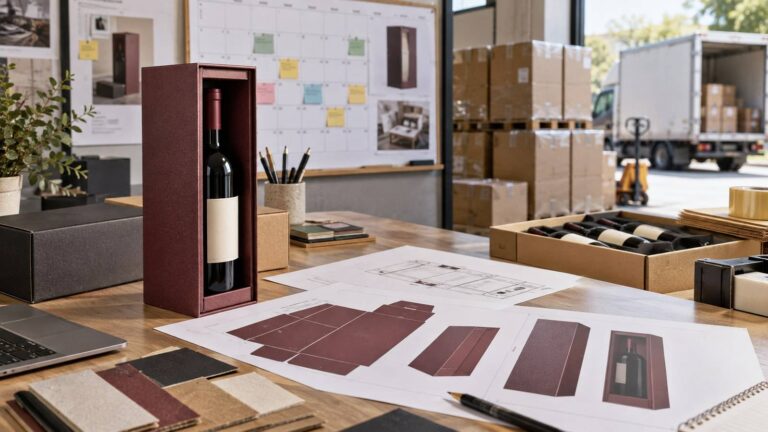

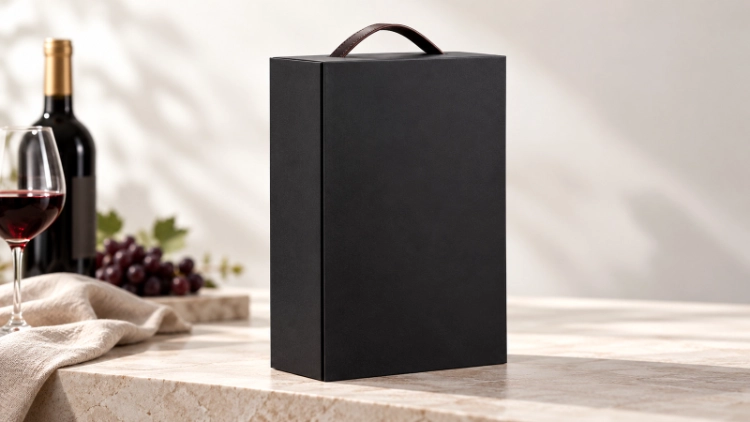
A handle that looks balanced on an empty wine box may behave very differently once the bottle is inside. Custom wine box handle design therefore starts with the filled package, not the handle material alone.
Ribbon, leather, PU, rope, and cut-out handles can all suit different presentation styles. None should be selected by appearance without checking the load path, fixing method, and intended carrying conditions. The following decisions are especially important when a custom gift box must protect a glass bottle while remaining comfortable to carry.
Why Does Handle Design Matter for Custom Wine Boxes?
A handle serves two jobs. It makes the package convenient to carry, and it introduces a point where the entire loaded weight may be concentrated. Those jobs can conflict. A narrow ribbon looks discreet, for example, but may become uncomfortable in the hand or stress the holes through which it passes.
The box structure matters just as much. A rigid base may carry a bottle securely while the panel holding the handle is comparatively weak. A foldable format also relies on correctly seated panels and secure locking or magnetic features; the handle should not pull the structure out of shape. The weight should ultimately be supported by the intended load-bearing construction rather than decorative paper or a closure flap.
Before choosing a handle, establish how the finished box will be used. A gift handed across a counter may be carried only briefly. An event package could be carried through a venue and set down several times.
Which Handle Types and Materials Work for Different Wine Gift Boxes?
Material affects appearance and grip, but it does not establish a safe load-bearing capacity by itself. The attachment and box construction still have to be assessed.
Ribbon Handles
Ribbon provides a soft, restrained finish and works well with presentation-led packaging. Width, edge construction, attachment position, and the way the ribbon passes through the board all deserve attention. Very narrow ribbon can twist or concentrate pressure at an attachment point.
Ribbon also needs a handling check after assembly. The final position should be reviewed with the actual filled bottle, not just a display mock-up.
Leather and PU Handles
Leather and PU handles create a more substantial grip and may suit heavier-looking rigid gift boxes. They can be paired with metal fittings or other secure attachment arrangements, depending on the design.
For premium presentation, check that hardware sits neatly against the box without marking its paper wrap. A visually refined attachment can still create a weak point if load is transferred into an unsupported panel.
Rope and Die-Cut Handles
Rope handles can suit casual or gift-oriented packaging, provided their ends and attachment holes are appropriately reinforced. Die-cut handles are different: the grip is formed directly in a panel, so the strength of the surrounding board and the shape of the opening become especially important.
Not every box style accommodates both options. A cut-out close to an edge can reduce the remaining material around the grip, while rope attachments may require space inside the box.
| Handle option | Typical design benefit | Main production check |
| Ribbon | Soft, discreet presentation | Hole reinforcement and loaded balance |
| Leather or PU | Structured grip and refined finish | Hardware fixing and panel support |
| Rope | Flexible carrying style | Anchor points and abrasion |
| Die-cut | Integrated appearance | Remaining board strength around the opening |
What Determines Wine Box Handle Load-Bearing Capacity?
A handle material cannot be assigned a meaningful carrying rating without the assembled box. The loaded package, fixing points, and body structure form one system.
Filled Weight and Load Distribution
The test load must include everything the customer carries: bottle or bottles, liquid, glassware if included, insert, accessories, and the box itself. A double-bottle case will generally impose more total load than a comparable single-bottle case, but the actual figures depend on the filled products and construction.
Load distribution is also important. A handle positioned away from the center of gravity may cause the package to tilt. That movement can increase stress on one fixing point and make the bottle press against its insert.
Handle Attachments and Reinforcement
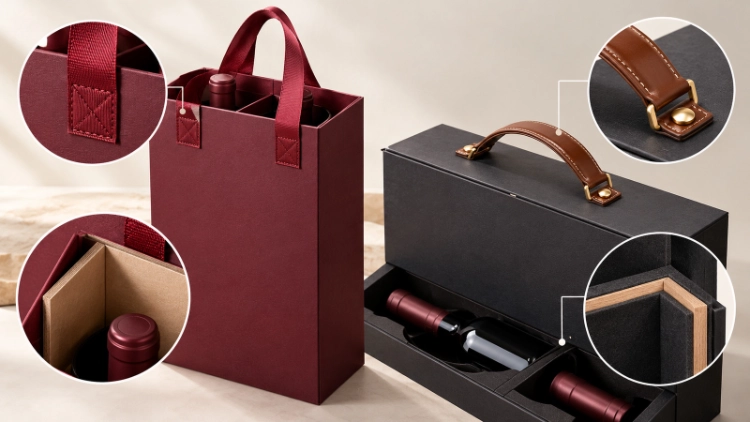
The attachment often deserves closer inspection than the handle strip. Reinforcement may involve additional board, a backing component, suitable hardware, or a revised fixing position. The correct approach depends on whether the handle passes through a side wall, mounts on a lid, or connects to an internal structural element.
Inspect for tearing around punched holes, stretching, loose hardware, and deformation where the handle meets the box. A decorative surface wrap is not a substitute for a secure fixing beneath it.
Base, Sidewalls, and Closure Behavior
A strong handle cannot compensate for a weak box base. The filled bottle needs a stable support underneath it, and the sidewalls must remain aligned while the package hangs from the handle.
Book-shaped and foldable structures require particular care. A carrying load should not pull the magnetic opening apart or shift the folds out of position. Inspect the assembled box while suspended briefly and again after it has been set down. Permanent distortion, weakened joints, or a closure that no longer aligns indicate a design problem, even if the handle remains attached.
How Does Handle Design Differ Between Single- and Double-Bottle Boxes?
For a single-bottle wine gift box with handle, the grip should sit where the loaded package remains upright and the bottle stays seated in its insert. Narrow upright formats can rotate as they are lifted. A physical sample reveals that tendency more clearly than a flat artwork drawing.
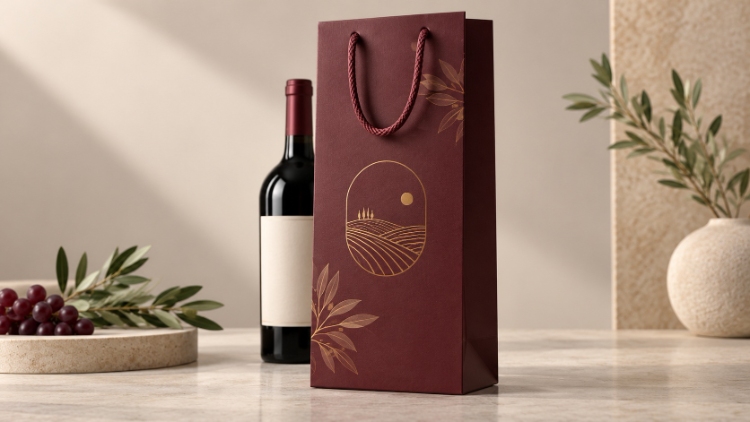
The Single Bottle Foldable Cardboard Wine Box combines a foldable rigid-cardboard structure with a ribbon grip and UV-textured printing. For a similar design, the ribbon attachment and assembled panels should be checked with the intended bottle in place. A single-bottle layout cannot simply adopt the fixing points from a wider double-bottle structure.
Double-bottle designs add another issue: unequal loading. Even if a box is intended for two matching bottles, confirm how it behaves when both are present and when packing or handling is imperfect. The inner support should prevent bottles from moving toward one side during carrying. Handle fixing points also need to work with the wider or heavier structure.
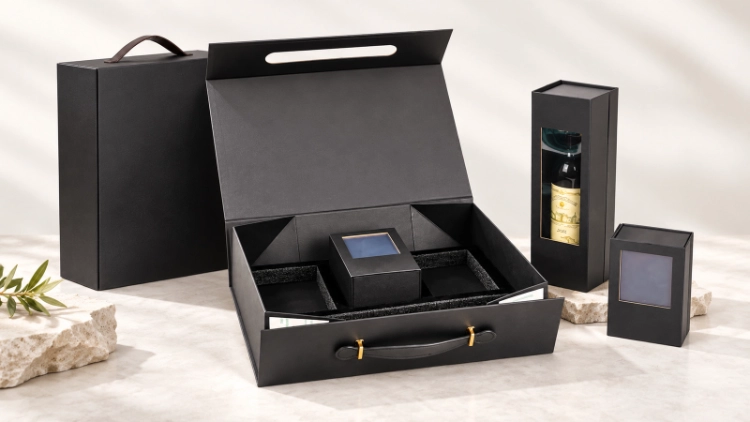
The Black Double Cardboard Wine Bottle Gift Box uses textured paper over gray cardboard in a foldable, book-shaped structure, with a leather handle and metal buckle. The grip and hardware must work with the rigid panels and the weight of both bottles. For a similar custom order, the attachment points and assembled box should be checked under the intended filled load.
How Should Handle Strength Be Checked Before Production?
Start with a sample assembled from the intended board, wrapping paper, handle, fittings, and insert.
Load the sample with the actual filled bottle or a representative equivalent. Lift it in its normal orientation, carry it over a realistic distance, set it down, and repeat the handling sequence. Examine grip comfort, balance, and whether the closure still works. Record any tearing at fixing holes, loosened buckles, stretched ribbon, or distortion around the attachment after repeated lifts.
A simple lift trial is a development check, not a substitute for a defined qualification test. If a project requires a documented load-bearing claim, the acceptance load, test method, duration, repetitions, and permitted damage must be agreed before testing. No single kilogram figure can be transferred from one handle design to every other wine box.
For distribution performance, carrying strength should also be distinguished from transit protection. A package that passes a manual lifting check may still need separate assessment of drops, vibration, or compression for its intended shipping route. Testing should match the actual packed-product configuration and distribution conditions.
What Should Be Included in a Custom Handle Specification?
Before approving the sample, document the handle material, finish, width, length, fixing position, attachment method, and any reinforcement. Record the complete loaded weight and whether the package is intended for one bottle, two bottles, or a bottle-and-accessory set. The proposed carrying orientation should be unambiguous.
The specification should also identify the box structure and the reference sample used for approval. Include observations about comfort, balance, panel deformation, visible damage, and closure movement.
Materials and finishing choices also affect the appearance of custom cardboard wine boxes, but handle design is not a finishing decision alone. Its attachment and loaded carrying behavior still need separate approval.
Bringing the Handle and Box Structure Together
At TopWinePack, custom wine packaging can be developed with specified structures, surface materials, handles, printing, and interior components. For a handled box, the most useful starting information is the filled bottle, box orientation, selected grip style, and intended carrying conditions.
A ribbon handle may be appropriate for a presentation-focused single-bottle format, while a leather handle with metal fittings may better fit another design brief. Neither option should be approved solely from a catalog image. The actual attachment and loaded handling behavior matter more than the material label.
If a project has a chosen bottle and handle direction, review the handle design and carrying requirements before finalizing the structural sample. Include the bottle weight, packaging layout, preferred grip material, and the way the completed gift box will be carried.
Conclusion
A well-designed wine box handle is part of the load-bearing package, not simply an accessory. The handle material sets the visual and tactile character; the attachment, reinforcement, box body, and filled-weight distribution determine how it performs. Approving those elements together is the practical route to reliable carrying and consistent presentation.
FAQs
Q: Which handle material is suitable for a custom wine box?
A: Ribbon can suit a lightweight-looking gift presentation, while leather or PU may suit a more structured design. Rope and die-cut handles are options for compatible constructions. Final selection depends on the filled package, fixing method, box strength, and physical sample performance.
Q: How is wine box handle load-bearing capacity tested?
A: A representative assembled box is loaded with the intended contents and checked through a defined lifting and carrying sequence. A formal capacity claim requires agreed test conditions and acceptance criteria, rather than an estimated figure based only on the handle material.
Q: Do double-bottle wine boxes need reinforced handles?
A: They may, depending on the combined filled weight, handle position, fixing method, and box construction. The sidewalls and base also need to carry the load without distortion. Reinforcement decisions should follow testing with the actual two-bottle configuration.