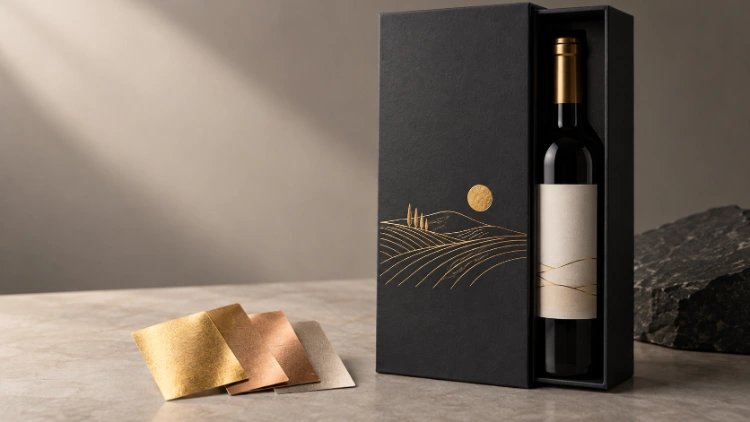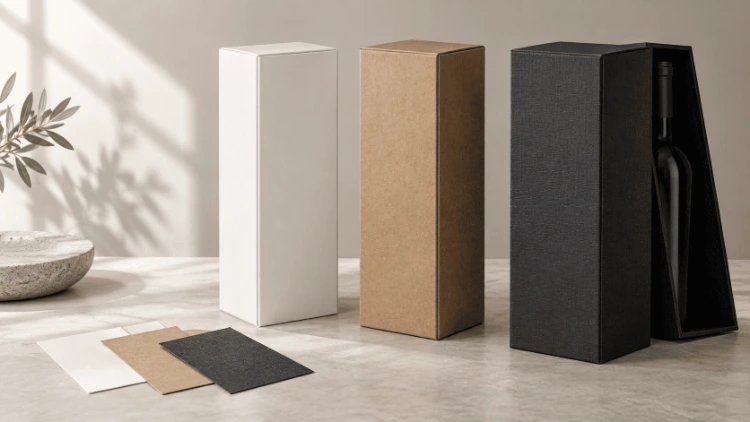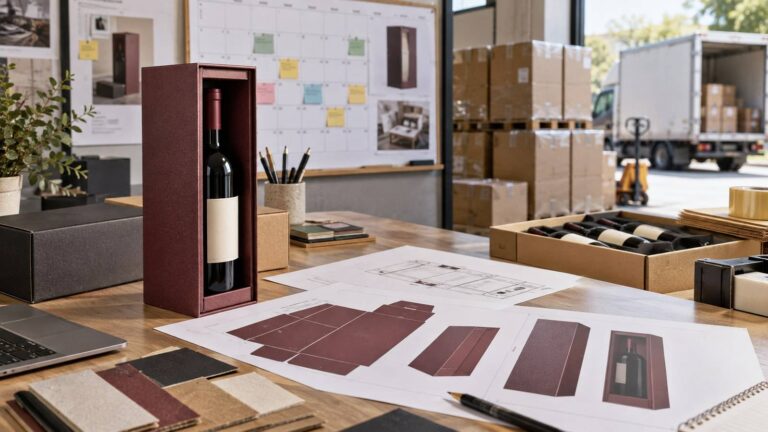

A custom wine box quotation may include tooling or setup charges that do not appear in the finished material list. Those costs can seem unclear if the project is viewed only as paper, board, printing, finishing, and assembly.
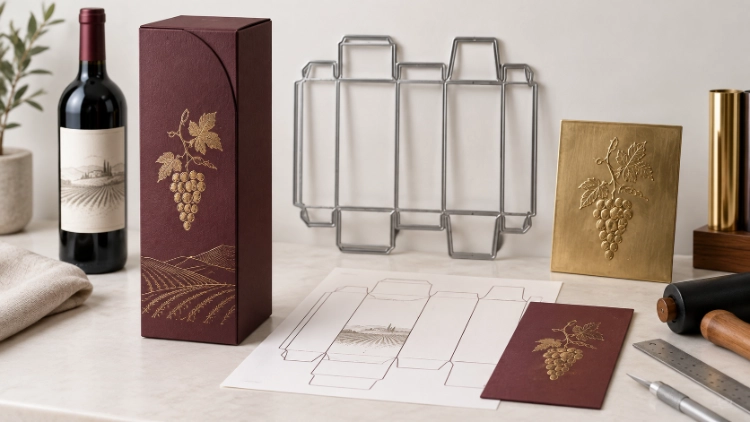
Tooling connects the approved design with physical production. Where die-cutting is used, a cutting die defines the cuts and creases for the relevant packaging components. A foil plate or stamping die defines the metallic artwork, while setup and registration determine where that artwork lands on the finished panel. Embossing and debossing require their own shaped tools. Other preparation may include file checks, alignment, trial pieces, and first-piece adjustment.
For B2B buyers, the practical questions are straightforward: which tools does the project need, which may be reused, what changes make them unsuitable, and how should tooling be handled in the quotation?
What Does Tooling Mean in Custom Wine Box Production?
Packaging tooling is a broad term for the physical tools and project-specific preparation needed to turn an approved design into repeatable production.
Reusable Production Tooling
Some production tools may be reusable when the same approved specification returns. A cutting die can sometimes be used again if the structural geometry and material route remain suitable. A foil stamping plate may also remain usable if the metallic artwork, scale, and relevant panel position are unchanged.
Reuse should never be assumed. Tool condition, process changes, revised dimensions, material changes, or new artwork can all affect whether an existing tool remains suitable.
Project-Specific Setup
Not every preparation item is a durable physical tool. File checks, press setup, alignment, trial pieces, first-piece confirmation, and finishing setup can still be required for a new production run even when some existing tooling is reused.
This distinction is useful when comparing quotations. A reusable die and a new press setup are not the same type of cost.
What Does a Cutting Die Do?
A packaging dieline defines the structural map of the relevant component. It shows panel boundaries, cut positions, fold or crease positions, and other structural features needed to convert flat material into the intended form.
Where die-cutting is used, that approved geometry is translated into a cutting and creasing tool for the applicable packaging components.
How the Dieline Becomes a Cutting Tool
The structural file should be final before the cutting tool is released. Panel dimensions, flap geometry, crease positions, openings, and other cut features need to match the approved structure.
The dieline and artwork also need to remain synchronized. Moving a printed logo may not affect the cutting die, but changing a panel size or fold position can affect both the structure and the artwork placement.
This is why structural approval should come before tooling manufacture rather than after it. A cutting tool built from an outdated dieline can no longer represent the approved box.
Why a Size Change Can Require a New Die
A cutting die is tied to physical geometry. If the box becomes wider, taller, or deeper, panel dimensions and crease positions may change. A new bottle can also lead to a revised insert, internal clearance, or outer structure.
Even a limited structural revision may affect connected panels. The previous die may no longer match the new dieline.
Two boxes that look similar in a product photo should not be assumed to share one cutting die. Reuse depends on the actual structural geometry and the production method used for those components.
What Tooling Is Used for Foil Stamping?
Foil stamping uses a prepared tool to transfer metallic or pigmented foil onto the selected surface. The tool defines the stamped artwork, while production setup controls registration and transfer.
What the Foil Plate Controls
The foil plate or stamping die defines the logo, line, icon, border, or other metallic shape. It needs to match the final approved artwork.
The tool does not define the foil color by itself. The foil reference, substrate, and approved sample remain separate parts of the finishing specification.
Why Artwork Position Matters
If a foil logo changes in size or shape, the existing plate may no longer match. A move to another panel can also affect the production layout and registration even when the logo itself remains unchanged.
Changes in stamped coverage can create the same issue. A small mark and a broad metallic area place different demands on tooling and setup.
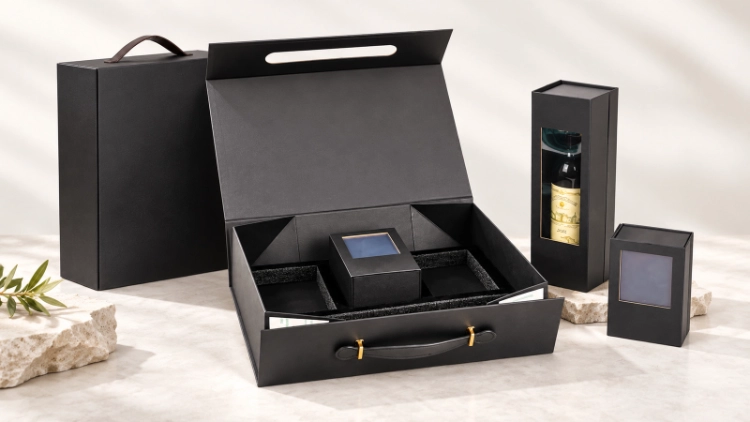
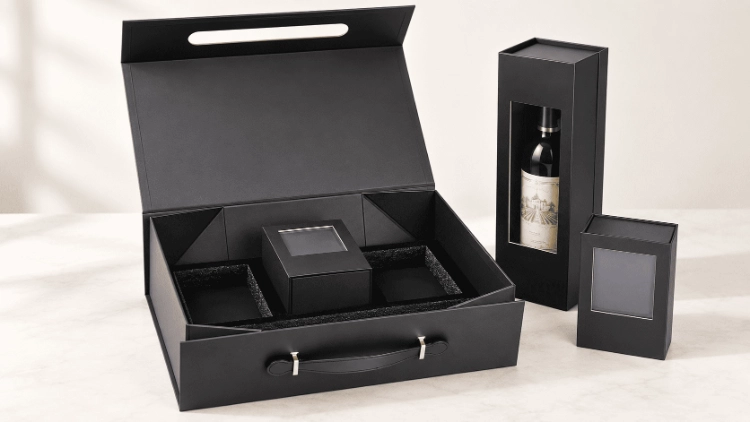
The Luxury Custom Wine Gift Box Set with Handle and Multiple Compartments provides a useful example of how structure and finishing can create different tooling requirements within one custom wine box project. Its drawer-style construction, custom dimensions, internal compartments, and finishing options such as hot stamping and embossing all need to remain aligned with the approved structural and artwork specifications before production.
What Tooling Is Used for Embossing and Debossing?
Embossing creates a raised feature; debossing creates a recessed one. These effects rely on shaped tooling that physically forms the selected paper or wrapped surface.
When embossing must align with printed artwork or foil, registration becomes part of the production check. A raised logo that sits away from the metallic or printed area will be more noticeable than a similar shift on a plain surface.
The substrate also matters. Texture, coating, lamination, and the construction under the wrap can influence the final relief. The approved sample should show the intended position and visual result before mass production.
Which Changes Usually Require New Tooling?
The clearest way to review tooling is to ask whether the physical geometry or finishing artwork has changed.
Structural Changes
A new box size, panel layout, opening style, window, structural cut, or insert geometry can affect the cutting tool used for the relevant component.
Smaller revisions can matter as well. Moving a crease line or changing a structural opening may be enough to make the earlier die unsuitable.
Artwork and Finishing Changes
A revised foil logo size, new embossed motif, changed foil position, different metallic coverage, or added debossed element can require new finishing tooling.
A printed text change may leave the cutting die unchanged, but it can still require new print preparation. Structural tooling, print preparation, and finishing tooling should therefore be reviewed as separate items.
Which Tooling Can Sometimes Be Reused?
Existing tooling may be reusable when the approved dimensions, dieline, production route, artwork geometry, and finishing area remain unchanged.
Repeat orders are the clearest example. If the same structure and foil layout return, the earlier cutting die or foil plate may still be suitable, subject to tool condition and production review.
Reusing tooling can reduce some preparation work, but it should not be treated as a guaranteed saving before the tool is checked. Wear, storage condition, revised materials, or process changes may affect reuse.
For projects that use recurring rigid or foldable structures, the cardboard wine box range provides examples of custom formats where structure and decorative finishing need to stay aligned from one production run to the next.
How Does Tooling Affect Packaging Setup Cost?
Tooling cost is usually project-specific preparation rather than material consumed in every finished box. A cutting die, foil plate, or embossing tool may therefore appear separately from the unit box price.
Whether that cost applies again on a repeat run depends on whether the existing tool is still suitable for the approved structure and artwork. Quantity economics are a separate issue, so buyers should compare tooling charges and unit pricing as two different parts of the quotation.
The custom wine box MOQ guide covers how fixed preparation and order quantity can affect unit economics without turning tooling into the same question as MOQ.
What Should Buyers Ask About Tooling in a Quotation?
Ask what tooling is required for the structure and each decorative process, whether tool manufacture is included in the quoted price, and whether existing tooling may be reused for a repeat order.
Also confirm what happens if the dimensions, logo, foil area, or embossed artwork changes. Do not assume that an existing tool can always be modified economically, or that every artwork revision automatically requires a new tool.
Ownership and storage should be clarified rather than assumed. Buyers should know whether tooling will be retained, how reuse is handled, and whether the tool needs to be reviewed before a later production run.
For a multi-SKU project, ask which tools are shared and which are version-specific. One structure may use common structural preparation while separate foil logos or embossed motifs require different finishing tools.
What Should Be Confirmed Before Tooling Is Released?
Tooling should not be released while critical specifications are still changing.
Confirm the final dimensions, dieline, bottle, insert, artwork position, foil coverage, embossing or debossing area, opening structure, and SKU plan. If the physical sample is intended to prove a tooling-sensitive detail, complete that approval before the relevant production tool is finalized.
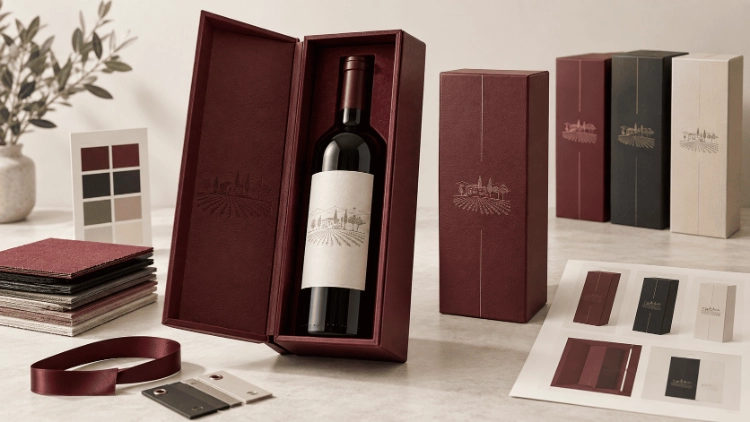
TopWinePack custom wine box projects can include rigid cardboard structures, textured surfaces, hot stamping, embossing, inserts, handles, and other specified elements. The final combination should be fixed before tooling and mass-production preparation move forward.
If the project is ready for review, send the final structure and finishing details together with the dieline, artwork, quantity, and any tooling-sensitive changes before release.
Conclusion
Packaging tooling is the bridge between an approved design and repeatable physical production.
Cutting dies control structural cuts and creases where die-cutting is used. Foil plates define metallic artwork. Embossing and debossing tools create relief. Other setup work prepares the process for accurate production.
The purchasing goal should not be to minimize tooling blindly. It is more useful to finalize the structure and finishing before tools are released, record what was made, and confirm which tools remain suitable for later orders.
FAQs
Q: Can a wine box cutting die be reused for a repeat order?
A: It may be reusable when the relevant structure, dimensions, production route, and dieline remain unchanged and the tool is still suitable for production. Reuse should be confirmed before the repeat run.
Q: Does changing the logo require a new foil plate?
A: It can. If the foil logo changes in size, shape, or stamped coverage, the existing plate may no longer match the approved artwork. A printed-only logo change may involve different preparation instead.
Q: Why is tooling charged separately from the box unit price?
A: Tooling is production preparation rather than material consumed in every finished box. Cutting dies, foil plates, embossing tools, and related setup can therefore create project-specific costs separate from board, paper, finishing materials, assembly, and packing.