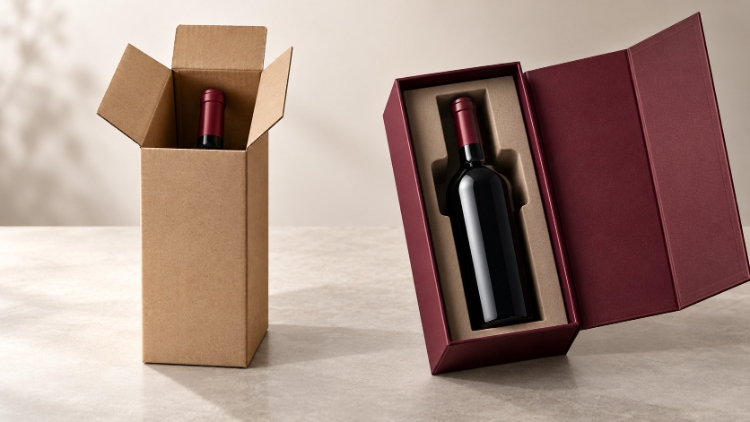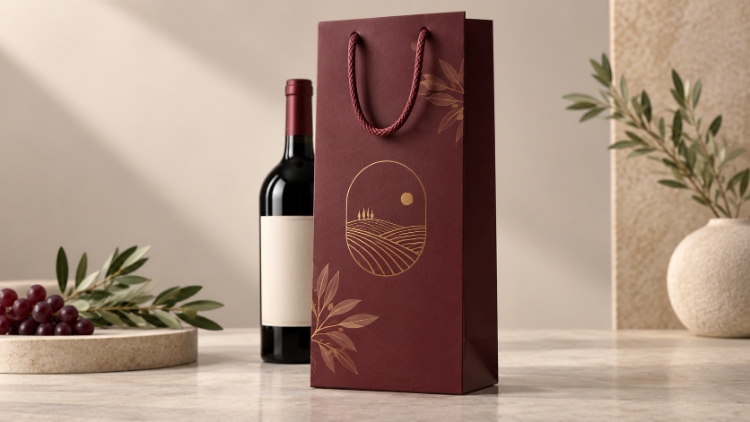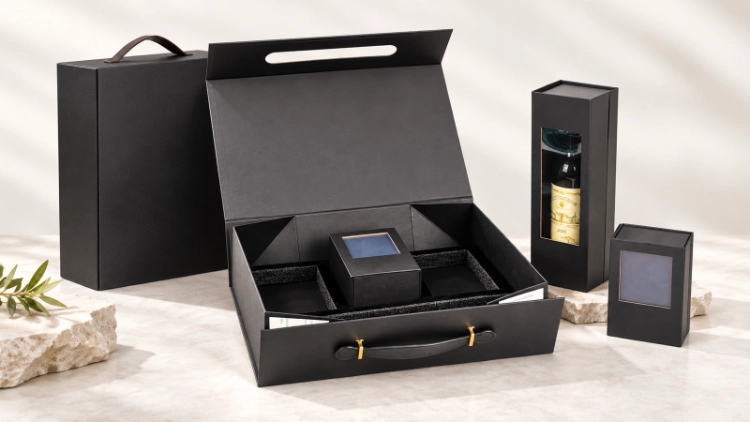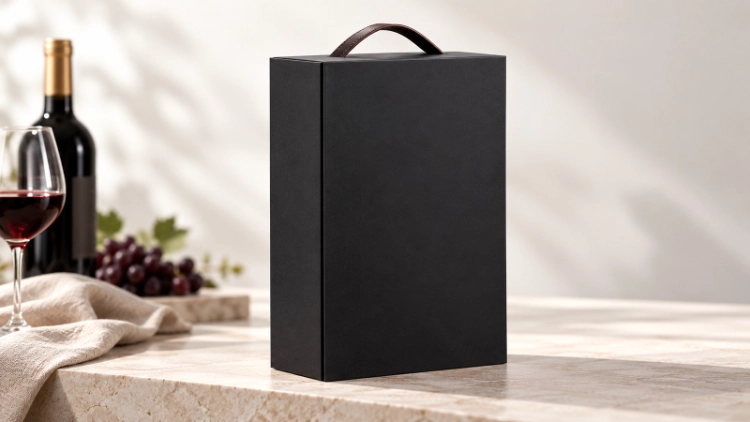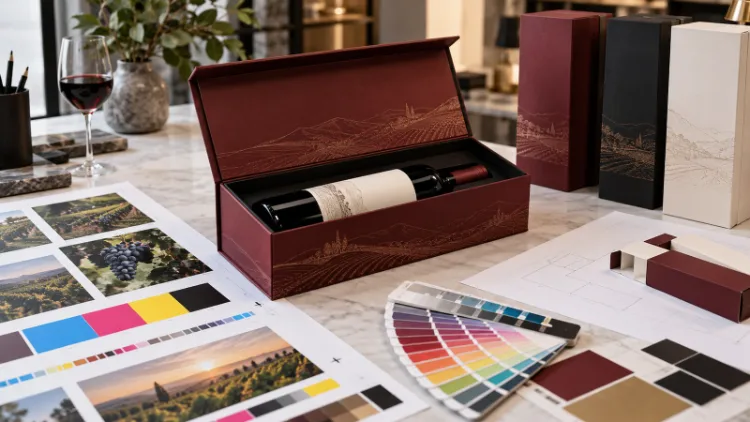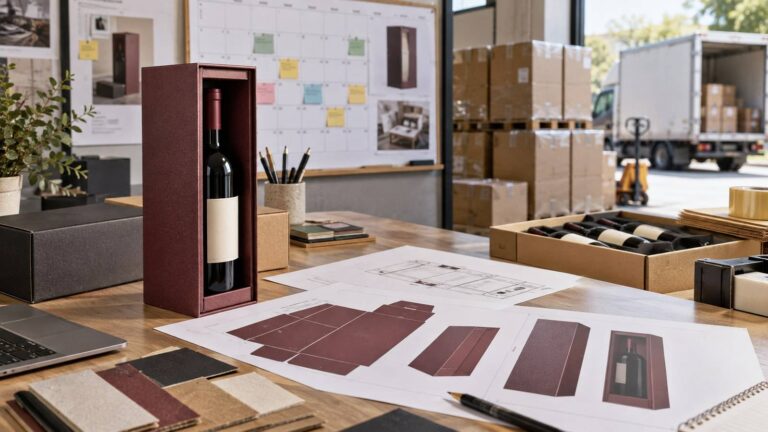

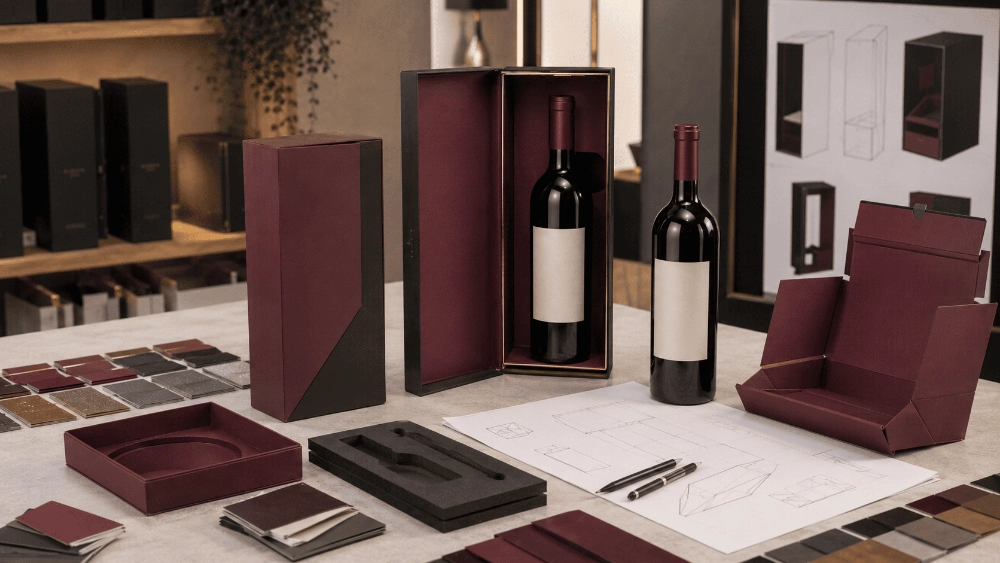
When sourcing custom wine box packaging, MOQ is often one of the first questions buyers ask: “Can I order only 100 boxes?” or “Why is 1,000 pieces more expensive per unit than 5,000?” A custom wine box is not produced like a stocked item, so quantity affects much more than paper consumption.
Before mass production, the factory may need file checks, dielines, tooling, machine setup, color adjustment, finishing setup, first-piece approval, and packing preparation. Much of this work is required whether the run is 1,000 or 5,000 pieces. The difference is how many finished boxes share those fixed costs.
The eight points below show how to plan that quantity and what to clarify before ordering.
1. Start with a Realistic MOQ Range for the Box Type
There is no universal MOQ across every packaging factory. Production method, structure, materials, printing, finishing, and assembly all influence the quantity a factory can produce economically. When comparing a custom wine box manufacturer or custom wine boxes supplier, buyers should also confirm whether the stated MOQ applies to one design, one structure, or the total project.
Typical Custom Wine Box MOQ by Project Type
| Wine Box Type | Typical MOQ | What Can Affect MOQ |
| Simple cardboard wine box | 500+ pcs | Printing and structure |
| Foldable rigid wine box | 500+ pcs | Folding structure & finishing |
| Magnetic wine box | 500–1,000+ pcs | Magnets, assembly & finishing |
| Premium rigid wine box | 500–1,000+ pcs | Board, wrapping & inserts |
| Wooden wine box | 1,000+ pcs | Wood, coating & hardware |
| Multiple artwork versions | Case-by-case | Quantity per version |
| Complex insert projects | Case-by-case | EVA, pulp, or accessories |
These figures are planning references, not universal factory standards. A custom wine box manufacturer may set different requirements according to equipment, materials, and order configuration.
2. Why Does the Unit Price Drop as Order Quantity Increases?
A custom wine box does not become cheaper only because more paper is purchased. Fixed preparation work is also distributed across more finished units.
Typical fixed preparation includes artwork and prepress checks, plate or tooling preparation, cutting-die preparation, machine setup, color adjustment, finishing setup, first-piece confirmation, and production planning. Variable costs include board, surface paper, printing consumption, inserts, finishing materials, assembly, and packing.
Unit cost can be viewed as the preparation cost allocated across the production quantity, plus the material and processing cost of each finished box.
If the same setup is spread across 1,000 boxes instead of 5,000, each unit carries a larger share of that preparation cost. Printing also creates startup waste before color, registration, pressure, and feeding become stable. At a larger run, the same type of startup loss represents a smaller share of total output.
This is why a 5,000-piece quotation can have a lower unit price without the paper itself becoming several times cheaper.
3. How Many Custom Wine Boxes Should You Actually Order?
The right quantity depends on how the packaging will be used. Ordering only for a lower unit price can create excess inventory.
New Product Launches
For a new launch, consider realistic demand, channel inventory, a reserve, storage capacity, and the expected reorder date. If the bottle or branding may still change, a very large first run can create write-off risk.
Seasonal and Corporate Gift Programs
For seasonal or corporate gifting, calculate recipients, projected sales, reserve quantity, artwork versions, and the event date. Seasonal or client-specific packaging may have little value after the campaign ends.
Repeat Retail Programs
For established retail programs, use monthly or quarterly consumption, storage capacity, reorder timing, and artwork stability. Larger runs make more sense when the structure and graphics are stable and the quantity fits a defined replenishment cycle.
4. Is MOQ Calculated Per Order or Per Artwork Version?
One common procurement mistake is assuming several designs can automatically be combined to reach one MOQ.
For example, 1,000 boxes with one design are not necessarily equivalent to 500 boxes with one design plus 500 with another. Different artwork can require separate files, plate changes, color adjustment, first-piece approval, sorting, and carton identification.
The same issue appears with several logos, languages, seasonal graphics, or regional versions. Structural tooling may be shared, but printing and finishing preparation still needs separate review. When comparing a custom wine box supplier, ask whether MOQ is calculated per design or across the complete project.
Provide the quantity for every design version, not only the grand total. For minor changes such as text or barcodes, ask whether common printing, variable digital printing, labels, or a changeable information area could reduce setup.
5. Why Do Structure, Materials, and Finishes Change MOQ?
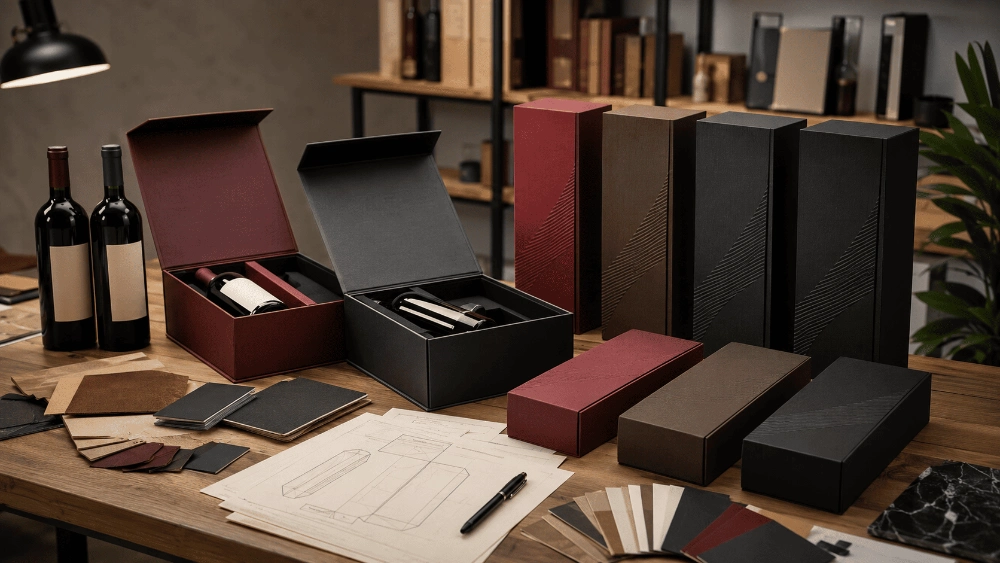
A folding format, magnetic rigid box, drawer box, and double-door gift box do not require the same preparation. Multi-part structures can add wrapping, magnets, hardware, manual alignment, and more inspection points.
Materials can create another constraint. Specialty paper, custom colors, metallic card, FSC-specified stock, EVA, molded pulp, blister inserts, ribbons, and hardware may have minimum purchasing or batch requirements.
Finishing also matters. Foil stamping, embossing, spot UV, and lamination may require plates, screens, dies, setup, trial pieces, or minimum processing charges.
Sampling is separate from mass-production MOQ. A structural or printed sample can confirm fit and appearance, but making one prototype does not mean the same economics apply to 100 finished boxes. Buyers can use the TopWinePack sample preparation guide before this stage.
6. Why Can Some Manufacturers Accept 100 Boxes While Others Start at 1,000?
The difference is usually the production method.
A short run may use digital printing, laser cutting, existing tooling, or more manual assembly. This can make dozens or hundreds of boxes possible, but unit cost is usually higher and material or finishing choices may be narrower.
Larger runs may use offset printing, dedicated tooling, automated or semi-automated converting, and repeatable finishing. Initial setup is greater, but the economics improve as output increases.
A low MOQ is not automatically the better offer. Buyers comparing a custom wine boxes manufacturer should ask which production method will be used and whether the result can be reproduced consistently at higher volume. A wine box manufacturer that accepts a very small run may be using a different production route from a wine box factory focused on repeat batch production, so MOQ should be compared together with process, consistency, and repeat-order requirements.
7. Is a Lower MOQ Always Better for Buyers?
A lower unit price can be attractive, but it should not be the only reason to increase a custom wine box order. Before moving from 1,000 pieces to 3,000 or 5,000, check how quickly the packaging will actually be used.
For a stable retail line with regular replenishment, a larger run may make sense. The same artwork, bottle, structure, and materials are likely to remain in use, so spreading production preparation across more boxes can reduce the cost per unit.
The calculation is different for a new launch, seasonal gift program, or client-specific design. Packaging left in storage may lose its value if the bottle changes, a logo is updated, legal information is revised, or the campaign ends before the stock is used. Storage space and tied-up purchasing capital also become part of the real cost.
This is why buyers should ask a custom wine box manufacturer for several quantity levels rather than only the minimum order. Comparing quotations for 1,000, 3,000, and 5,000 pieces makes it easier to see where the meaningful price change occurs.
The best quantity is usually the one that can be used within a realistic sales and replenishment cycle. A slightly higher unit price on 1,000 boxes may be a better purchasing decision than a lower unit price on 5,000 boxes if a large share of the extra packaging is likely to remain unused.
8. What Should You Send to Get an Accurate MOQ and Quote?
A factory cannot assess quantity accurately from a product photo alone. Before requesting a final MOQ and quotation, provide the information that defines the production route. For a useful custom wine box quote, a custom packaging manufacturer needs the same technical inputs that will later define production, rather than only a target quantity.
| Information | What to Provide |
| Box type | Rigid, magnetic, foldable, drawer, wooden, or other format |
| Bottle | Dimensions, profile, closure, and filled weight |
| Total quantity | Planned production volume |
| Design versions | Quantity per logo, color, language, or seasonal version |
| Material | Board, surface paper, wood, and insert preference |
| Finishing | Foil, embossing, spot UV, lamination, or coating |
| Insert | EVA, pulp, paperboard, blister, or accessory layout |
| Repeat plan | One-time campaign or recurring program |
| Timing | Required completion and delivery window |
When asking for a quote, send the same specification to every factory and ask for prices at several quantities, such as 1,000, 3,000, and 5,000 pieces. Keep the box size, material, insert, printing, and finishing unchanged between each quantity level. Otherwise, the prices are not directly comparable. Once the difference between the three quantities is clear, it is much easier to decide whether the saving on unit price is worth the additional stock.
TopWinePack Custom Wine Box MOQ
For TopWinePack custom production, the standard starting MOQ is 1,000 pieces. Structure, materials, finishes, inserts, and artwork versions should still be confirmed before the final production quantity and quotation are released.
TopWinePack custom wine packaging services cover size, structure, printing, logo, materials, accessories, inserts, sampling, production, inspection, and packing. Once these requirements are fixed, quantity can be reviewed against one consistent specification.
Final Ordering Check
Before ordering, confirm whether MOQ applies to the complete order or each artwork version, whether quantity breaks use the same specification, whether stock can be consumed before the next design change, and whether the production method supports repeat-order quality.
A useful MOQ balances unit economics, inventory exposure, sales demand, and stable manufacturing.
If you already know the box structure, artwork versions, materials, finishes, and expected quantity, send the project details to TopWinePack for an MOQ check. Ask for prices at 1,000, 3,000, and 5,000 pieces under the same specification. This makes it easier to see where the unit price changes and whether ordering the extra stock is worthwhile.
FAQ
Q: What is the MOQ for custom wine boxes at TopWinePack?
A: For TopWinePack custom production, the standard starting MOQ is 1,000 pieces. The final production condition still depends on structure, materials, finishing, inserts, and artwork versions.
Q: How many custom wine boxes should I order for a new product launch?
A: Base the first run on realistic launch demand, initial channel inventory, a reasonable reserve, warehouse capacity, and the expected reorder schedule. Do not increase the order only to obtain a lower unit price if demand is still uncertain.
Q: Is MOQ calculated per total order or per design?
A: Several designs for one MOQ do not automatically add up.If 1,000 boxes are to be printed with two logos or in several languages, the packaging supplier must be told how many pieces of each design version are required.The packaging structure remains the same, but printing, color change, sorting and packaging of the individual designs are processed separately.Ask for the MOQ and the corresponding price for each design version before you place the order.