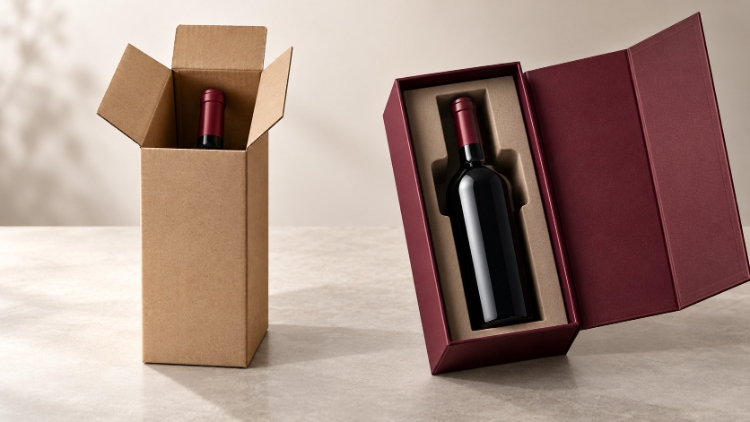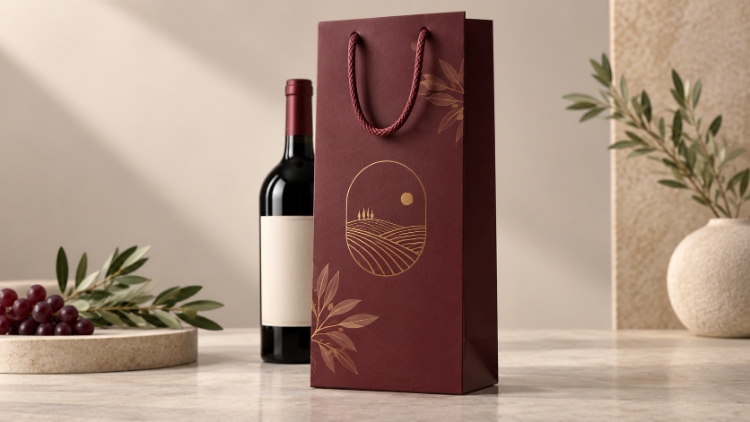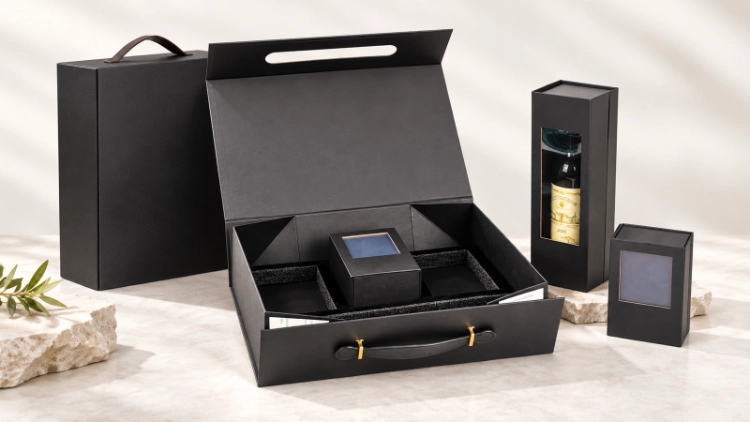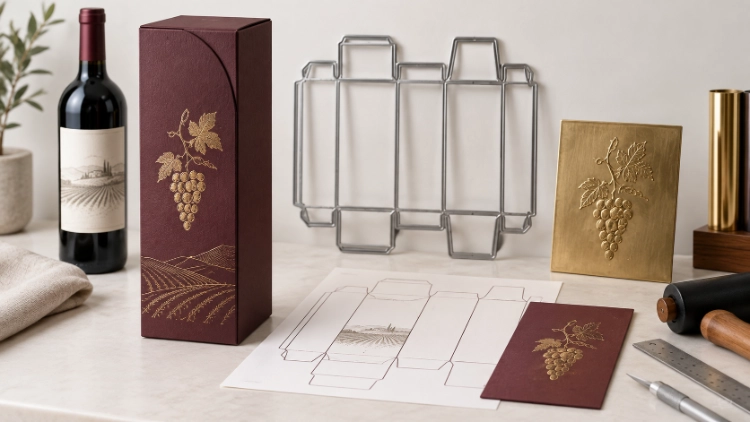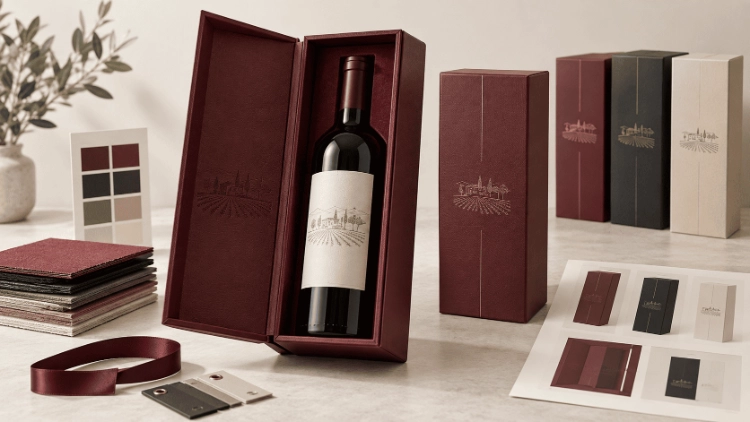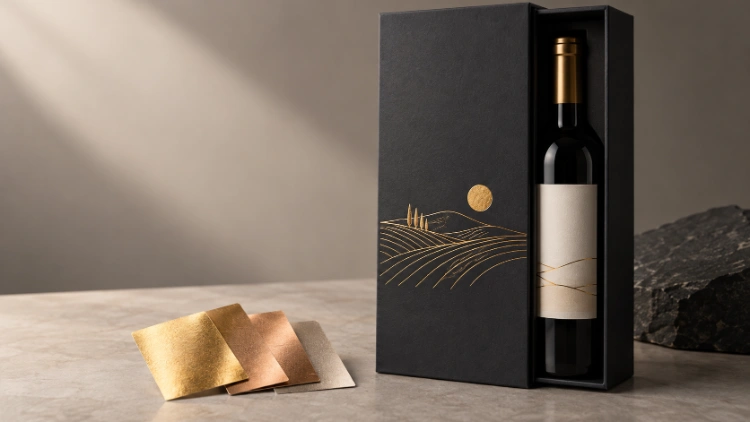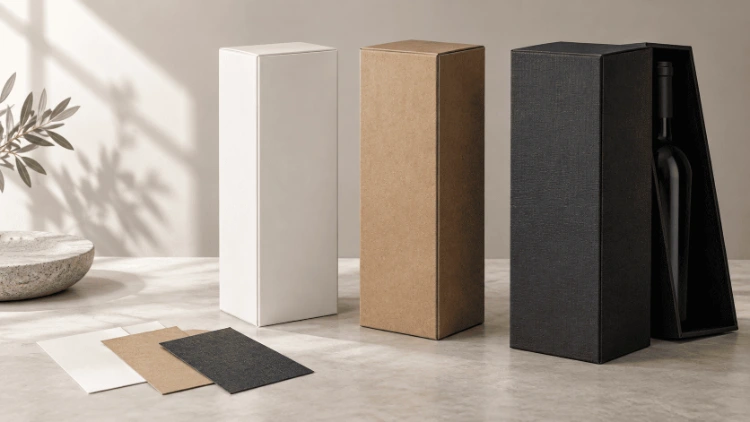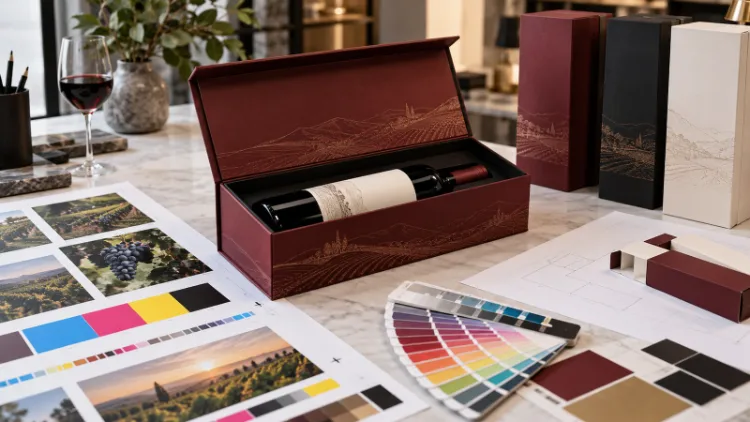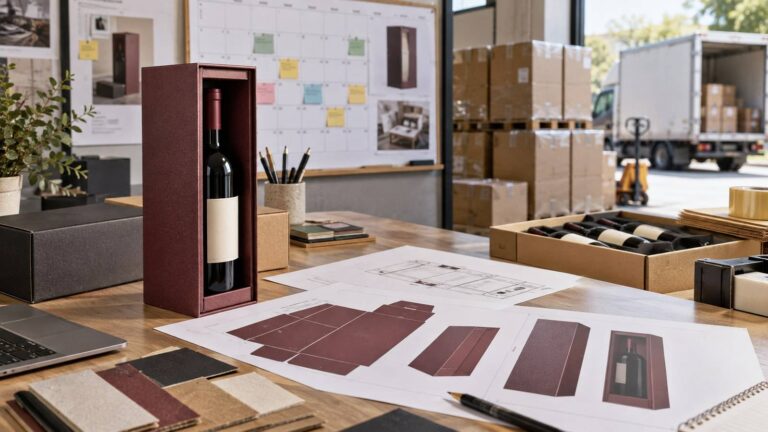

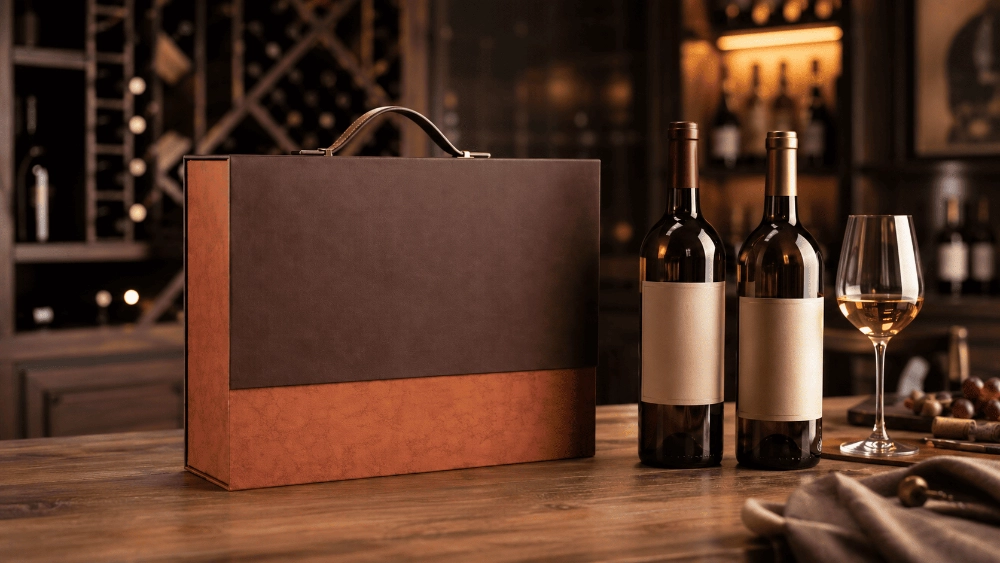
A premium package does not need wood or metal to create a strong presentation. A custom cardboard wine box can combine rigid structure, refined surface materials, fitted inserts, controlled opening, and detailed branding in one format. For many B2B projects, that balance makes rigid paper-based packaging a practical option for retail, gifting, direct sales, and limited-edition programs.
Premium wine packaging depends on board rigidity, surface paper, bottle fit, inserts, finishing, and production consistency. When these elements are specified together, cardboard can provide a strong platform for premium presentation while remaining flexible across bottles, artwork versions, and sales channels.
Why Rigid Cardboard Can Support a Premium Position
A thin folding carton and a rigid gift case may both use paper-based materials, but they perform very differently. The distinction matters when appearance, opening behavior, and bottle support form part of the product experience.
Rigid Board Creates a Stable Base
Rigid board creates a defined body that can support magnetic flaps, lids, drawers, double doors, and handled structures. Decorative paper then forms the final exterior.
Separating structural board from surface material gives designers more control over proportion, texture, and branding. The box can be built around one or several bottles while the insert follows the actual bottle profile.
Premium Value Comes from the Whole System
A metallic logo alone does not compensate for poor bottle fit, uneven wrapping, or weak closure alignment. Premium projects work best when board, paper, insert, closure, finishing, and assembly quality support the same positioning.
A restrained design can communicate more than several competing effects. Textured paper may carry most of the visual character while foil or embossing creates one focal point.
Structural Design Controls the Opening Experience
Box structure changes how the bottle is revealed and how the packing team assembles and checks the package. The structure should therefore follow both presentation goals and operating conditions.
Magnetic and Book-Style Formats
Magnetic flap and book-style formats provide a broad front surface and a deliberate opening action. They can work well when a brand needs a clear logo area or tactile outer paper.
Magnet position, flap alignment, board thickness, and packed weight still need physical verification. Smooth, repeatable closing is more important than simply increasing magnetic force.
Lid-and-Base, Drawer, and Double-Door Formats
A lid-and-base format gives direct access to the product. Drawer structures reveal the bottle gradually and require controlled clearance between tray and sleeve. Double-door structures place greater emphasis on symmetry and central alignment.
No custom wine box structure is automatically superior. The choice should follow bottle dimensions, filling method, storage conditions, display requirements, and opening sequence.
Single-, Double-, and Multi-Bottle Layouts
Single-bottle formats focus attention on one wine, while double- and multi-bottle layouts support gift sets. As bottle count increases, buyers must account for filled weight, spacing, divider strength, and access.
A custom cardboard wine box for several bottles should prevent direct bottle contact while keeping the case balanced during lifting and presentation.
Surface Materials and Finishing Shape Brand Presentation
Once the structure is fixed, the exterior determines how the package is seen and touched. The goal is not to add as many effects as possible, but to select a surface system that fits the brand and can be reproduced consistently.
Choose Surface Paper Before Finalizing the Look
Specialty paper, kraft paper, flocked paper, metallic card, and leather-textured paper can create different results on the same rigid base. Surface choice affects color, wrapping, edge appearance, and tactile character.
For color-critical work, approve the actual paper and a representative printed sample rather than relying only on a screen proof.
Use Finishing to Create Hierarchy
Foil stamping, embossing, spot UV, and selected coatings work best when they direct attention to a logo, product name, or structural detail. A pronounced paper texture may need only one controlled finishing process.
Artwork should match the current dieline, with logo scale, text, print areas, and finishing positions defined before production.
Inserts Complete the Bottle Presentation
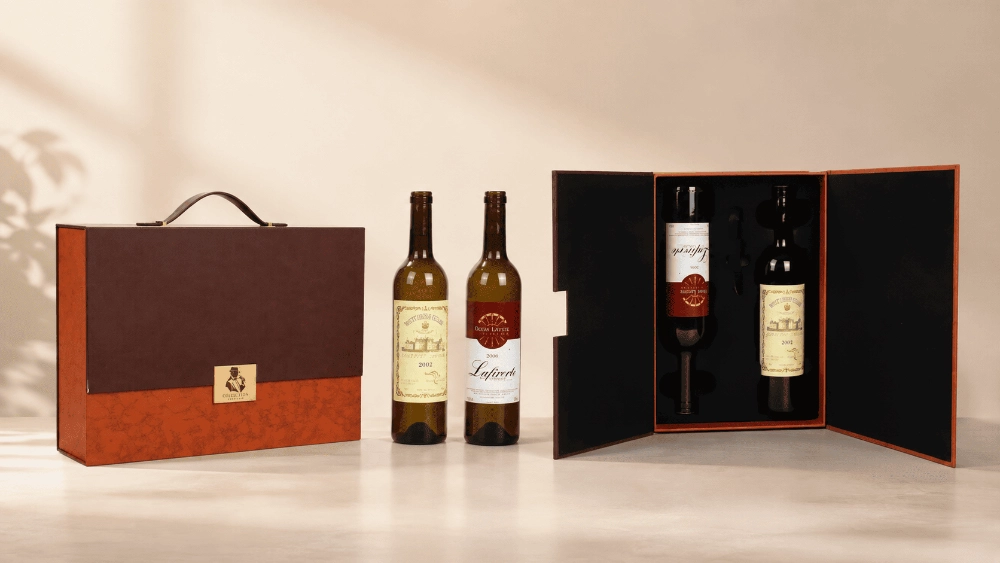
The exterior attracts attention, but the interior determines whether the bottle remains stable and easy to remove. For premium wine packaging, the insert should be planned with the box cavity.
Bottle Fit Comes Before Decoration
Develop the insert from the finished bottle, including height, maximum diameter, shoulder, neck, closure, label position, and filled weight. Bottles with the same nominal capacity can still require different cavities.
Too little clearance can hinder removal or press against labels; too much can allow movement. Buyers who need a fuller sizing process can review the guide to determining custom wine box dimensions from bottle size.
Insert Materials Change Fit and Appearance
EVA, flocked foam, molded pulp, blister, paper molds, and paperboard dividers use different wall thicknesses and support methods. The insert material should suit bottle weight, contact points, presentation goals, and the required visual finish.
Accessories Need Dedicated Space
Gift sets may include a corkscrew, pourer, card, booklet, or glassware. Each item needs a defined position that avoids bottle contact and does not interfere with closing. The complete set should be physically tested before production approval.
Custom Cardboard Formats Offer Commercial Flexibility
Rigid paper-based packaging is useful when one brand needs related formats for retail, gifting, direct sales, or seasonal campaigns. The structure can remain recognizable while graphics, inserts, and selected details change by program.
Adapt Structure to the Sales Channel
Retail may favor compact dimensions and clear front-facing branding. Gift programs may need handles, cards, or accessory cavities. Limited editions may place more emphasis on opening sequence and finishing.
For a custom wine box program, a stable structural concept can support different channel needs without forcing a full redesign. The cardboard wine box collection offers additional references for paper-based formats.
Manage Artwork Versions as Part of Production
A single box concept can support different colors, languages, seasonal graphics, or client logos. Each version still needs controlled print files, color references, and finishing positions.
This flexibility is useful for B2B programs, but more artwork versions can increase production changes, sorting requirements, and approval work.
Fit the Box to Filling and Packing Operations
Premium appearance still has to work during assembly and loading. Buyers should decide whether cases arrive flat or assembled, when inserts are installed, how bottles and accessories are loaded, and what individual protection is required.
These decisions influence labor, storage, and carton planning.
A Two-Bottle Format for Premium Gifting
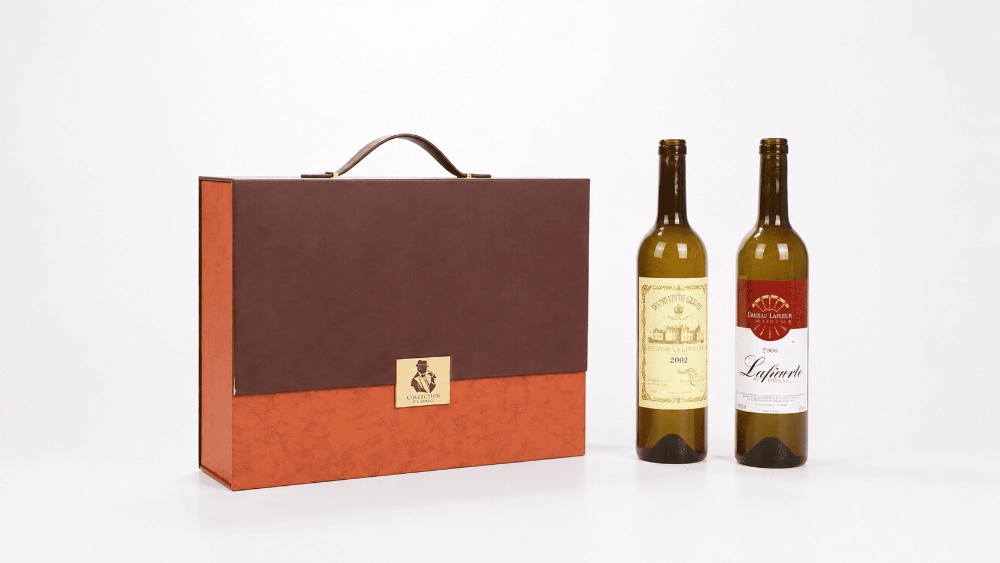
img.Custom 2-bottle Packaging cardboard wine gift box.webp
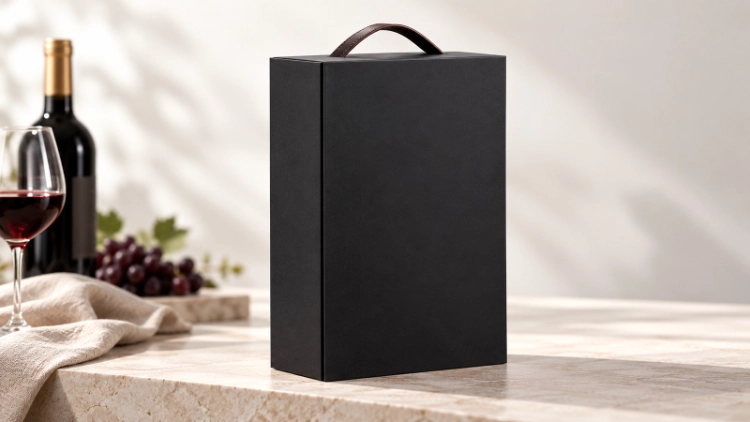
The Custom 2-Bottle Cardboard Wine Gift Box uses rigid cardboard, a textured decorative surface, magnetic flap closure, portable handle, and custom insert. Size, color, material, logo, and bottle configuration can be adapted, with single-, double-, and triple-bottle versions available.
The format shows how structure and presentation can work together. The rigid body supports the gift format, the textured exterior creates a formal surface, the magnetic flap defines the opening action, and the insert organizes the bottles. The handle adds carrying value when packed weight and fixing are confirmed during sampling.
Where Cardboard Is a Strong Project Fit—and Where It May Not Be
Cardboard can be a strong option when a project needs extensive printing, textured paper, multiple artwork versions, gift structures, or manageable package weight. It also suits brands developing related packaging across product or campaign variants.
Another material may suit a brief that requires a permanent wooden collector case, furniture-like lacquer, or a very heavy display format. Material selection should follow the intended use, bottle set, handling route, and brand position.
What B2B Buyers Should Confirm Before Production
| Item | What to Confirm |
| Bottle | Dimensions, closure, and filled weight |
| Structure | Magnetic, drawer, lid, or double-door format |
| Board | Rigidity and final construction |
| Surface | Paper, texture, color, and wrapping |
| Finishing | Foil, embossing, spot UV, or coating |
| Insert | Material, support points, and clearance |
| Sample | Structural and visual approval points |
| Packing | Flat or assembled delivery |
The custom wine box specification should be fixed before release. TopWinePack can support structure, materials, printing, logos, accessories, inserts, sampling, production, inspection, and packing for custom projects. The project should still be defined around the actual bottle, channel, and approved specification.
Final Considerations
For premium wine packaging, the strongest reason to choose a rigid cardboard format is not that cardboard is automatically cheaper or better than every alternative. Its value comes from combining structure, surface design, inserts, branding, and production flexibility in one adaptable system.
A custom cardboard wine box should begin with the bottle, sales channel, presentation goal, filling process, and quantity. Those inputs make it easier to decide which structural and visual features are commercially useful.
Share your bottle format, preferred structure, artwork, finishing, and insert requirements to develop your next custom wine packaging project. We can help turn the brief into a sample-ready specification without adding features that do not serve the final use.
FAQ
Q: Can rigid cardboard support high-value wine presentation?
A: Yes, when board structure, surface paper, finishing, insert design, and assembly quality match the intended positioning. A premium result depends on the complete packaging system rather than the material name alone.
Q: Can a custom cardboard wine box hold two or more bottles?
A: Yes. Multi-bottle layouts are possible, but bottle dimensions, filled weight, spacing, divider strength, insert design, and carrying method should be checked together before production.
Q: Which finishes work well for a premium rigid cardboard format?
A: Foil stamping, embossing, spot UV, textured paper, and selected coatings can all support a premium presentation. The best combination depends on artwork, surface material, handling conditions, and the visual hierarchy required.