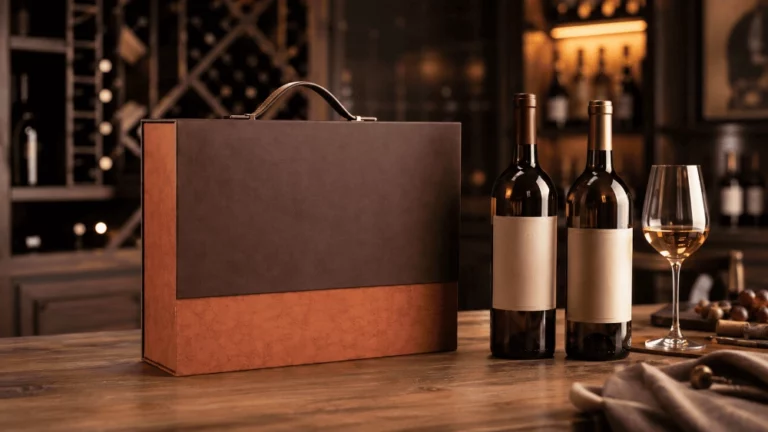

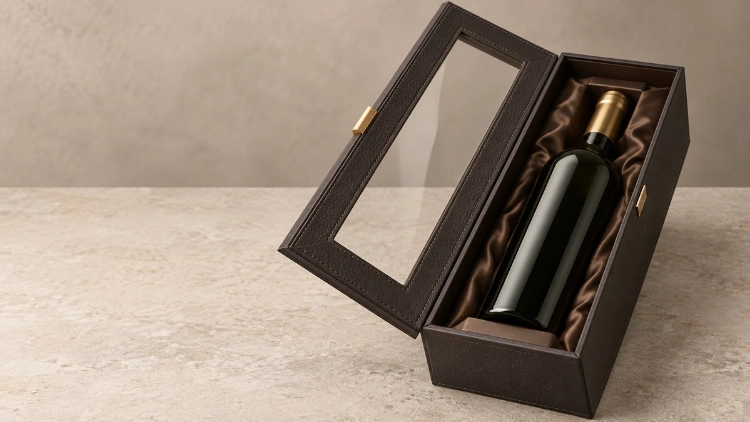
Custom liquor box packaging has to earn its place beyond the first visual impression. The box must fit the bottle, carry its weight, protect vulnerable glass areas, and open in a way that suits the spirit inside. Whiskey, brandy, vodka, liqueur, and other premium spirits come in different shapes, closures, and accessory formats. A structure designed for a tall wine bottle may not suit a short, wide spirits bottle.
The most reliable approach is to settle four decisions early: material, box structure, insert design, and surface treatment. This is the basis of practical custom spirits packaging. The guide then walks through the main options and shows how brands can compare them without assuming one format will fit every premium bottle.
Why Do Premium Spirits Need a Different Packaging Approach?
Bottle shapes are less predictable than standard wine bottles
Spirits packaging may need to accommodate broad shoulders, short necks, heavy bases, unusual closures, or a distinctive silhouette. A wide, square whiskey bottle and a tall cylindrical vodka bottle create very different layout problems. Brandy may use rounded shoulders, while a limited-edition design may add embossed glass or an oversized cap.
These details influence the internal layout. The insert must support the bottle without hiding important visual features or pressing against a fragile shoulder. The outer box needs enough room for assembly, opening, and removal. Even a small clearance change can affect whether the lid closes cleanly or the bottle shifts inside.
Weight and presentation have to work together
Heavy glass, a substantial closure, or a multi-piece gift set can change the load the box must carry. The base and side walls need to spread that load instead of pushing it into one corner. Yet the inside still has to look deliberate when the package is opened for display or gifting.
Protection cannot be separated from presentation. A thick shell will not fix an insert that lets the bottle move, and an attractive tray will not rescue a weak base or a closure that opens in transit.
The box should match the intended use
The right format depends on how the spirit reaches the customer. Retail packaging may need shelf stability and consistent dimensions. Corporate and holiday gifts may prioritise opening sequence and accessory presentation. Limited editions may require a more substantial case, while e-commerce shipments place greater emphasis on movement control and external protection.
Which Materials Are Used in Custom Liquor Box Packaging?
Grey board and specialty paper for rigid gift boxes
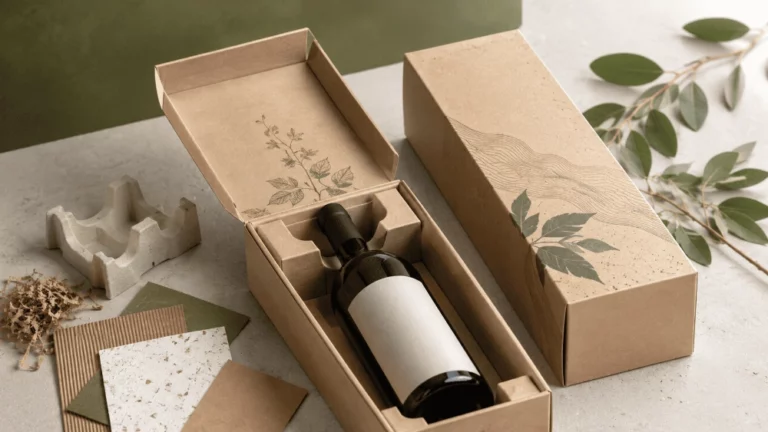
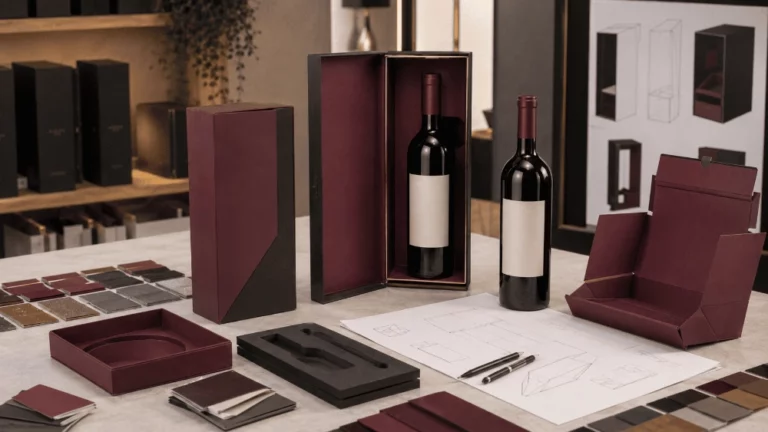
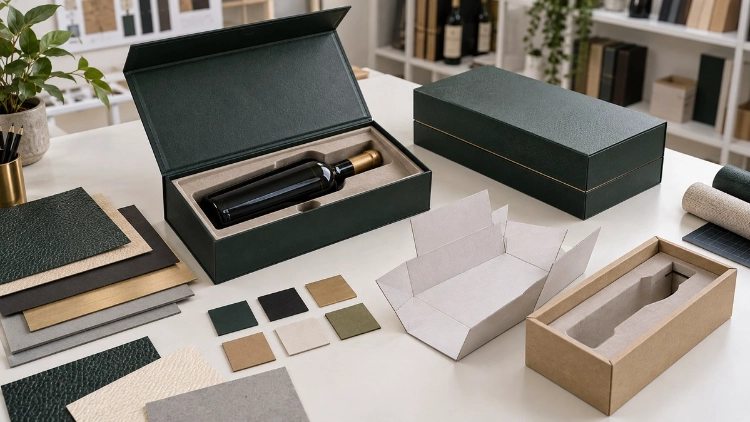
Rigid grey board gives premium spirits packaging a firm outer shell. It can be wrapped in specialty, textured, coated, flocked, or leather-textured paper, depending on the tactile effect required. The wrap also protects the board and creates a surface for colour, patterns, logos, and finishing work.
Material selection should reflect the whole structure. A heavy board may support a substantial lid-and-base box, but the corners, hinge, and bottom still need suitable construction. The surface paper also needs stable moisture behaviour and enough flexibility for clean wrapping around edges.
Corrugated and folding cardboard for lighter formats
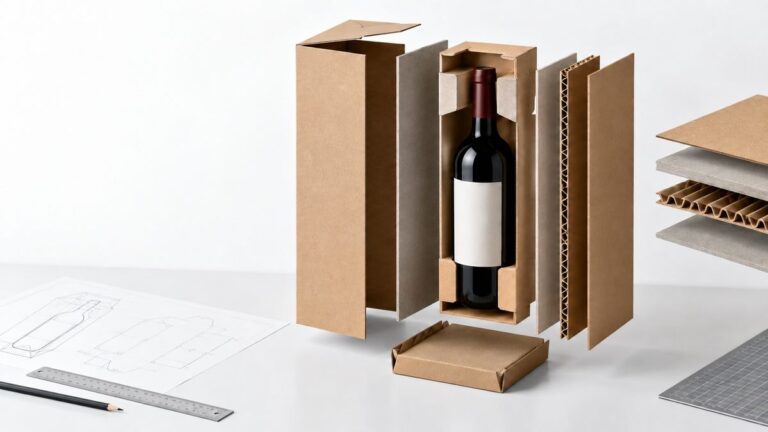
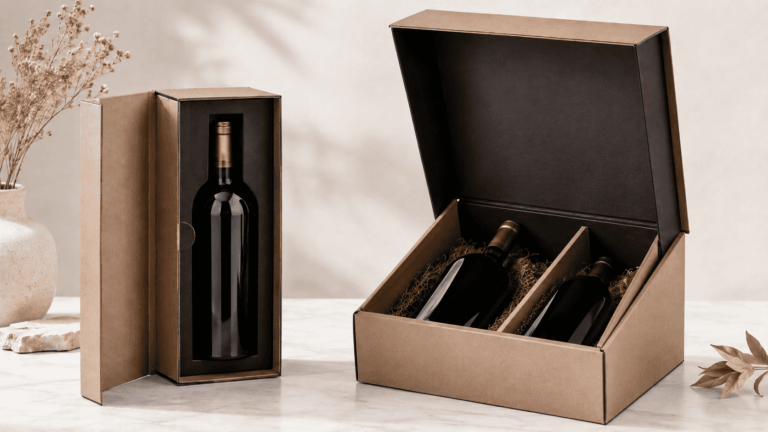
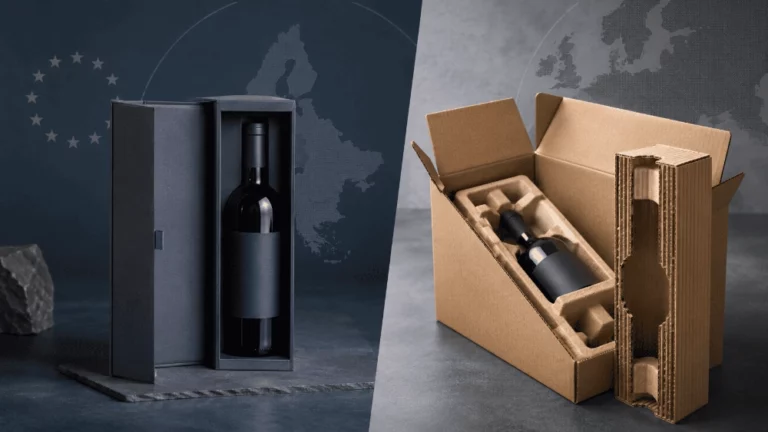
Corrugated board can be useful when cushioning, stacking, and shipping efficiency matter. Its fluted layer adds stiffness and helps absorb handling forces without making every panel solid. Folding cardboard supports compact designs, die-cut features, sleeves, and lighter gift formats.
These materials are not limited to low-value packaging. Their suitability depends on the bottle, the distribution route, the insert, and the level of presentation required. A well-designed cardboard structure can look refined when its proportions, printing, texture, and closure details are controlled.
Surface materials change tactile and visual perception
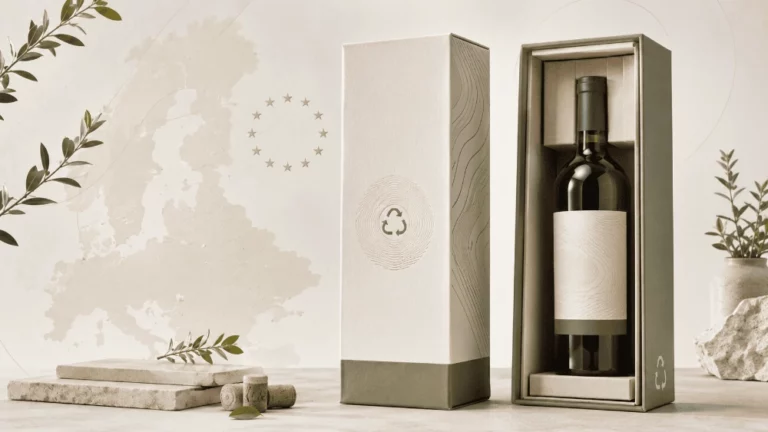
Texture is often the first physical cue a customer notices after picking up the box. Soft-touch paper, linen texture, leather-grain paper, metallic paper, and uncoated specialty stocks create different impressions. The choice should support the spirit’s positioning instead of adding unrelated decoration.
Surface material also affects production. Deep textures can change how small text or fine lines reproduce. Metallic surfaces can alter colour perception. In luxury liquor packaging, a coating may improve scuff resistance, but it can also affect recyclability or the way foil adheres. These decisions should be reviewed as part of the complete packaging specification.
Which Box Structures Work for Premium Spirits?
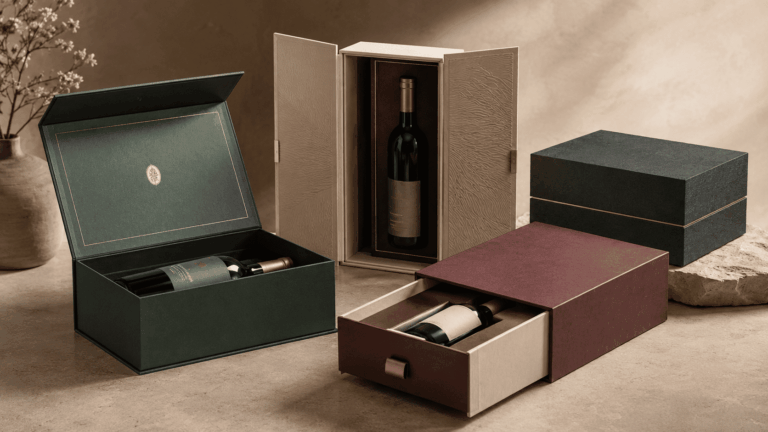
Rigid lid-and-base boxes for formal presentation
Lid-and-base boxes offer a stable shape and a clear opening sequence. They work well for single bottles, bottle-and-accessory sets, and gift formats that need a substantial hand feel. A fitted insert can keep the bottle centred while leaving the label visible when the lid is removed.
The base should be checked under the filled bottle’s weight. If the box includes a deep insert or accessory compartment, the internal height must leave enough clearance for the lid and prevent pressure on the closure.
Magnetic book-shaped and double-door boxes for gift opening
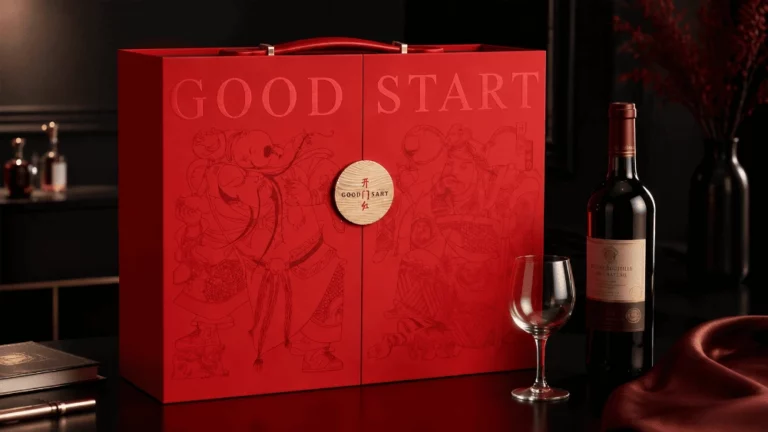
Book-shaped magnetic boxes create a front-to-back opening motion that can reveal the bottle and accessories in stages. Double-door structures can create a symmetrical presentation and provide more space for printed storytelling or multiple components. Both formats need accurate panel alignment and closure placement.
Magnets, ribbons, and hardware add weight and attachment points. The surrounding board may need reinforcement, and the closure should be tested through repeated opening and closing. The visual effect is important, but the mechanism should remain easy to use and stable when the box is carried.
Drawer and foldable structures for different handling requirements
Drawer boxes create a gradual reveal and can protect the bottle inside a sleeve. Foldable structures can reduce storage volume and shipping space, which may be useful for selected gift formats. Their performance depends heavily on creasing, locking tabs, and the strength of glued joints.
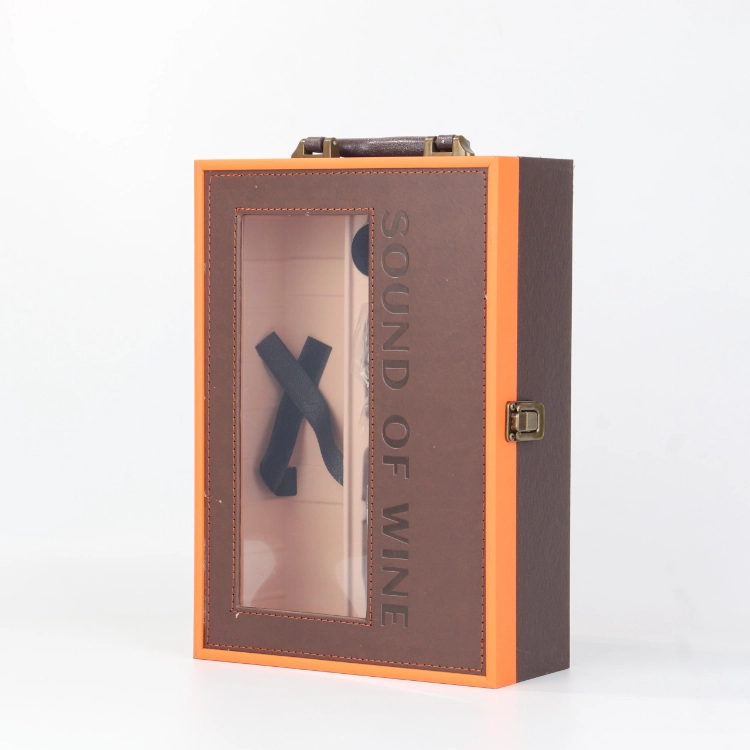
For a format that combines a premium exterior with a transparent viewing element, brands can consider a custom luxury leather wine gift box with PVC transparent window when label visibility is part of the presentation goal. The same structural logic can be adapted to a spirits bottle only after its dimensions and weight have been checked.
How Do Inserts and Closures Affect the Packaging Experience?
EVA, paperboard, pulp, and velvet-lined inserts
EVA can be shaped for close-fitting support around unusual bottles and accessories. Paperboard inserts can support a paper-based structure and create clean compartments. Molded pulp may suit brands seeking a fibre-based internal component, while a velvet-lined tray can add softness and contrast in a presentation box.
The best insert is the one that controls movement while preserving the intended display. It should support the base, bottle body, shoulder, or neck as required. Cut-outs must be large enough for removal but not so loose that the bottle rocks inside the box.
Bottle neck and shoulder support should match the bottle
A broad bottle may need lateral restraint near the shoulders. A tall bottle may require a neck support to prevent tilting. A heavy cap can shift the centre of gravity, which makes the upper section of the insert more important. These details should be checked with the actual bottle rather than a simplified drawing.
Closures and accessories add functional detail
Magnetic closures, ribbons, handles, windows, and metal hardware can make the package easier to open or carry. They also introduce attachment points, added weight, and potential alignment issues. A handle should transfer lifting force into a reinforced part of the structure. A window should not remove necessary wall support or leave the bottle exposed to contact.
Which Design Options Create a Premium Spirits Look?
Foil stamping and embossing for brand marks
Foil stamping can highlight a logo, border, or small pattern. Embossing adds a raised or recessed effect that customers can feel. Both techniques work best when the artwork allows enough space for clean registration and the surface paper is suitable for the process.
Overusing decorative effects can make a package difficult to reproduce consistently. A restrained logo treatment, a controlled contrast, or a single tactile panel may communicate more clearly than several competing finishes.
Colour, texture, and contrast should follow brand positioning
Dark blue, burgundy, black, deep green, metallic accents, and natural paper tones are common choices for premium spirits, but colour alone does not establish a quality position. Proportion, edge finishing, typography, and material texture also influence the result.
The exterior should make the bottle easy to identify while leaving enough visual space for the brand mark and required information. If a box contains several components, a controlled colour system can help the opening sequence feel organised.
Windows and accessories should support the product story
A transparent window can reveal the bottle shape or label before opening. A dedicated area for a glass, corkscrew, tasting card, or other accessory can turn the package into a complete gift set. Each added component increases the need for accurate layout and protection, so it should have a clear purpose.
What Should Be Confirmed Before a Liquor Box Enters Production?
Record bottle dimensions, weight, and quantity
The specification should include maximum height, width, depth, shoulder profile, neck diameter, closure height, filled weight, and the number of bottles per box. Accessories should be measured separately. If several bottle shapes will use one outer box, each insert version should be checked.
Confirm structure, finish, insert, and closure together
A quotation or production brief should identify the board type, surface paper, opening style, insert material, closure, window, handle, printing, foil, embossing, and packing method. These elements affect one another. Changing the insert can alter internal height. Adding a handle can change the reinforcement plan. Switching from paperboard to a rigid wrapped structure can affect folding and assembly.
Approve a physical sample and bottle-fit check
The sample should be reviewed with the real bottle whenever possible. Check the opening force, fit, label visibility, movement, corner alignment, insert removal, and the condition of the surface after handling. Colour approval should be completed with the selected material because the same artwork can look different on coated, textured, metallic, or uncoated paper.
For broader information about custom packaging development, the TopWinePack wine packaging team can review the bottle details and intended use before a structure is finalised. The final design should be based on a tested physical sample rather than a digital rendering alone.
Conclusion
Custom liquor box packaging performs best when material, structure, insert, closure, and decoration are planned as one system. Rigid grey board may create a substantial shell, corrugated or folding cardboard may support lighter or transport-oriented formats, and specialty papers can change the tactile impression. None of these choices should be separated from the bottle’s shape, weight, and handling conditions.
Premium spirits packaging does not need every available finish. It needs a controlled combination of protection and presentation that remains practical during production, storage, gifting, and transport. Brands preparing new custom liquor boxes can send the packaging brief for review with bottle dimensions, target quantity, accessory requirements, and preferred opening style.
FAQs
Q1: What materials are commonly used for custom liquor box packaging?
A:Common options include rigid grey board with specialty paper, textured or leather-textured paper, folding cardboard, corrugated board, and selected wood formats. The right material depends on bottle weight, structure, presentation goals, and handling conditions.
Q2: Which box structure is suitable for premium spirits?
A:Rigid lid-and-base, magnetic book-shaped, double-door, drawer, and selected foldable structures can all work. The choice depends on bottle geometry, opening experience, accessory layout, protection needs, and storage or shipping requirements.
Q3: How should inserts be designed for whiskey or brandy bottles?
A:The insert should match the bottle’s base, body, shoulder, neck, and closure while limiting movement. EVA, paperboard, molded pulp, and velvet-lined supports can be considered after the actual bottle dimensions and weight are confirmed.