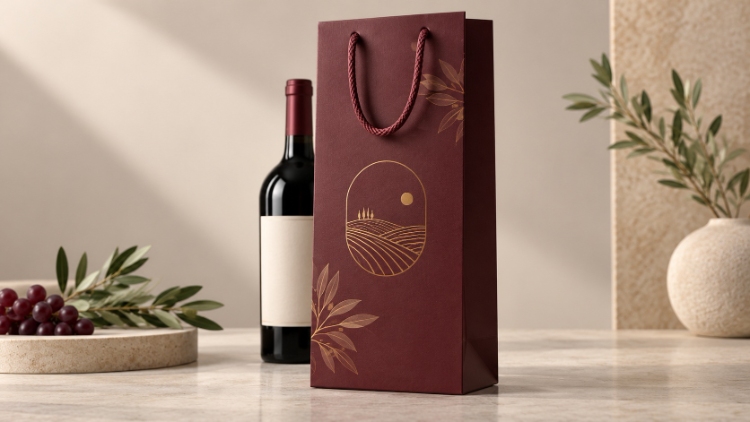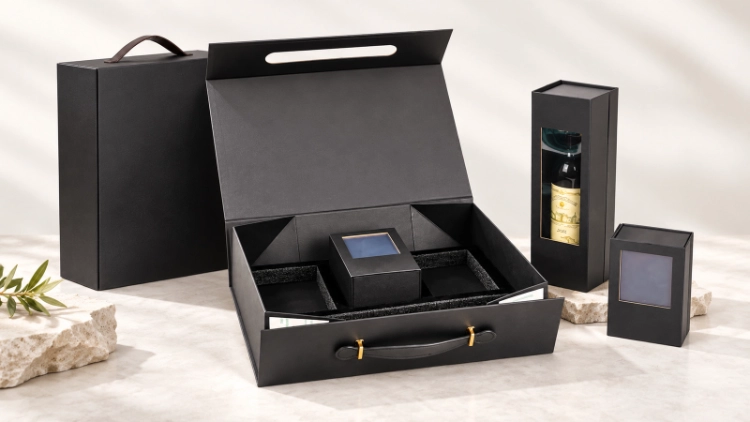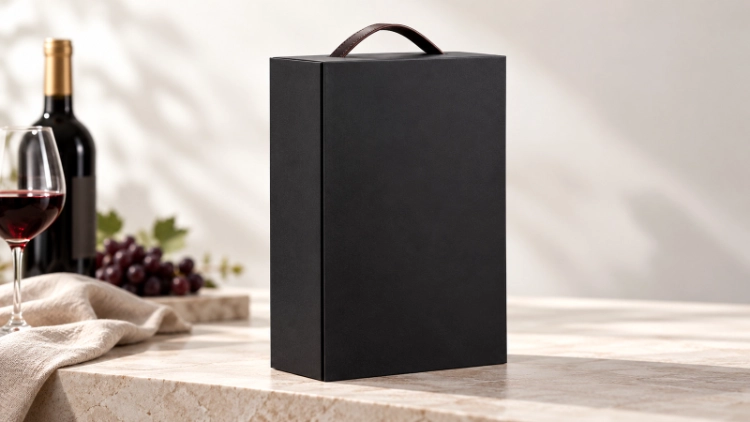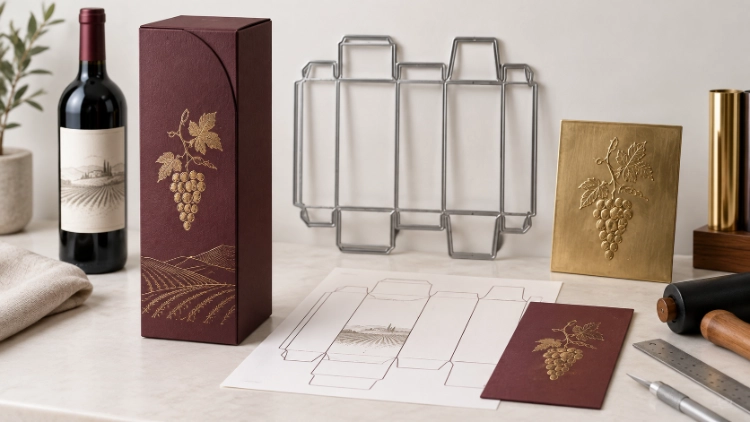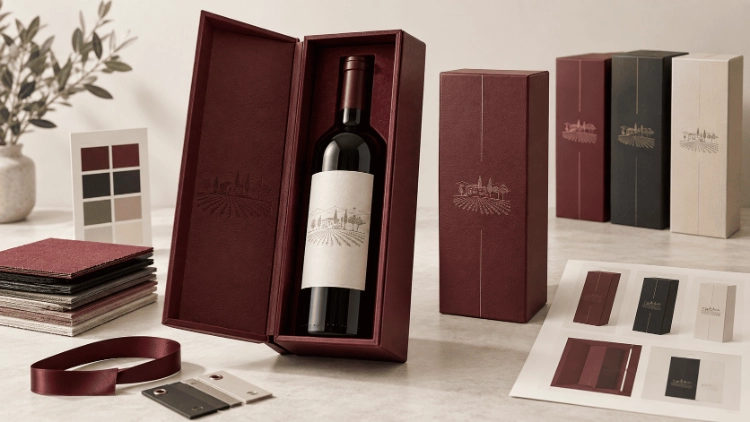

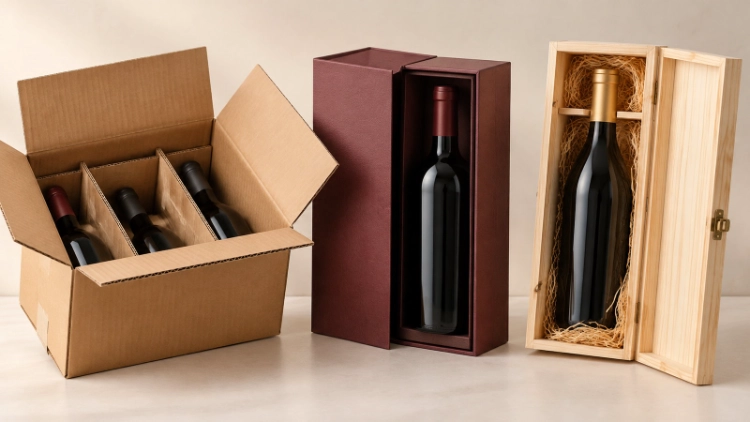
Wine club orders usually depart from a winery inside corrugated cartons. These boxes are built to keep multiple bottles separated. A buyer getting wine after a tasting might select a single-bottle gift box instead. The packaging needs shift depending on the specific situation. When shipping items, bottle separation and carton strength are highly important. However, a gift bought in person requires a nice visual finish. It also needs an easy way to carry it around.
These various uses show why custom wine packaging for wineries relies on multiple materials. Corrugated board serves as a popular option for delivery cartons. Meanwhile, rigid paperboard works well for presentation boxes. Wood provides another great choice. This is especially true for collector releases. A sturdy gift box might still require a corrugated outer carton during transit. Furthermore, its internal insert has to secure the bottle firmly. This remains true no matter what exterior material is selected.
What Makes Material Selection Different for Wineries?
Think about where the box will be used. A winery may pack club allocations at a fulfilment bench, sell a single bottle at the tasting-room counter, or prepare a limited release for a collector. Each setting places different demands on the package.
At the counter, buyers notice the finish and how comfortably the box carries. In a parcel network, the bottle faces repeated handling. A collector’s box has another brief: it needs to hold its shape and present the bottle well when opened. Those differences affect board grade, internal support and dimensions.
Material names alone tell you little about performance. A corrugated carton with the wrong divider can let bottles knock together; a rigid box with a shallow base can buckle under its contents. Check the full construction, from board thickness and flute profile to insert fit and closure.
Which Three Materials Are Commonly Used for Winery Packaging?
1. Corrugated Board for Shipping and Recurring Orders
Corrugated board uses flat liner papers with a fluted layer between them. The middle layer spaces the liners apart, giving the sheet stiffness and some cushioning. Single-wall and double-wall boards use different liner and flute combinations. The right grade depends on bottle weight, case size, stacking and delivery route. The FEFCO explanation of corrugated board construction shows the basic structure.
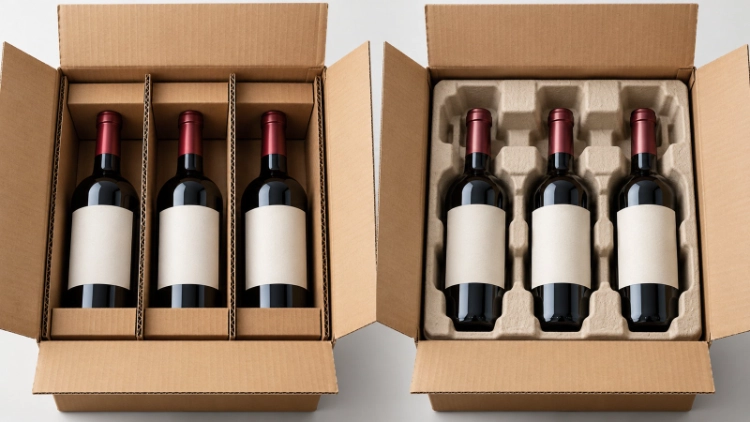
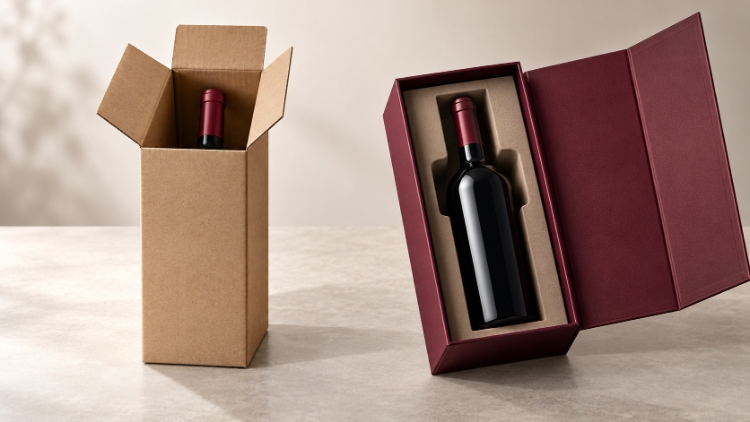
Wineries use corrugated wine boxes for storage, fulfilment and direct delivery. A one-bottle shipper may use a fitted insert; a multi-bottle case usually needs dividers to stop glass knocking against glass. The base carries the combined load, so check the corners and closure too, especially when cartons will be stacked.
Printing and die-cutting let the carton carry winery branding, but print does not keep the bottle in place. Check the bottle’s height and widest diameter, then confirm the closure and filled weight before the insert is cut. TopWinePack’s custom corrugated wine shipping boxes suit projects built around dispatch or case handling.
Flat-packed blanks save storage room between bottling runs. The trade-off is assembly time: a complicated divider layout can slow staff down even when the cartons take up little shelf space.
2. Rigid Paperboard for Retail and Premium Gift Packaging
Rigid paperboard boxes start with a thick core, often greyboard, wrapped in printed or decorative paper. The core gives the box its shape; the wrap supplies color and texture. Specialty paper, kraft paper and textured stocks are options, but choose the wrap after settling the structure.
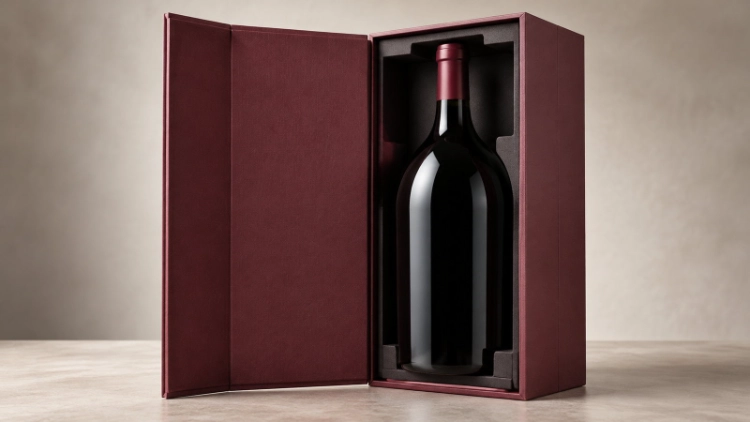
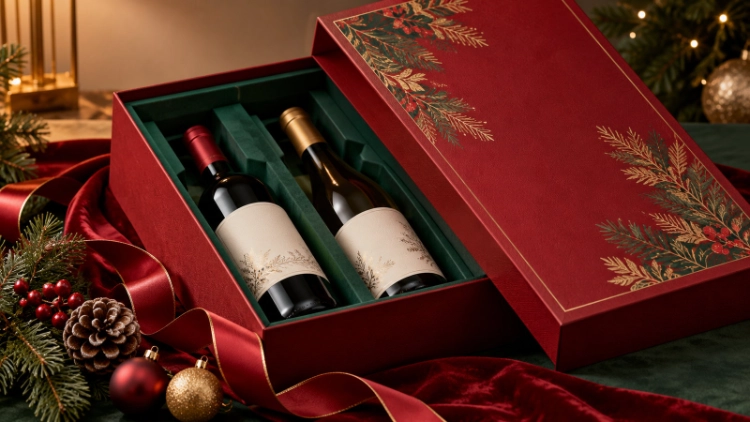
A rigid wine box is often chosen when the packaging remains part of the gift. Magnetic closures, book-style lids and lid-and-base constructions create different opening experiences. For multi-bottle sets, the base and dividers must carry the contents without shifting. Add a compartment for glasses or a corkscrew only after checking the space the bottles need.
Foil stamping or embossing gives a winery mark more presence. Debossing and spot UV create other effects, especially on textured paper. The finish has to suit the stock and artwork. Foil placed too close to a fold or poorly registered print makes defects easier to notice.
Rigid boxes take up more room than flat-packed corrugated cartons and often need more assembly. They are usually better treated as presentation packaging. If a gift box will travel by parcel, place it inside a protective shipper instead of expecting it to do both jobs. TopWinePack’s cardboard wine box range includes rigid-cardboard and corrugated options; confirm the construction before ordering.
3. Wood for Collector Editions and High-Value Gifts
Wooden wine boxes occupy a narrower part of the range. Visible grain, solid panels and metal hardware give a commemorative release or collector gift a keepsake quality. The case also weighs more than a paper-based box, so decide the bottle count and interior layout before working on the exterior.
Inside, the bottle needs a proper seat. A fitted insert can cradle its base and body; velvet or covered foam softens the contact points. One TopWinePack wooden box example has a high-gloss lacquer finish, velvet lining, custom-molded EVA inserts and gold-tone hardware. It is specified for up to four standard bottles, not every bottle format. See the custom luxury wooden wine box.
Wood changes the freight calculation. The case is heavier, and hinges or latches add weight and assembly work. Compare finished weight and storage space with the presentation value. That trade-off can suit a limited release; it is less practical for weekly club shipments.
How Do the Materials Fit Different Winery Sales Channels?
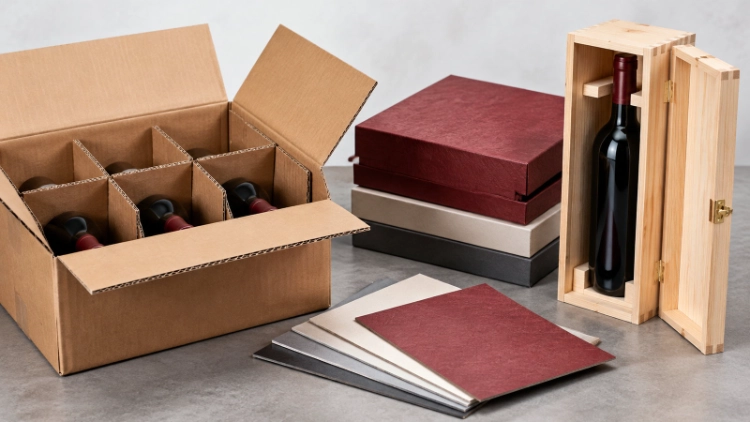
Wine-club orders are packed repeatedly, so a carton that is easy to erect and load matters alongside its board grade. At a tasting-room counter, buyers handle the box before purchase; finish and carrying comfort are more visible. For winery gift packaging, a collector edition puts more emphasis on the opening and how the bottle sits inside.
| Typical winery use | Packaging starting point | What to check |
| Wine-club or parcel orders | Corrugated board | Bottle restraint, dividers and carton grade |
| Tasting-room gifts | Rigid paperboard | Finish, closure and carrying comfort |
| Collector release | Wood | Interior support, hardware and finished weight |
| Gift box sent by parcel | Rigid box inside corrugated shipper | Fit and protection of the outer carton |
These are starting points, not fixed pairings. Premium wine can travel in corrugated packaging, and a rigid gift box can sit inside a shipper for protection. If one SKU serves both a tasting room and online orders, design the presentation box first, then decide whether it needs a separate shipper. See TopWinePack’s wine industry packaging solutions.
Which Components Should Be Specified Separately?
Write the specification in separate parts. A rigid box might use a greyboard core, specialty-paper wrap and EVA or paper insert. A corrugated shipper uses liners and dividers; a wooden case may need a fitted tray and metal hardware. This makes individual changes easier to manage.
The insert should support the bottle, not simply fill empty space. Paperboard partitions keep bottles apart in a case; shaped EVA holds a bottle in a gift box; a velvet-covered tray finishes a wooden case. Check that the bottle lifts out cleanly and the insert stays seated when carried. A neat drawing is not enough.
Surface treatments also affect disposal. Foil, film lamination, plastic windows, magnets and mixed-material inserts may be handled differently from plain paperboard in local recycling systems. FSC notes that paper and cardboard packaging can be recyclable, but the result depends on construction and local collection rules. Kraft-colored paper alone is not proof of sustainability. Check the FSC guidance on paper and packaging before making environmental claims.
What Should Wineries Check Before Approving Custom Packaging?
Before sampling, send the supplier the actual bottle or a dimensioned drawing. Include bottle count, filled weight and label position, along with the sales or shipping route. If glasses or a corkscrew share the box, show their dimensions too. ‘Strong enough for shipping’ is too vague; describe carton count, stacking and delivery conditions.
Put the production bottle into the sample. Check the base, then see whether the neck and shoulder stay in place when the box is lifted. Close the lid and check that it clears the closure. For a handled box, lift the filled package and inspect the attachment and top panel. Multi-bottle packs need the same check in every cavity.
Ask for a sample with the intended finish. An unprinted prototype confirms fit, but it will not show the final paper, foil or coating. Check print registration and foil position; run a finger along the wrapped edges and test the magnets and hardware. TopWinePack’s OEM/ODM customization process covers design confirmation, proofing, printing, lamination, box making and inspection. Agree on the proof that needs sign-off before production.
Keep the approved drawing with the specification. Record internal dimensions, insert material, artwork revision, finish and packing method so repeat orders use the same reference.
Conclusion
Choose the material after the use is clear. Corrugated board is the practical starting point for shipping; rigid paperboard gives retail and gift packaging more room for presentation; wood suits projects where a keepsake case justifies the weight. Load the real bottle into the sample, close it, carry it and check the fit before releasing the production specification.
FAQs
Q1: Which material is best for a winery that ships wine directly to customers?
A1: For direct-to-consumer shipments, corrugated board is usually the first option to test. The board grade and insert need to match the bottle’s filled weight, carton count and delivery route. If the wine is sold in a rigid gift box, place that box inside a separate shipper when the outer package needs additional protection.
Q2: Is rigid paperboard suitable for premium winery gift boxes?
A2: Yes. A rigid paperboard core gives the box its shape, while the wrap and finish create the presentation. Magnetic, book-style and lid-and-base structures all work as starting points; the insert still needs to match the actual bottle or gift set. For premium winery gift packaging, approve the paper and finish on a physical sample.
Q3: When should a winery consider a wooden wine box?
A3: A wooden wine box makes sense for a collector release, commemorative bottle or high-value gift when a keepsake case is part of the brief. Check the finished weight and interior support before committing; wood is not automatically the right choice for regular dispatch.