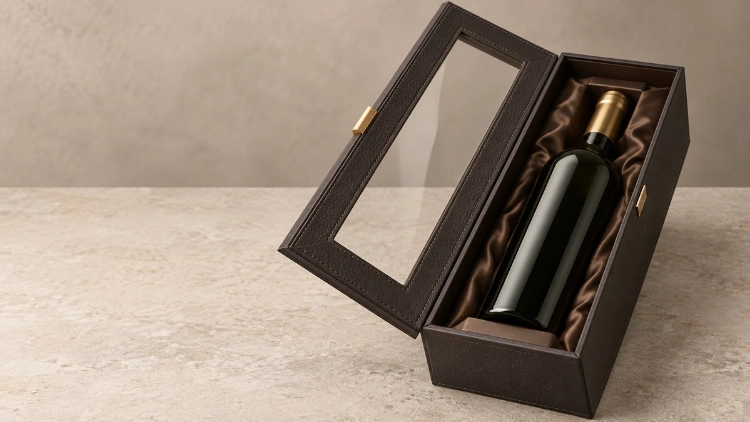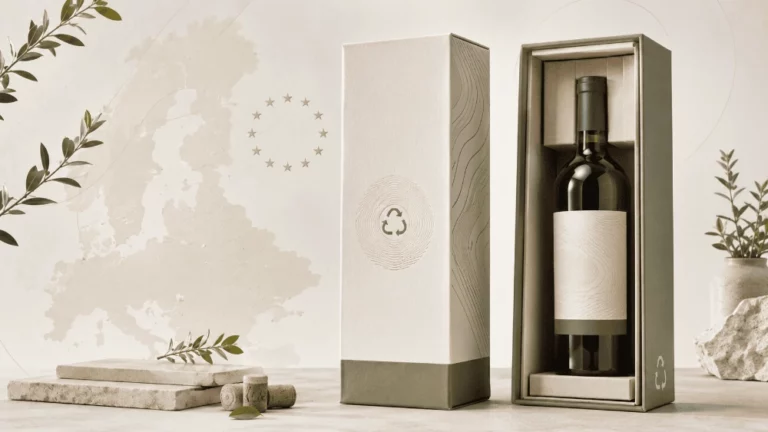

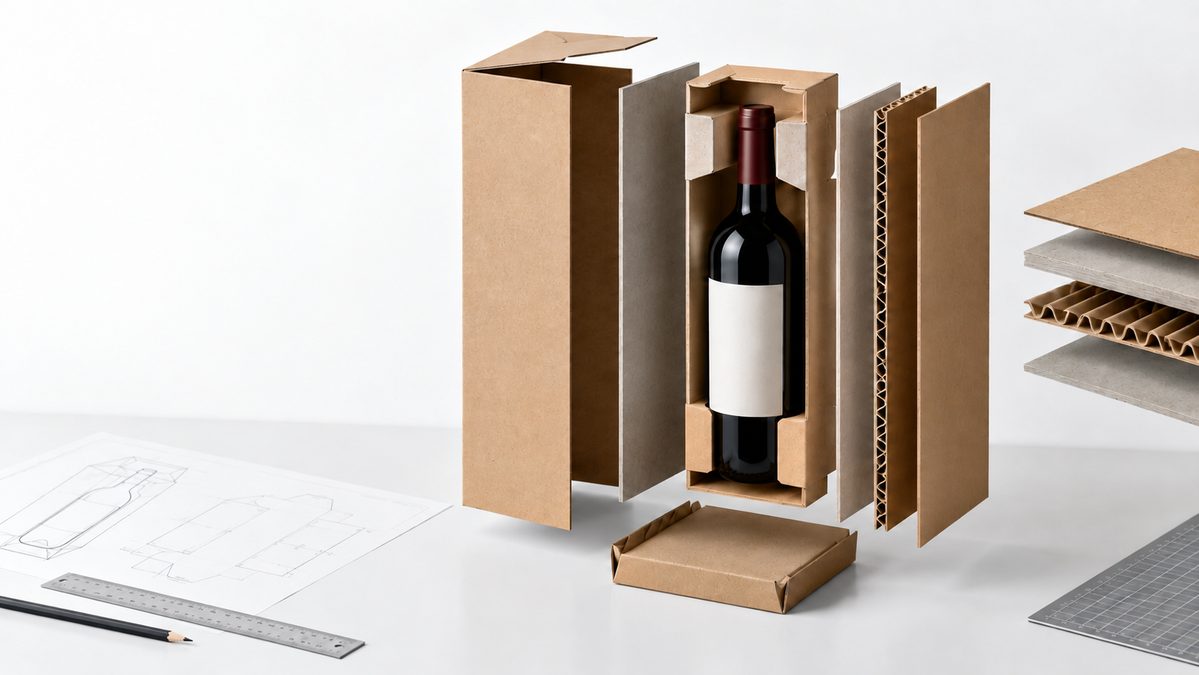
At first glance, a cardboard wine box may seem strong enough. That impression can change once a full bottle is placed inside, the boxes are stacked, or the package starts moving through transit. Cardboard wine box strength is shaped by the board weight, thickness, box construction, crease quality, inserts, closures, and handling conditions. GSM helps compare paper and board, but it cannot describe the whole performance picture. A thicker board is not always the right answer for every format.
These sections look at how wine box GSM, wine box thickness, and wine box structural integrity relate to one another. They also cover the checks that reveal actual performance and the details that belong in a workable packaging specification.
What Actually Gives a Cardboard Wine Box Its Strength?
Bottle weight creates the starting load
The box must support the filled bottle, not an empty sample. One bottle may be relatively light, while another uses heavier glass or a broader base. Champagne and spirits bottles put their own demands on the bottom and side panels. A two-bottle box also carries the load differently from a single-bottle box because the base, dividers, and outer walls share the weight.
Bottle dimensions matter as well. A tall bottle can create leverage against the side panels if the neck is not supported. A wide bottle can place pressure on the corners or push the insert against the walls. For that reason, a useful strength brief records the bottle height, maximum diameter, shoulder shape, neck size, filled weight, and number of bottles before board selection begins.
Board construction distributes the load
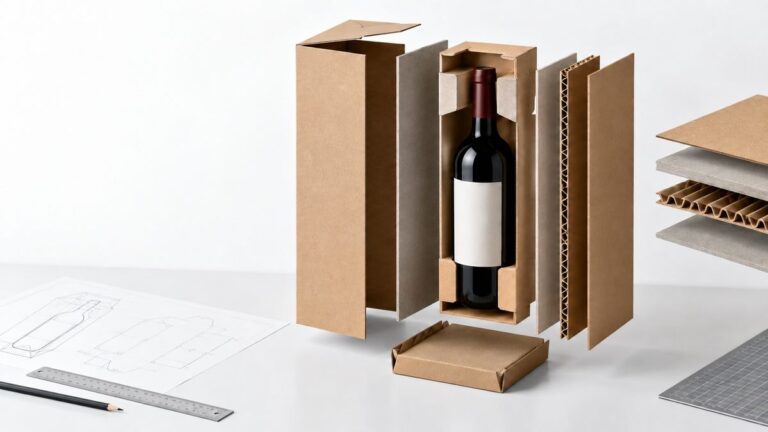
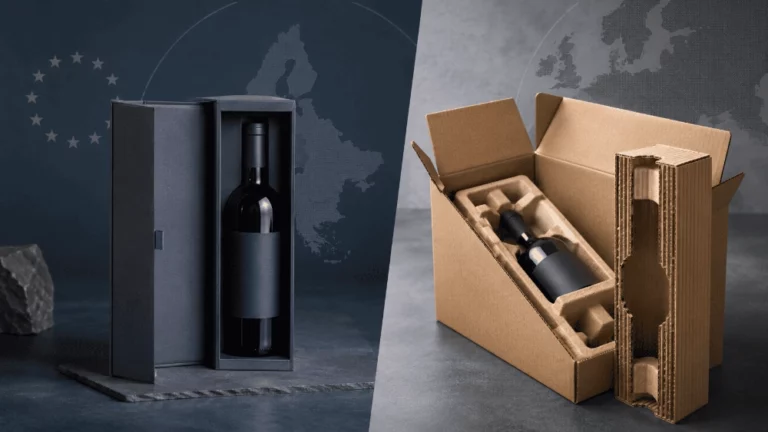
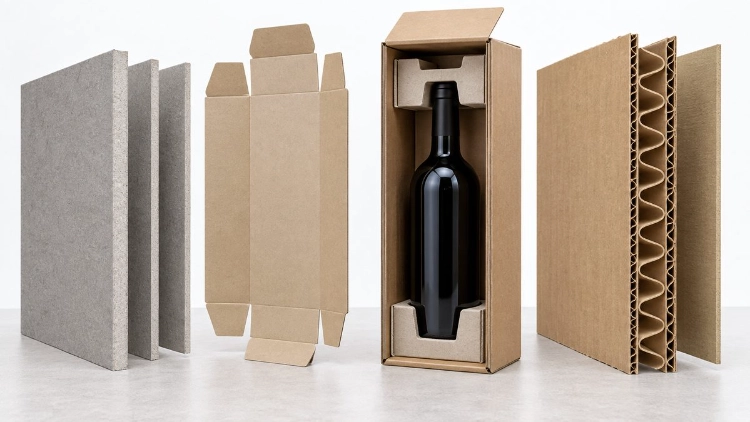
Cardboard wine boxes may be built from rigid grey board, folding paperboard, corrugated board, or several layers used together. Those constructions do not respond to pressure in the same way. Rigid board gives a firm shell for presentation boxes. Folding paperboard supports efficient die-cut structures. In a corrugated wine box, the fluted layer adds stiffness and a degree of cushioning without making the entire package solid.
The panel layout is just as important as the board itself. Long unsupported sides can bow under compression. Narrow tabs can tear during assembly. A weak bottom panel can deform even when the lid looks strong. Score lines, glue joints, corner wraps, and the connection between the base and side walls all affect the final result.
Inserts and base reinforcement protect weak points
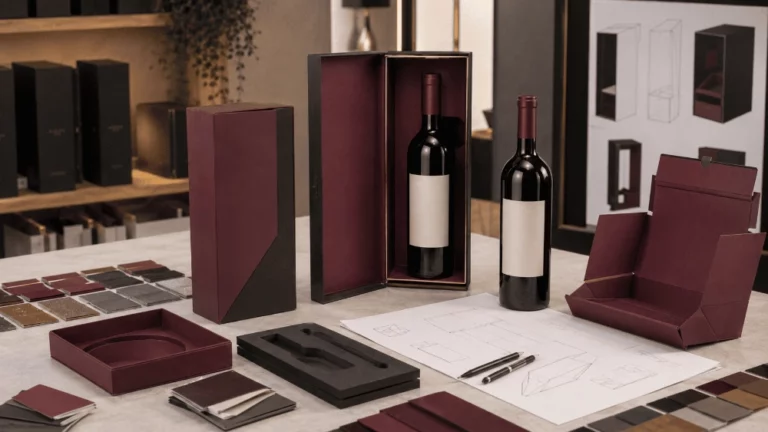
An insert keeps the bottle from moving inside the box, which reduces impact and pressure during handling. Depending on the project, a die-cut paperboard insert, molded pulp insert, EVA support, or velvet-lined tray may be used. The right option depends on bottle geometry, presentation goals, and the level of cushioning required.
The insert should work with the box rather than act as a separate decorative piece. A reinforced base, a double-layer bottom, or a shaped cradle can spread the bottle load across a larger area. Neck and shoulder support can also reduce side-to-side movement. If the insert is too tight, it may distort the walls. If it is too loose, the bottle can shift and strike the box during transport.
How Do GSM and Thickness Affect Wine Box Performance?
What does wine box GSM measure?
Wine box GSM refers to the mass of paper or board per square metre. It helps compare material weight, but it does not describe every property that controls cardboard wine box strength. Two boards with similar GSM can have different densities, fibre structures, coatings, moisture levels, and bending performance.
GSM is also used differently across packaging materials. A surface paper, a solid grey board, and a liner used on corrugated board should not be compared as if they were identical layers. A clear specification should identify the material category, the number of layers, and the role each layer plays in the box.
Why wine box thickness is a separate specification
Wine box thickness describes the board’s physical caliper. It affects stiffness, folding behaviour, edge protection, and the amount of space available for a fitted insert. Thickness alone does not guarantee better performance. A dense board with clean edges may perform better than a thicker board with weak fibres, poor moisture control, or damaged creases.
Thickness also affects production. Very thick rigid board may require different corner wrapping, scoring, or closure treatment than a folding carton. If a design depends on sharp folds, a board that is too thick can crack or spring open. If the board is too thin, the box may lose shape after repeated handling.
When should a project use rigid board or corrugated board?
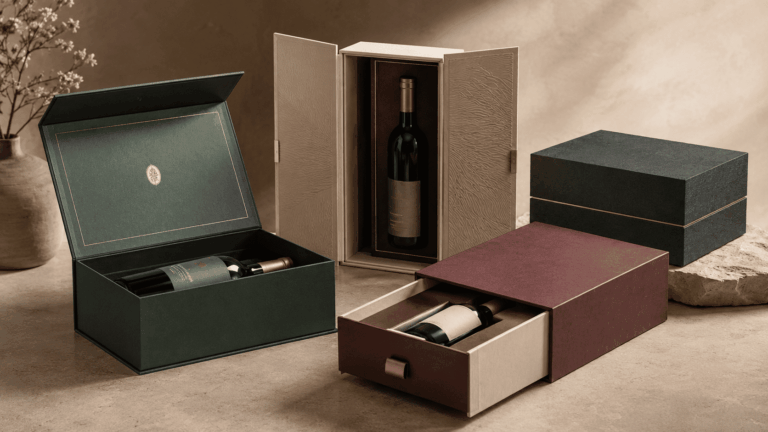
Rigid board is often selected for gift presentation, premium retail packaging, and structures that need a solid hand feel. Corrugated board is useful when cushioning, stacking, and shipping efficiency are important. Folding paperboard may suit lighter formats and compact structures where die-cut accuracy matters.
The decision should follow the use case rather than a fixed idea that one material is always stronger. A rigid box can still fail at a weak hinge or bottom seam. A well-designed corrugated wine box can protect bottles effectively when the flute direction, partitions, and outer dimensions are correct. A comparison of visual positioning and construction choices is available in this guide to rigid and corrugated wine boxes, but strength decisions still require a project-specific test.
Which Tests Reveal Wine Box Structural Integrity?
Different tests answer different questions. No single number describes every failure mode.
| Edge crush test | How well does corrugated board resist force applied to its edge? |
| Compression test | Can the package withstand stacking or top load? |
| Burst strength test | How well does the board resist surface rupture? |
| Drop testing | What happens when the packed box is dropped or mishandled? |
| Bottle-fit test | Does the insert control movement without creating pressure points? |
| Humidity check | Does the structure remain stable when moisture changes? |
Laboratory tests and real-bottle testing answer different questions
Board tests help compare materials under controlled conditions. They do not replace a packed trial using the actual bottle, insert, closure, and outer dimensions. A box may perform well as a flat board sample and still fail when a heavy bottle concentrates force around a corner or hinge.
Real-bottle testing should check the assembled box, the insert fit, the base, the lid, and the way the package is lifted. For a multi-bottle design, the dividers should be inspected for movement and compression. If the package will travel through parcel networks, drop and vibration testing should reflect the planned handling route rather than an ideal warehouse condition.
Closures, corners, and creases need separate inspection
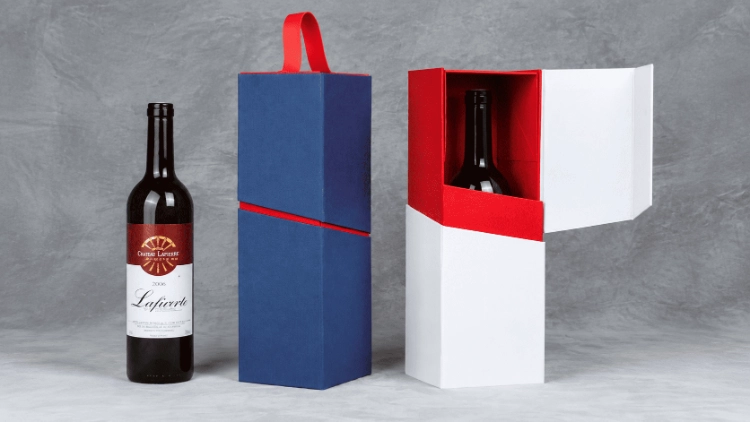
Corners and folded edges often carry more stress than broad flat panels. A magnetic closure can add weight to a lid. A ribbon handle can transfer lifting force to a small attachment area. A drawer box can experience friction and pulling force around the front panel. These details should be checked during opening, closing, lifting, and repeated handling.
Creasing is another important variable. A clean crease allows the board to fold without crushing the outer surface. An inaccurate crease can make the box twist, leave gaps, or place extra tension on glued joints. Structural integrity includes these assembly details as well as the material specification.
Storage and transport conditions can change the result
Paper-based materials respond to moisture. High humidity can reduce stiffness, while very dry conditions can make some folds more brittle. Stacking height, warehouse time, vibration, and temperature changes also affect the package. A wine shipping box designed for short local handling may need a different construction from one that will be stored in a distribution centre and shipped internationally.
How Should a Cardboard Wine Box Be Specified?
Record bottle dimensions, weight, and quantity
The specification should list the bottle’s maximum dimensions, filled weight, quantity per box, and any accessories. If the same box will hold several bottle shapes, each version should be tested rather than assumed to behave identically.
Specify the board, insert, base, and closure together
The board should be selected alongside the insert and closure. A heavier board may not solve a weak base. A soft insert may improve presentation but provide less lateral restraint than a shaped paperboard or EVA component. A handle or magnetic lid may require reinforcement around the attachment area.
Approve a physical sample before production
A physical sample allows the team to check bottle fit, opening force, panel alignment, edge finishing, and the behaviour of the base under load. It also reveals issues that are difficult to judge from a digital drawing, such as excessive looseness, tight corners, or a lid that rubs against the insert.
Common Mistakes When Evaluating Wine Box Strength
Treating GSM as the only strength indicator
GSM is a useful material reference, but it cannot replace caliper, board construction, joint design, and testing.
Assuming thickness always means better protection
An oversized thickness may complicate folding, increase material use, or create a poor fit around the bottle. The correct value is the one that supports the complete structure.
Testing an empty box
An empty box cannot reveal how the filled bottle loads the base, insert, corners, and closure. Testing should use the actual contents whenever possible.
Ignoring the bottom and the bottle neck
The bottom carries the main vertical load, while the neck and shoulder can move during handling. Both areas need deliberate support.
Turning one product parameter into a universal rule
A material range or a particular grey board specification may suit one box format, but it should not be presented as the correct value for every wine packaging box. Bottle weight, box dimensions, structure, environment, and test requirements must be considered together.
Conclusion
Cardboard wine box strength comes from a coordinated system rather than one impressive material number. Wine box GSM helps describe material weight, while wine box thickness helps define stiffness and construction limits. Neither one alone proves wine box structural integrity. Board construction, folds, joints, inserts, closures, bottle weight, and transport conditions all contribute to performance.
For a technical discussion of board construction and packaging tests, brands can contact the packaging team with bottle dimensions, weight, quantity, and intended handling conditions. A clear specification makes it easier to compare materials and build a cardboard wine box that performs as planned.
Related educational topics can be explored through the wine packaging knowledge hub when a project involves broader material, structure, or handling questions.
FAQs
Q1: What GSM is commonly used for a wine box?
A suitable GSM depends on the board type, box structure, bottle weight, insert, and handling conditions. It should be selected with thickness, construction, and physical testing rather than used as an isolated target.
Q2: Does a thicker cardboard wine box always provide better protection?
No. Thickness can improve stiffness, but poor creasing, weak joints, an inaccurate insert, or an under-reinforced base can still cause failure. The complete assembled package should be evaluated.
Q3: How can wine box structural integrity be tested?
Use a combination of material tests, compression or stacking checks, drop testing, bottle-fit inspection, and environmental review. The final assessment should use the actual bottle and completed box structure.