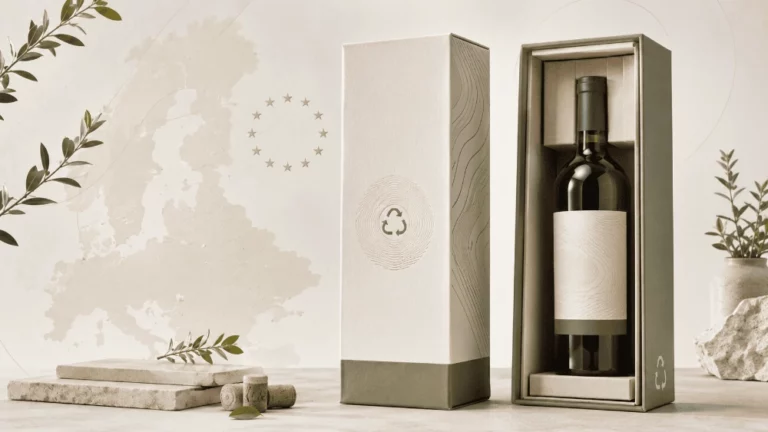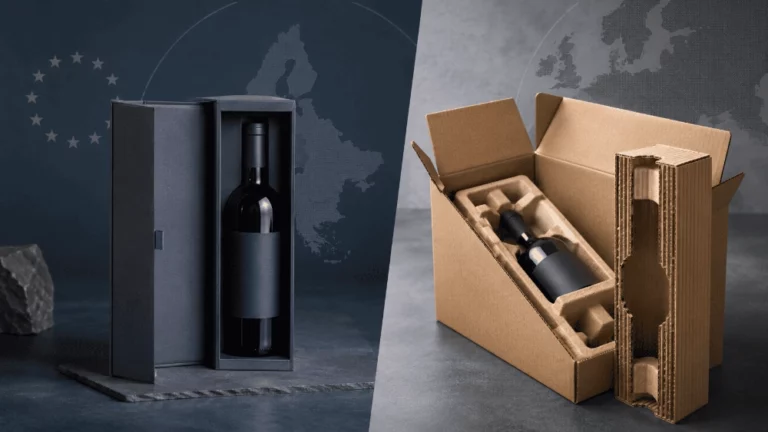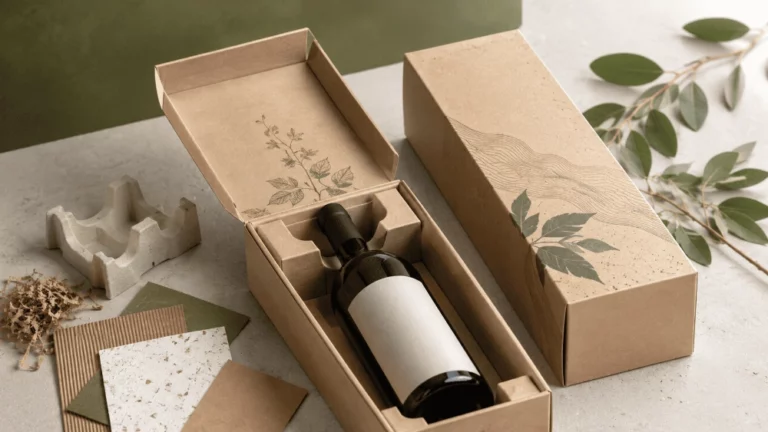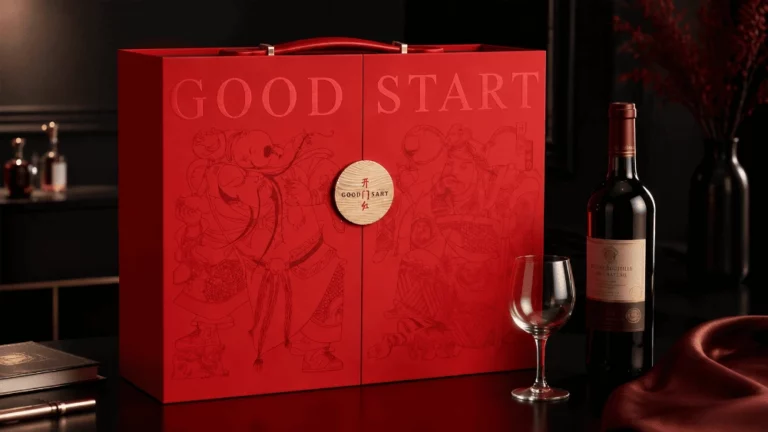

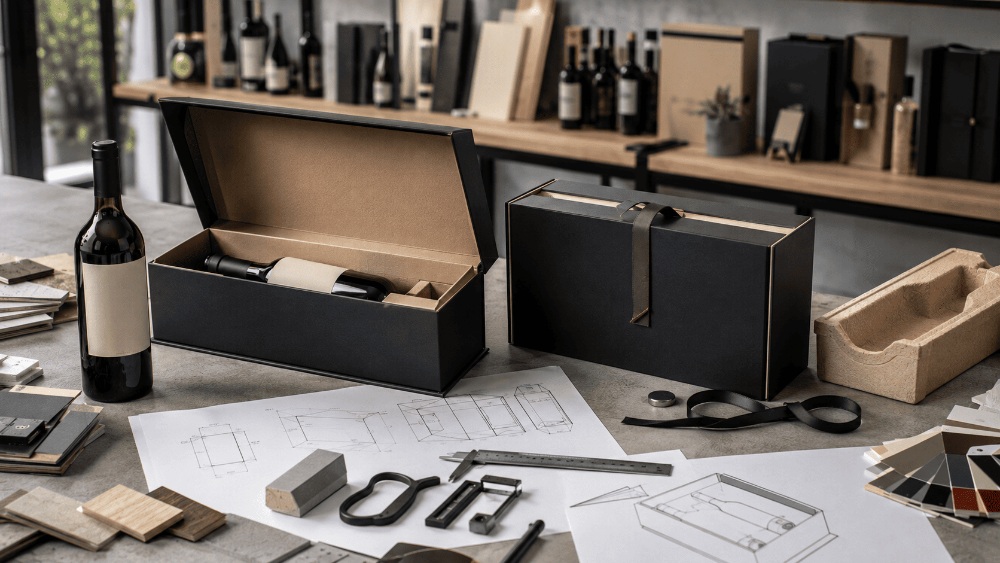
Commissioning custom wine boxes connects bottle data, brand presentation, structure, materials, inserts, artwork, quantity, sampling, packing, and approval control. Vague inputs can force the quotation to rely on assumptions that later change the sample or production scope.
A wine box packaging factory can only prepare a reliable proposal when the buyer provides a usable project brief. The following ten points help B2B teams define a custom wine packaging project before requesting a quotation or authorizing sample development.
1. Define the Commercial Purpose
Start with the reason the package is being created. Retail display, corporate gifting, limited editions, direct sales, promotional events, and collector sets have different priorities.
Retail packaging may need fast recognition and controlled shelf dimensions. Corporate gifts may require a formal opening sequence, card position, and carrying feature, while collector sets place more value on display and reusable construction. The purpose separates essential design choices from added cost.
Before commissioning custom wine boxes, write one primary and one secondary objective. A two-bottle gift, for example, may need premium presentation while remaining practical for regional distribution.
2. Provide the Actual Bottle Data
Bottle capacity is not enough. Two bottles marked 750 ml may differ in height, maximum diameter, shoulder profile, neck position, closure, label area, and filled weight.
Record the Complete Bottle Profile
Measure the final commercial bottle from the base to the highest closure point. Record the widest diameter, shoulder width, neck diameter, label position, and any wax seal, foil, cap, or decorative feature. Use filled weight because the empty glass does not represent the load carried by the box.
When several bottle versions share one package, test every production profile rather than relying on an average or a combined set of maximum values.
List Every Item in the Set
Include glasses, corkscrews, pourers, cards, booklets, food items, or other accessories. Each item affects the cavity, balance, opening order, and finished dimensions.
The custom wine box dimensions guide explains how bottle data becomes cavity, insert, and external dimensions before the custom wine packaging project moves into sampling.
3. Choose the Box Structure
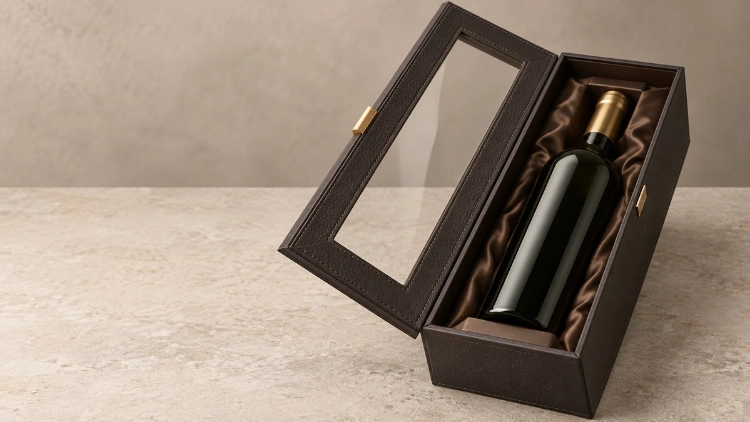
The phrase “luxury wine box” does not define how a box is made or used. A custom wine box manufacturer needs the intended structure, opening method, and delivery condition.
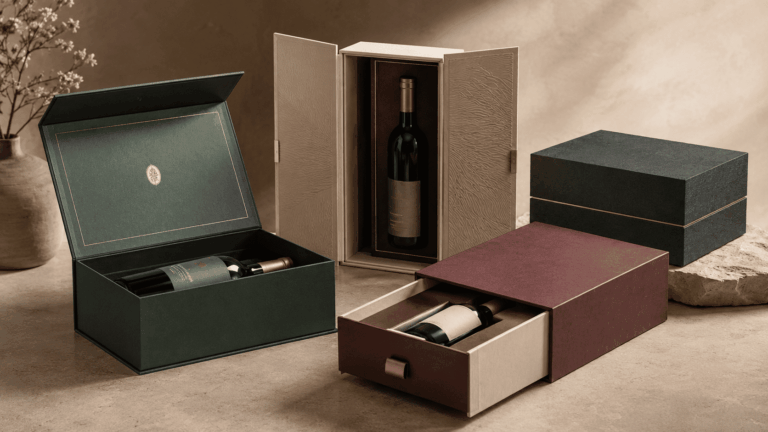
Common routes include lid-and-base, magnetic closure, drawer, foldable rigid, double-door, window, and handled formats. Each changes the dieline, internal space, assembly, cartonization, and inspection points. Drawers need controlled clearance, double doors need central alignment, and foldable structures need repeatable assembly.
The selected structure should match the packing location. If boxes will be delivered flat, confirm who will assemble them and how the insert will be fitted. If they arrive assembled, confirm storage volume and surface protection.
4. Confirm Materials and Surface Paper
Material descriptions must be specific enough for quotation and repeat production. “Premium cardboard,” “special paper,” or “wooden box” does not define the actual construction.
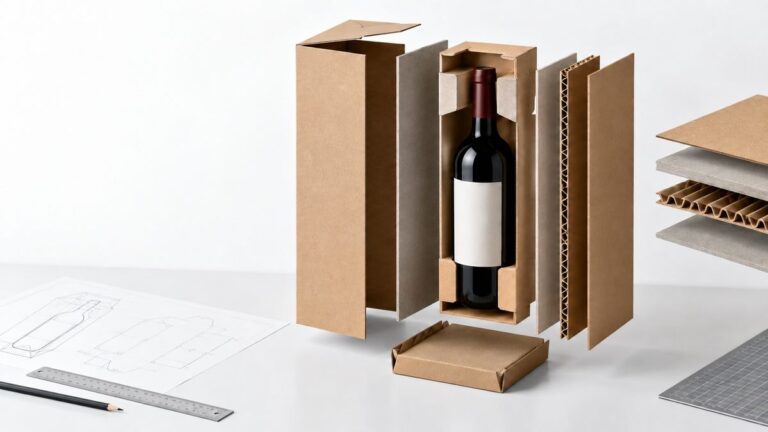
For paper-based boxes, identify the board, surface paper, lining, and reinforcement. Options may include gray board with specialty paper, kraft paper, white card, metallic card, flocked paper, or leather-textured paper. For wood-based cases, specify the panel, coating, lining, and hardware.
The surface affects color, texture, edge wrapping, and finishing. Ink or foil can appear different on coated paper, kraft, textured paper, or dark stock, so request a representative sample when appearance is critical.
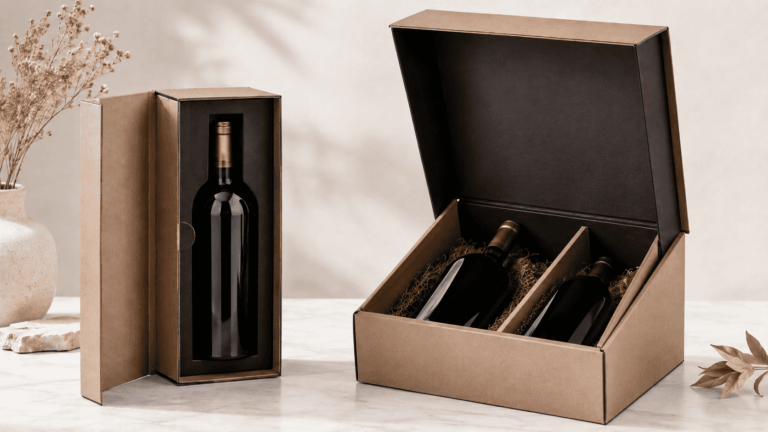
The cardboard wine box range can be used as a structural reference, but every custom wine packaging project still needs its own material specification.
5. Define the Insert and Accessory Layout
An insert is not an item to add after the external box has been approved. It determines internal dimensions, bottle support, removal, and presentation.
EVA, flocked foam, molded pulp, blister, paper molds, and paperboard dividers use different wall thicknesses and contact methods. Select the material against bottle weight, label sensitivity, presentation, and cavity accuracy.
Mark the base support, body support, shoulder or neck restraint, finger access, bottle separation, and accessory cavities. Tools and glassware should not touch the bottle or shift into the closing path.
A wine box packaging factory should receive a layout showing bottle orientation and accessory order. This helps the custom wine box manufacturer evaluate whether the insert, structure, and external dimensions work together within the custom wine packaging project.
6. Finalize Artwork and Finishing Requirements
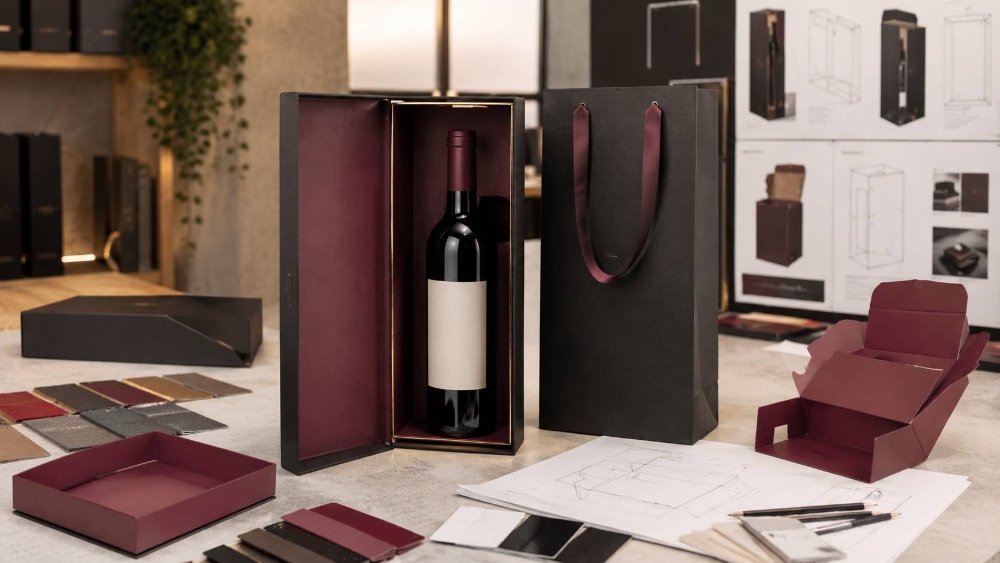
Artwork should match the current dieline before a printed sample is authorized. Provide vector logos, final text, fonts, suitable images, barcodes, required information, bleed, and safe areas.
Color references should be clear. Pantone references, process-color values, approved swatches, or an existing printed standard may be used depending on the project. The brief should also identify where foil stamping, embossing, debossing, spot UV, lamination, ribbons, magnets, or metal elements are required.
Avoid a vague instruction such as “make it look more luxurious.” A custom wine box manufacturer needs measurable locations, sizes, colors, and finish references. If the structure changes, the artwork and finishing map must be checked again.
The production path may include design confirmation, plate making and proofing, printing, lamination, machine box making, hand assembly, quality inspection, and packing. These stages explain why late artwork changes can affect more than the visual file.
7. State Quantity and Design Versions
Total quantity is not enough when the order includes several logos, colors, languages, or seasonal editions. State the quantity for each version.
One structure with one artwork version is different from the same total divided among five customer logos. Each version may need separate file checks, print setup, sorting, carton marks, and approval records.
When commissioning custom wine boxes, also state whether the project is a one-time event, a market test, or a repeat program. That information helps the wine box packaging factory review material planning, sample scope, packing, and repeat-order consistency.
Do not assume that one MOQ applies to every structure or process. TopWinePack confirms quantity conditions by box style and printing process, while individual product routes may carry different requirements.
8. Decide What the Sample Must Confirm
A sample should have a defined purpose. A structural blank sample can confirm dimensions, bottle fit, insert position, opening, folding, and assembly. A printed sample can confirm artwork, color placement, surface paper, and the finishes included in its scope.
The sample brief should list every approval point. Use the actual bottle and accessories, then check closure, door alignment, drawer movement, handle performance, and label clearance.
A custom wine box manufacturer should not release a custom wine packaging project because the sample “looks acceptable” in photographs. Record the dimensions, materials, finish positions, hardware, insert, packed configuration, and any approved corrections.
The recently published custom wine box sample preparation guide can support teams that need a separate checklist before requesting the prototype.
9. Confirm Packing, Storage, and Delivery Conditions
The factory needs to know whether boxes will ship flat or assembled, whether the insert is fixed or separate, and whether each unit needs tissue, film, a bag, foam, or a sleeve. Dark papers, glossy coatings, foil, and metal parts may need additional protection against rubbing.
Provide the destination, delivery window, storage limits, and packing method. Request estimated carton dimensions, pieces per carton, gross weight, and volume, then confirm final figures after packing.
This section should remain separate from the final pre-shipment release. Commissioning custom wine boxes establishes the intended packing route; the completed batch still needs its own inspection, carton-data confirmation, and handover review before collection.
10. Establish Approval and Quality-Control Records
The final commissioning step defines the production reference: bottle version, structure, dimensions, material, artwork, color standard, finishing, insert, hardware, packing, and approved sample identification.
Define who may request changes and who approves structure, artwork, color, and materials. Mark obsolete files clearly. A correction should not be treated as approved until the affected item has been verified.
Quality checks should follow the design. Magnetic boxes need closure alignment, drawers need movement control, double doors need central alignment, and handles need packed-load checks. Surface review should cover scratches, glue marks, wrinkles, foil loss, coating defects, and color variation.
The approved sample and written specification should remain together as the shared reference for the wine box packaging factory and buyer.
A Practical Commissioning Brief
| Project Input | Information to Provide |
| Commercial purpose | Retail, gifting, limited release, or collector set |
| Bottle data | Dimensions, profile, closure, label position, and filled weight |
| Structure | Opening method, flat or assembled delivery, handle or closure |
| Materials | Structural material, surface paper, lining, and reinforcement |
| Insert | Material, support points, finger access, and accessory layout |
| Artwork | Final files, colors, languages, and finishing positions |
| Quantity | Total units and units per design version |
| Sample | Structural or printed scope and approval points |
| Packing | Individual protection, carton method, and destination |
| Approval | Responsible people, version control, and production reference |
Starting a Project with TopWinePack
At TopWinePack, we work with custom wine packaging for wineries, brand owners, retailers, and gift projects. Our custom wine box service process connects design confirmation, material selection, sampling, production, inspection, and packing rather than treating the box as an isolated graphic item.
A first inquiry should include the bottle, intended use, preferred structure, quantity by version, artwork status, insert needs, destination, and schedule. We can then identify which decisions need confirmation before quotation or sampling.
Share the project brief to start a practical custom wine box review. Clear information gives both teams a stronger basis for quotation and production planning.
FAQ
Q: What should be prepared before commissioning custom wine boxes?
A: Prepare the commercial purpose, final bottle data, product set, preferred structure, materials, insert, artwork, quantity by version, sample scope, packing conditions, and approval responsibilities.
Q: Should a buyer choose a wine box packaging factory before the design is complete?
A: The full design does not need to be complete, but the buyer should provide a clear brief. Early structural input from a qualified factory can prevent artwork or presentation concepts from being developed around an impractical box.
Q: Is the lowest quotation the best basis for selecting a custom wine box manufacturer?
A: No. Compare the stated materials, structure, insert, finishing, sample scope, packing, carton assumptions, quality controls, and change conditions. A lower unit price may exclude work or specifications required by the project.