
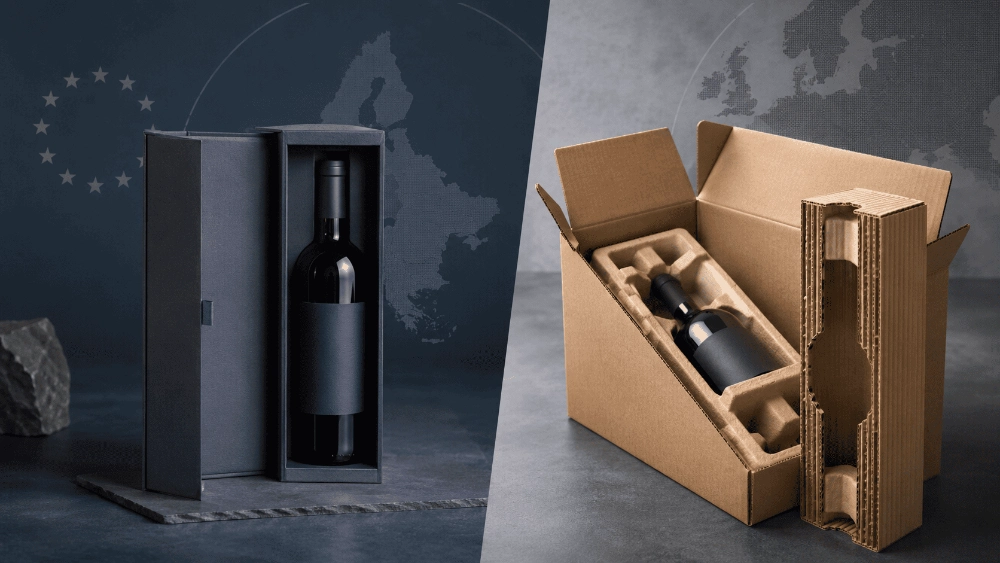
Cardboard wine boxes and corrugated wine boxes are often compared as though one should replace the other. In practice, they usually solve different parts of the packaging job. A rigid cardboard box can carry the visual and tactile experience expected in premium retail or gifting, while corrugated board is often more practical when the pack has to survive storage, distribution, e-commerce handling, or repeated transport.
That distinction matters in the EU market because material use, empty space, recyclability, shipping weight, and packaging function now need to be considered together. A box that works well on the shelf may still need another layer for transport, while an efficient corrugated pack may not suit premium gifting.
The comparison should therefore start with the package’s role. Protection, storage, freight volume, presentation, recyclability, and cost all matter. The Packaging and Packaging Waste Regulation (PPWR) adds another factor by placing more weight on recyclability and material minimisation.
For some projects, rigid cardboard is the better sales-packaging choice. For others, corrugated board makes more sense. Premium products moving through e-commerce or cross-border distribution may need both.
What Is the Difference Between Cardboard and Corrugated Wine Boxes?
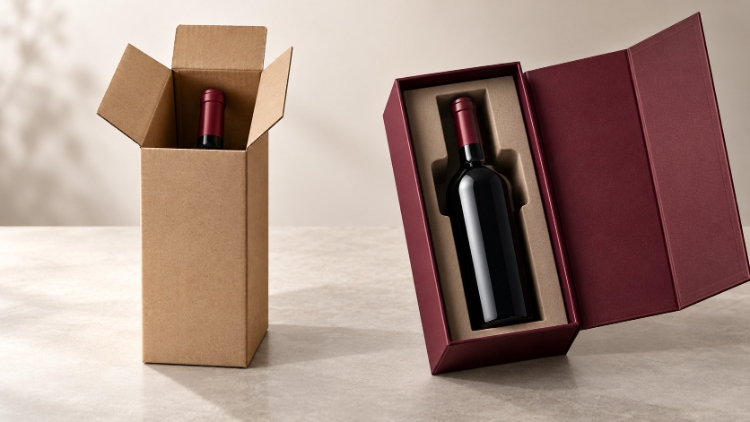
In this comparison, cardboard wine boxes mainly refer to rigid paperboard or greyboard-based presentation boxes. Corrugated wine boxes use fluted board between liner layers and are more often selected for shipping, transport, and protective formats.
Rigid cardboard wine boxes
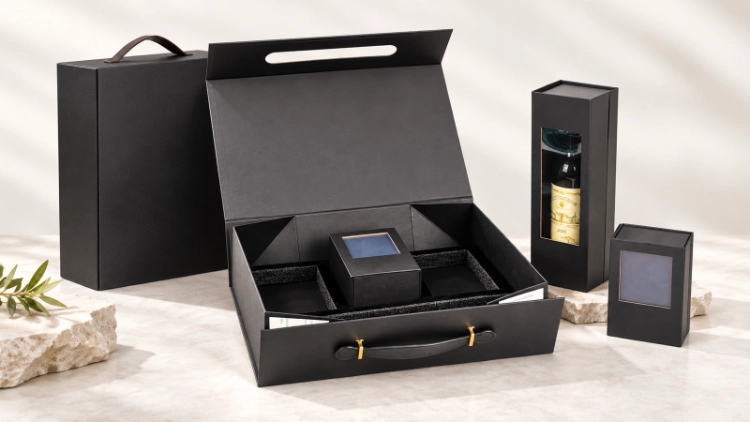
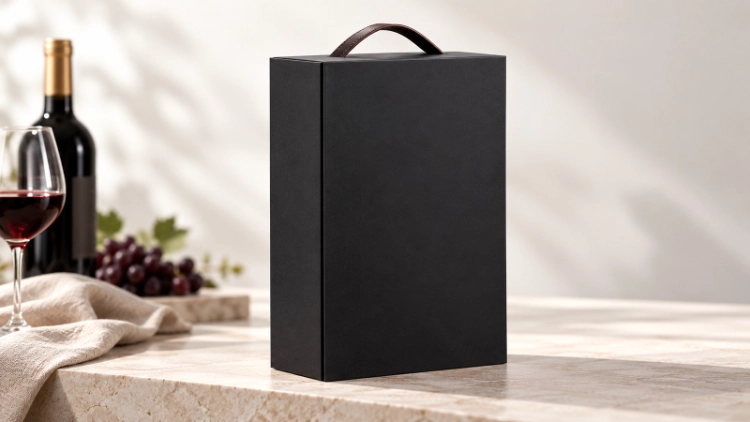
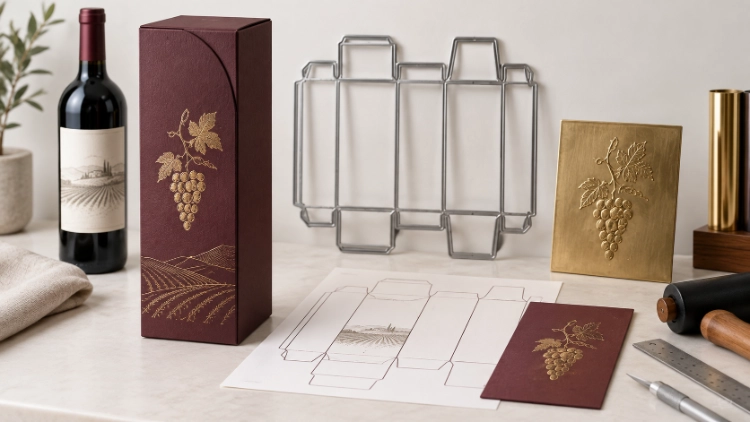
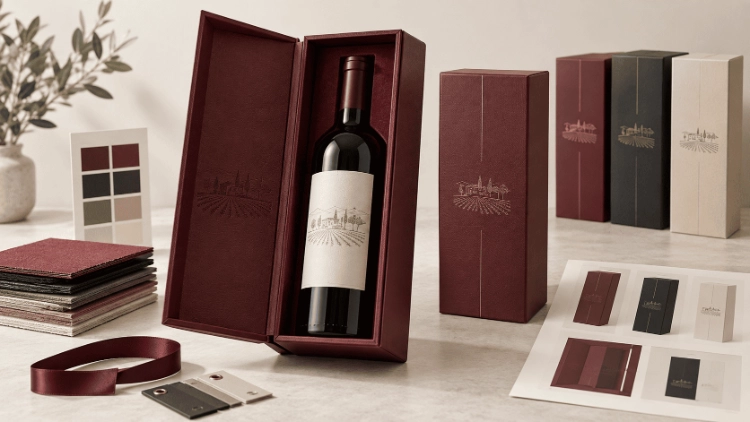
Rigid cardboard holds its shape and can support book-style openings, magnetic closures, double-door structures, lid-and-base boxes, handles, and custom inserts.
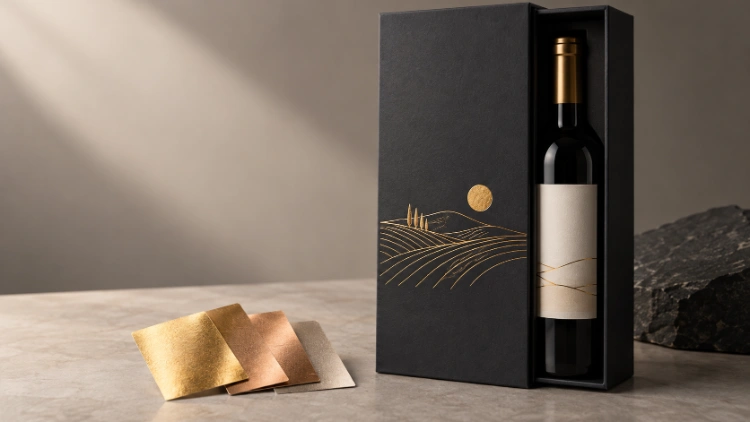
Specialty paper, embossing, foil, spot UV, lamination, and textured surfaces can also be incorporated into the design. That makes rigid cardboard useful where retail presentation or gifting matters. Conventional rigid boxes occupy their full dimensions before filling, although foldable designs can reduce storage volume.
Corrugated wine boxes
Corrugated board uses fluting to create stiffness and cushioning without relying on thick solid board. It is commonly used for wine shipping boxes, e-commerce packs, outer cartons, and multi-bottle transport.
Corrugated dividers can separate bottles, while die-cut sections can hold the base or neck. Elaborate gift presentation, however, may require a separate presentation box.
Which Wine Box Provides Better Bottle Protection?
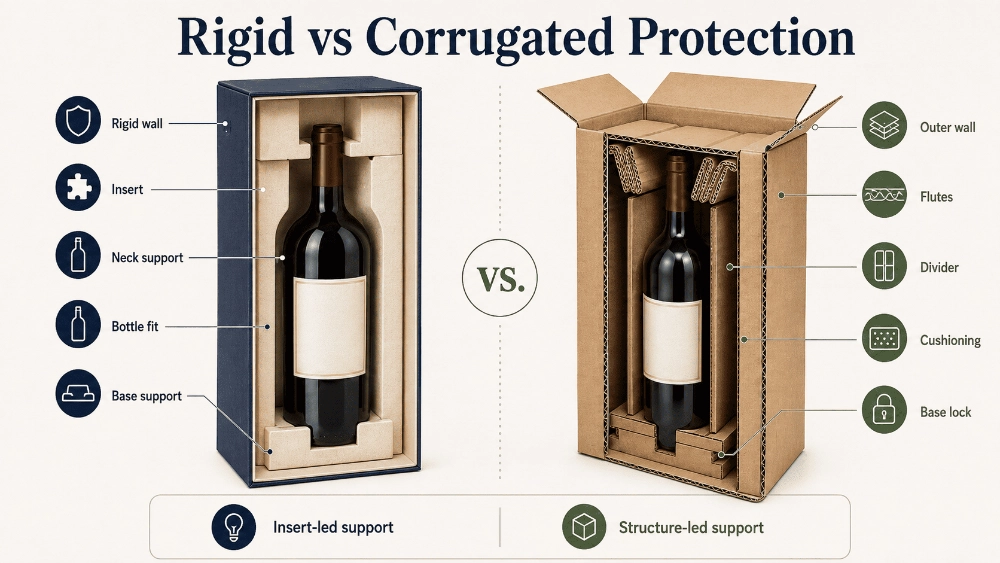
Protection depends on the full pack, not the board name alone. A poorly fitted rigid box can allow movement, while a well-designed corrugated pack can hold bottles firmly through distribution.
Protection in rigid cardboard wine boxes
Rigid cardboard works well when presentation and product support need to be combined. EVA, foam, flocked trays, paperboard supports, moulded pulp, or custom card inserts can position bottles and accessories.
The main issue is fit. The insert should control movement without pressing excessively against the bottle. Bottom support, shoulder support, neck position, and separation between bottles all need to match the actual pack.
Protection in corrugated wine boxes
Corrugated wine boxes are often practical for distribution because fluting supports stacking and absorbs some handling forces. Partitions can keep bottles apart and reduce contact during transport.
The design still needs to match the route. Warehouse movement, palletisation, sea freight, courier sorting, and final delivery place different demands on packaging. A local-delivery structure should not automatically be assumed to suit international transport.
Which Is Better for Shipping and Storage?
Corrugated structures often offer a practical advantage when shipping weight, flat storage, and transport protection are key priorities. Foldable rigid boxes can narrow that difference when premium presentation is still required.
Weight, volume, and assembly
An assembled rigid box occupies its full volume before filling. A foldable rigid box can be stored flatter and assembled near the packing stage. Corrugated boxes are also commonly supplied flat, which can make warehousing and inbound transport more efficient.
The complete pack-out matters more than the unit box alone. A rigid sales box may still need a corrugated outer carton, while a corrugated sales pack may perform part of the transport function. Flat structures can reduce storage volume but may add packing-line labour, so freight, storage, assembly, and outer-carton needs should be assessed together.
E-commerce and empty space
Wine shipping boxes used in e-commerce can pass through repeated transfers and sorting, so empty space should be controlled without excessive void fill. PPWR treats sales packaging differently from grouped, transport, and e-commerce packaging. The 50% maximum empty-space rule applies to the latter categories from the relevant 2030 timing, while sales packaging must reduce empty space to the minimum necessary for functionality from 12 February 2028.
Which Wine Box Is Easier to Recycle in the EU?
Neither rigid cardboard nor corrugated board is automatically the more recyclable choice. Both are fibre-based, but the finished pack may also contain coatings, films, magnets, foam, plastic windows, metal parts, ribbons, or other materials.
Material simplicity matters
A simple corrugated structure made mainly from fibre-based components may have a relatively straightforward recycling route, but that advantage shrinks when plastic lamination, non-paper inserts, or permanent accessories are added. Rigid cardboard can also be simplified through paper-based inserts, restrained finishes, and removable accessories.
A material schedule should identify the board, surface paper, insert, adhesive, coating, closure, handle, and decorative parts.
PPWR changes the decision criteria
PPWR requires packaging placed on the EU market to be recyclable and introduces more detailed design-for-recycling criteria and performance grades in stages. Packaging minimisation also becomes a formal requirement from 2030.
For buyers, necessary material, component complexity, empty space, and functional protection matter more than broad sustainability claims. A lighter corrugated box is not better if it fails in transport, and a rigid box is difficult to justify if much of its material serves only decorative volume.
Which Box Works Better for Retail and Premium Gifting?
Brand presentation
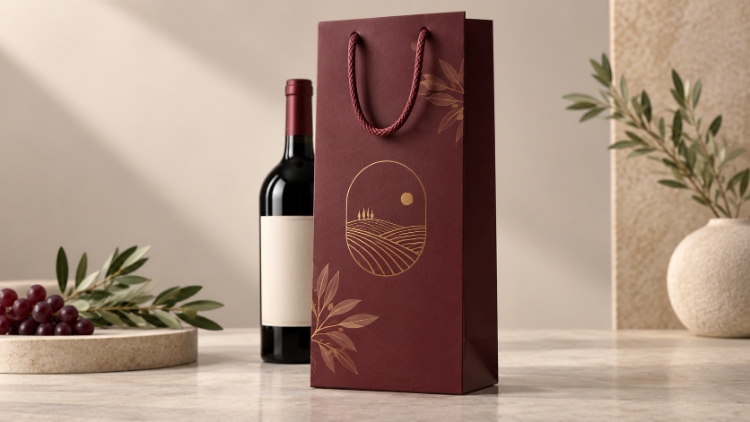
Rigid cardboard wine boxes provide a wider range of premium finishing options. Specialty paper, foil, embossing, spot UV, and textured surfaces can create a distinct visual and tactile result.
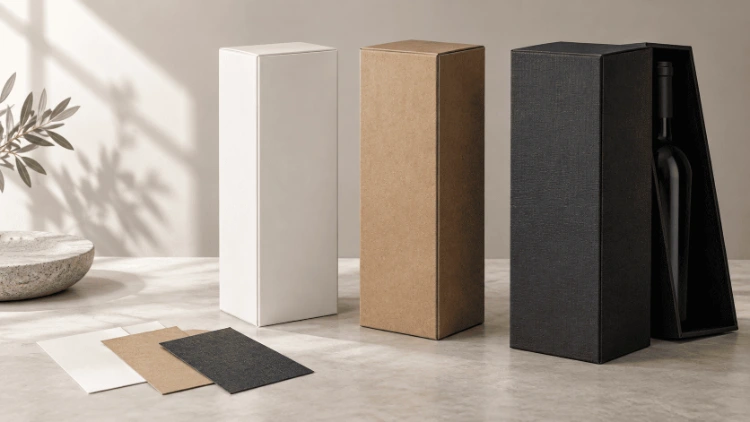
Corrugated board can work well for minimal, natural, or e-commerce-led branding, especially where the material itself is part of the intended appearance. Some intricate gift structures, however, require additional components.
Gift sets and accessories
Wine gift sets may include glasses or accessories. Rigid board offers a stable base for arranging them, but each cavity and insert should have a practical reason to exist.
TopWinePack’s Eco-Friendly Cardboard 2-Bottle Wine Glass Set Red Wine Gift Box Packaging provides a useful rigid-box reference. It uses 1400g grey cardboard with 157g textured paper, a double-door structure, magnetic opening, CMYK printing, UV coating, lamination, and an insert for two bottles and two glasses.
Cardboard vs Corrugated Wine Boxes by EU Use Case
| EU use case | Better starting point | Main reason |
| Premium retail wine | Rigid cardboard | Presentation and finish control |
| Corporate gifting | Rigid cardboard | Structured gift experience |
| Winery direct sales | Depends on route | Balance of brand and protection |
| E-commerce shipping | Corrugated | Transport and weight efficiency |
| Cross-border distribution | Corrugated | Handling and stacking focus |
| Premium e-commerce gift | Both | Presentation plus transport protection |
| Seasonal gift program | Depends | Storage, assembly, and presentation |
| Weight-sensitive project | Corrugated first | Material efficiency |
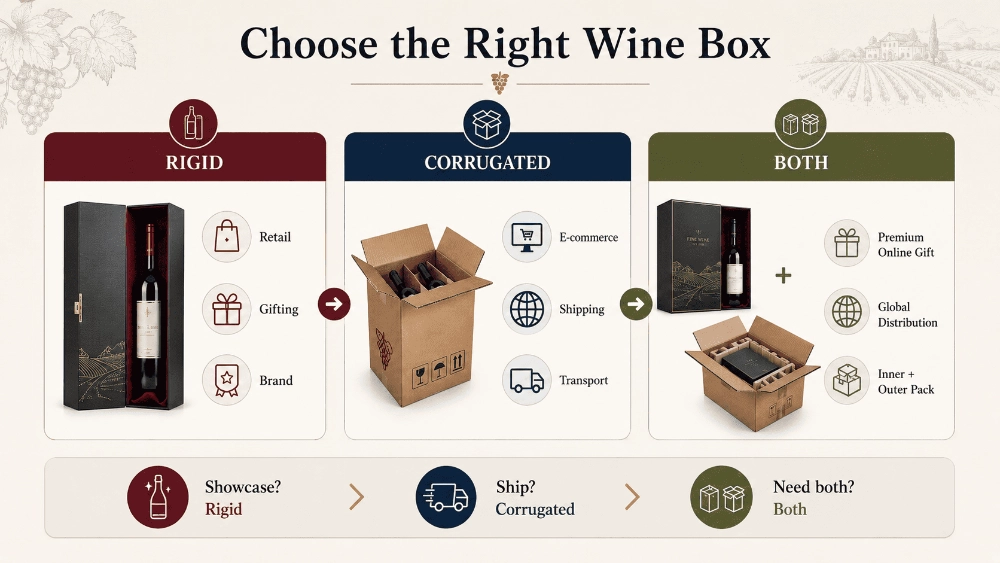
Using both structures can be practical when a premium sales box must travel through demanding logistics. The rigid box handles presentation, while a close-fitting corrugated outer pack manages stacking and distribution. Both layers should be designed together to avoid unnecessary cushioning and empty space.
What Should EU Buyers Specify Before Requesting a Quote?
A clear custom brief should start with bottle dimensions, filled weight, bottle count, sales channel, shipping route, storage method, presentation level, and whether the structure needs to fold flat.
It should also identify the board type, insert material, printing, coatings, handles, magnets, windows, and other final components. Sustainability targets should be practical: reduced material combinations, paper-based inserts, separable components, or a specific certification requirement are more useful than a general request for “green packaging.”
At TopWinePack, we focus primarily on custom wine box development for different bottle formats, channels, and presentation requirements. Rigid, foldable, magnetic, double-door, handled, and other paper-based formats can be developed around the actual bottle and use case.
Buyers preparing an EU project can discuss a custom packaging brief before the structure is fixed.
Conclusion
Rigid cardboard is often the more suitable starting point for premium retail, gifting, and structured presentation. Corrugated board is often more practical when shipping efficiency, e-commerce handling, and distribution protection carry greater weight.
The final decision should follow the packaging role rather than the material name. Protection, material use, empty space, storage, freight, recyclability, and presentation all matter. For premium products moving through international distribution or e-commerce, a rigid sales box inside an efficient corrugated transport pack may be the most practical combination.
FAQs
Q1: Are corrugated wine boxes stronger than cardboard wine boxes?
A: Not in every situation. Corrugated board is efficient for compression, stacking, and shipping, while rigid cardboard can provide strong local support when the bottle and insert are precisely fitted. Protection depends on the full structure and logistics route.
Q2: Which wine box is more recyclable in the EU?
A: Neither material is automatically more recyclable. The complete construction matters, including coatings, inserts, adhesives, windows, magnets, handles, and other components. A simpler material combination generally provides a clearer recycling route.
Q3: Should premium wine use a rigid box or a corrugated shipping box?
A: Premium retail and gift presentation often favour rigid cardboard, while shipping commonly favours corrugated board. When both presentation and transport protection are required, a rigid sales box inside a corrugated outer pack can be the more practical solution.