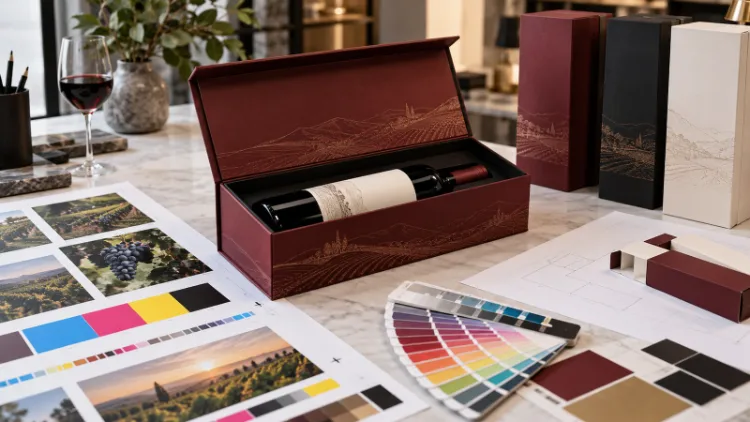

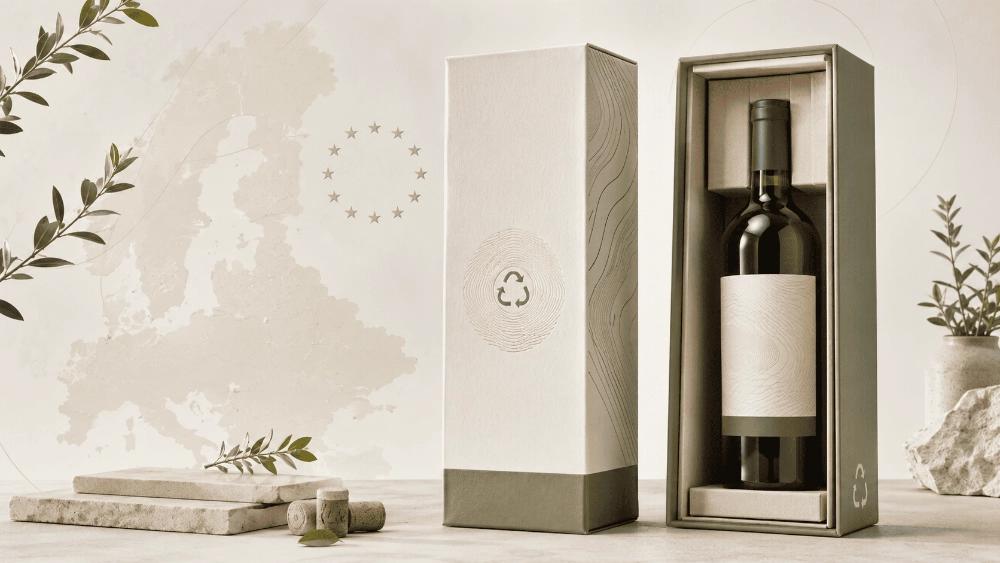
Custom wine packaging for the EU market now has to satisfy a broader brief than appearance and bottle protection alone. A box may look premium and use paper-based materials, yet still create problems if it depends on hard-to-separate components, unnecessary volume, or a material mix that complicates recycling. For B2B buyers, sustainability is becoming part of the specification itself rather than a claim added after design approval.
That changes when compliance work should begin. It is risky to settle the structure, insert, artwork, and finishes first, then review regulatory details shortly before shipment. Material choice, empty space, decorative parts, coatings, and even the way the bottle is held can affect whether a finished pack suits the intended EU route.
The Packaging and Packaging Waste Regulation (PPWR) entered into general application on 12 August 2026. Not every requirement takes effect on the same date. Some design-for-recycling, labelling, minimisation, and recycled-at-scale provisions follow later milestones. A project started now should meet current obligations without creating obvious redesign work for the next stage.
For buyers, the practical starting point is a complete packaging brief. It should define what the box has to protect, how it will be sold, how it will travel, which materials are used, and why each component is present. That is more useful than relying on broad labels such as “eco-friendly” or “recyclable.”
What Does PPWR Mean for Wine Packaging Sold in the EU?
Current application and later milestones
The general framework applies from 12 August 2026. Article 6 requires packaging placed on the market to be recyclable, while more detailed design-for-recycling assessment develops in stages. Union-level recyclability performance grades are scheduled to become relevant from 2030 or later if related delegated acts take effect later. Recycled-at-scale assessment follows from 2035 or a later date linked to implementing rules.
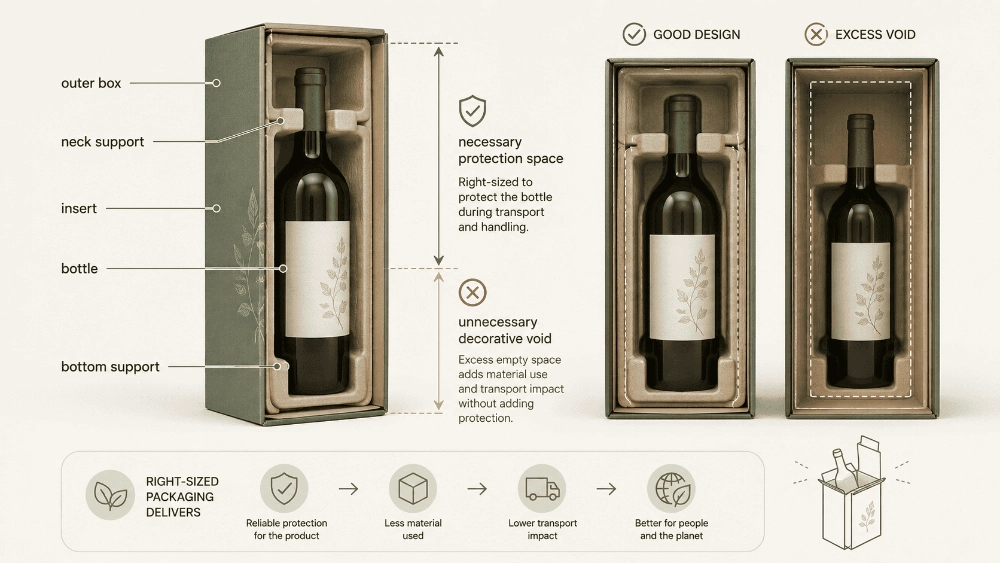
By 1 January 2030, manufacturers or importers must reduce packaging weight and volume to the minimum required for functionality. Protective material can remain where it performs a genuine function, while decorative cavities, false bottoms, or extra layers with no clear role are harder to justify.
Imported packaging still needs an EU compliance route
A custom wine box made outside Europe does not sit outside PPWR once it is placed on the EU market. Importers have responsibilities relating to conformity assessment, technical documentation, required information, and labelling before packaging reaches the market.
Material and construction information should therefore be collected before mass production. Exact responsibility depends on the economic operator’s role.
Which PPWR Requirements Matter Most for Custom Wine Packaging?
Recyclability should be assessed as a complete system
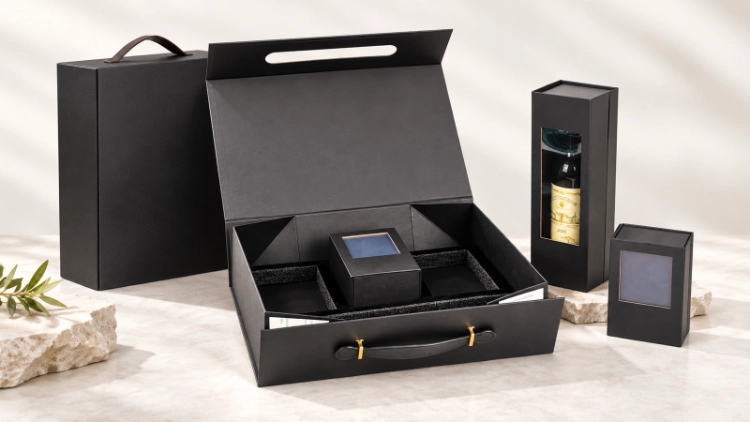
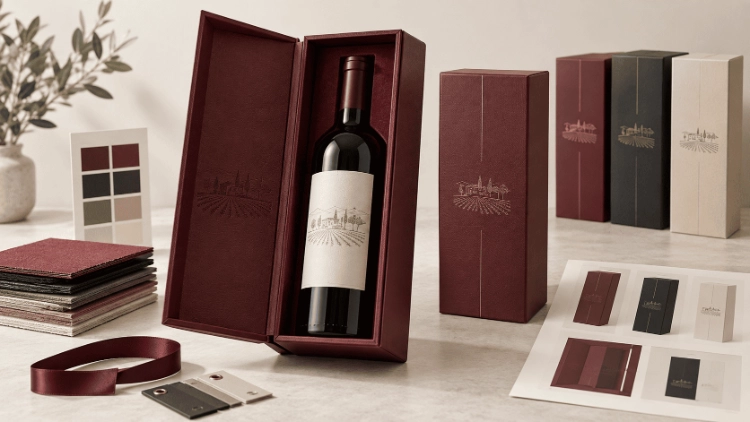
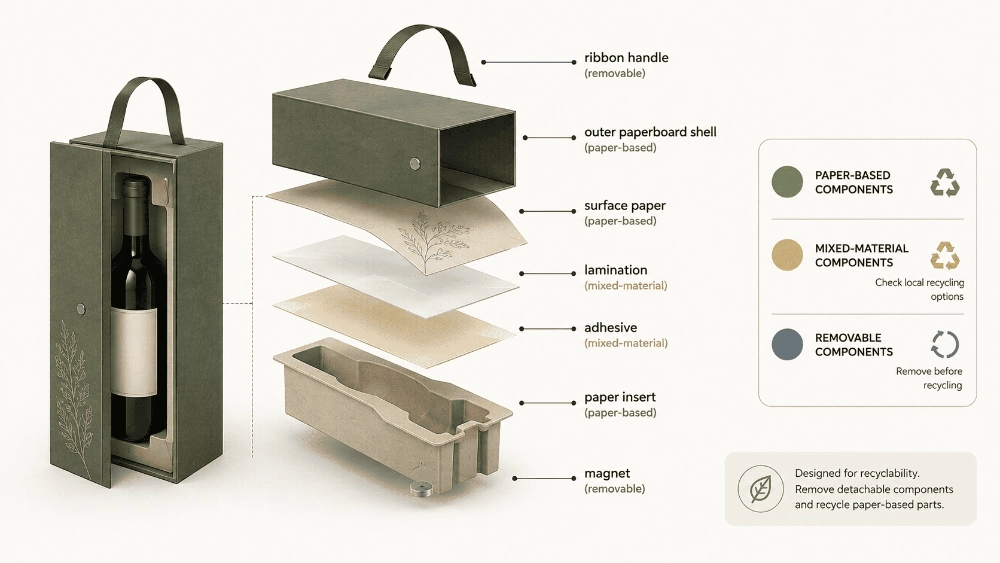
Paperboard can support recyclable wine packaging, but the outer board is only one part of the finished pack. A rigid box may also contain laminated surface paper, magnets, ribbon, foam, plastic windows, metal fittings, or several types of adhesive.
Buyers need to review the whole material combination and whether components can enter suitable collection, sorting, and recycling streams. A paper-based insert may simplify separation, while EVA or foam may still be suitable where the bottle needs more support.
Packaging minimisation must preserve bottle protection
Wine bottles need stable bottom support and controlled movement around the body, shoulder, and neck. Multi-bottle packs also need enough separation to prevent glass-to-glass contact.
Minimisation should not be reduced to cutting board weight. Buyers should review oversized outer dimensions, decorative voids, duplicated layers, and unnecessarily deep cavities while retaining material genuinely needed for protection.
Sales packaging and transport packaging also need to be treated differently. For sales packaging, empty space must be reduced to the minimum necessary for functionality from 12 February 2028. The separate 50% maximum empty-space rule applies to grouped, transport, and e-commerce packaging from the relevant 2030 timing. It should not be applied mechanically to every premium wine gift box.
Labelling and documentation need space in the brief
Harmonised EU material-composition labelling is scheduled from 12 August 2028, or later if the implementing acts enter into force later. New artwork should leave enough room for required information rather than using every available panel for brand graphics.
Technical documentation matters as well. Manufacturers must prepare the required conformity documentation, while importers must verify relevant steps before packaging is placed on the market. Artwork and sample approval should not be the only checkpoints.
How Do Wine Box Materials Affect Recyclability?
Rigid paperboard, corrugated board, and inserts
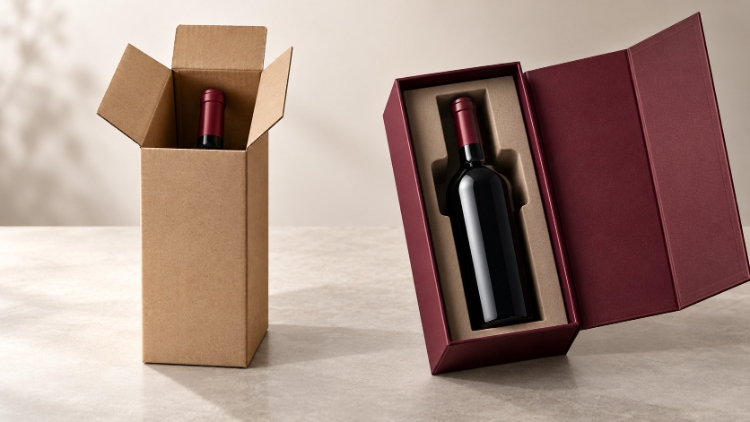
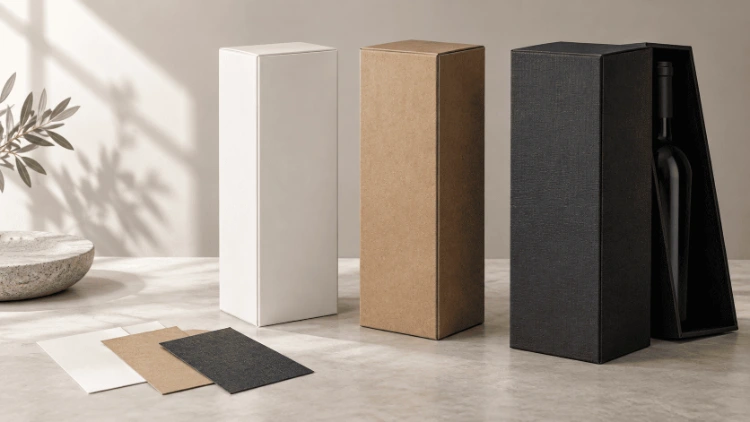
Rigid paperboard is often chosen for premium retail presentation, gifting, and structured opening experiences. Corrugated board offers a different strength-to-weight balance and is more common where transport protection, stacking, or e-commerce handling matters more.
Neither option is automatically compliant. A rigid box with restrained finishing and a removable insert may be easier to manage than a heavily coated mixed-material pack. Corrugated packaging can become equally complex when plastic windows, foam, laminated surfaces, or permanent accessories are added.
Bottle protection can use paperboard partitions, moulded pulp, EVA, foam, flocked trays, or custom card structures. Fit comes first; then buyers can compare weight, separability, material compatibility, and likely disposal route.
Finishes should earn their place
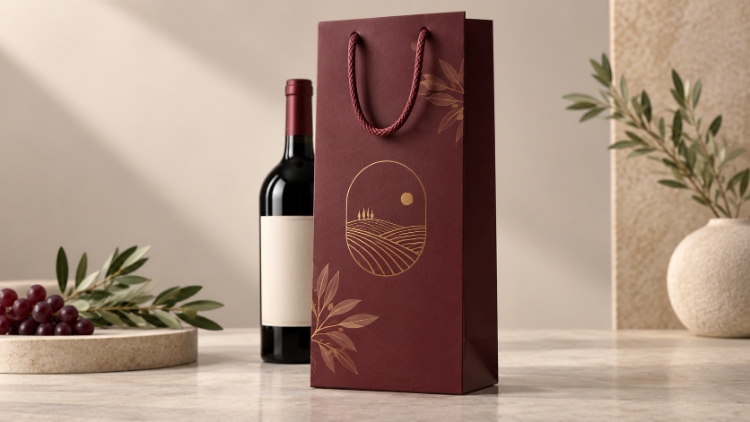
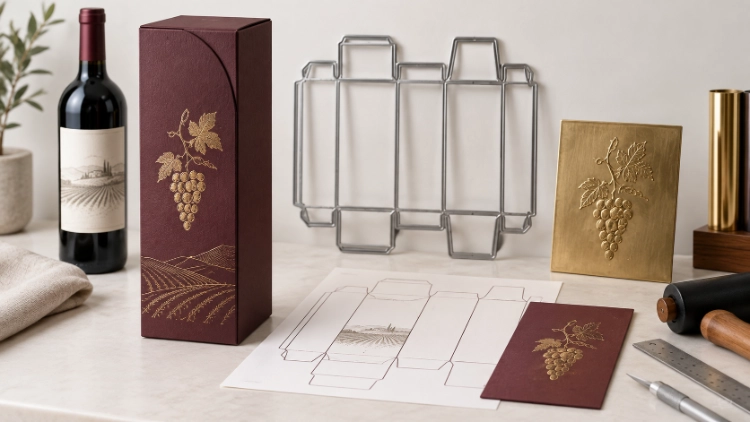
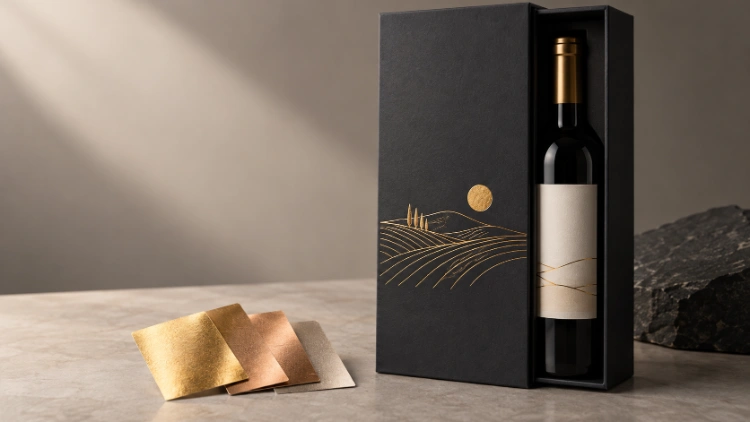
Hot foil, embossing, spot UV, lamination, textured paper, ribbon, and magnetic closures can support premium presentation, but they do not need to appear together.
A textured paper may create enough depth on its own. Embossing can add contrast without another laminated layer. A smaller foil area may achieve the intended premium cue more efficiently than a fully decorated surface. This restraint also makes sampling easier because each finish can be judged by value, durability, and material complexity.
Can Luxury Wine Packaging Still Work Under PPWR?
Use structure instead of excess layers
A clean opening sequence, accurate bottle fit, and well-finished edges can create a premium experience without a large decorative cavity. Foldable rigid structures can also reduce storage and shipping volume before assembly where that format suits the project.
TopWinePack’s Single Bottle Foldable Cardboard Wine Box Customized With Ribbon Handle is one relevant example. It uses rigid cardboard, UV texture printing, a ribbon handle, and a foldable single-bottle structure. Size, colour, printing, and handle details can be customised.
Keep premium finishes selective
Decorative features should have a clear role. If textured paper already carries most of the visual identity, several additional finishes may add little. A smaller foil logo can create contrast without making the entire surface more complex.
What Should EU Buyers Specify Before Ordering Custom Wine Packaging?
Define the bottle and sales route first
Start with bottle dimensions, filled weight, bottle count, closure shape, and any accessories that share the box. Then define whether the package is for retail, corporate gifting, direct delivery, e-commerce, or sales packaging placed inside a separate transport carton.
That information influences box size, insert geometry, empty space, and transport protection.
Record every material and finish
The specification should identify the board, surface paper, insert, adhesive, coating, lamination, handles, magnets, metal parts, and plastic components. If recycled content or FSC-certified paper is required, state it before sampling.
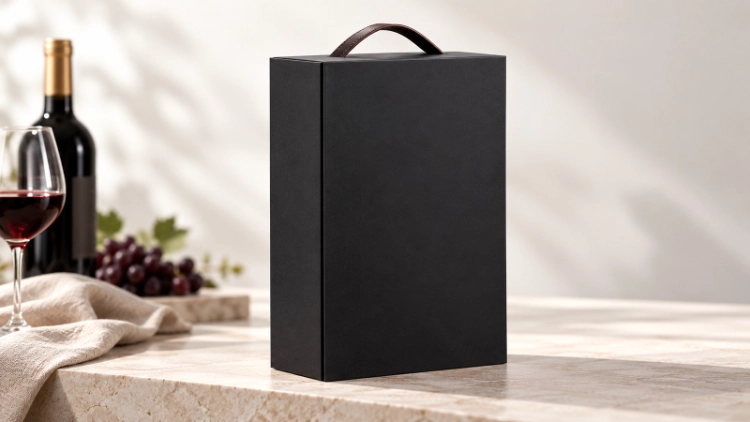
TopWinePack develops rigid, foldable, magnetic, drawer, double-door, and handled custom paper-based structures. Materials, inserts, printing, and finishes can be adjusted around the bottle and intended use.
Review the sample as a compliance prototype
A sample should confirm more than colour and logo position. Bottle movement, bottom support, opening force, insert fit, material combination, finish quality, and component separation should all be checked.
Any change after approval should be recorded because a different adhesive, lining, insert, coating, or closure may alter the final material composition. Before production is fixed, the EU-side economic operator should confirm required technical and conformity documentation.
A Practical PPWR Checklist for Wine Packaging Buyers
| Buyer check | Practical question |
| Bottle fit | Is the bottle stable without unnecessary void space? |
| Materials | Is every component identified by material? |
| Recyclability | Can the package enter appropriate sorting and recycling streams? |
| Separation | Can removable inserts or accessories be separated easily? |
| Volume | Are there decorative spaces or layers with no functional need? |
| Protection | Can structural material be justified by bottle safety? |
| Finishes | Does each coating or decorative element add clear value? |
| Labelling | Is space available for required EU information? |
| Documentation | Can the responsible EU operator obtain the required information? |
| Sampling | Has the final material combination been checked before production? |
Common PPWR Mistakes Wine Packaging Buyers Should Avoid
Several mistakes can create avoidable redesign work. FSC certification should not be treated as proof of full PPWR conformity; it relates to fibre sourcing, while PPWR covers a broader packaging framework. A paper outer box is not automatically simple to recycle because inserts, coatings, magnets, windows, handles, and other components still matter. The 50% empty-space figure should not be applied to every sales box because sales packaging and transport or e-commerce packaging are treated differently. Material information should be collected before sample approval, not after mass production.
Conclusion
Custom wine packaging for the EU market now needs a closer link between design and compliance planning. PPWR brings recyclability, minimisation, documentation, and future labelling requirements into decisions that were once treated mainly as packaging-development issues.
The aim is not to make every box as light or as plain as possible. It is to use material for a clear reason, protect the bottle, keep the recycling route in view, and provide the responsible EU operator with the information needed for compliance.
Buyers who want to review structure, materials, and sample development before the design is fixed can discuss a custom wine packaging brief with TopWinePack.
FAQs
Q1: Does PPWR apply to custom wine packaging sold in the EU?
A: Yes. Packaging placed on the EU market falls within the PPWR framework, subject to the regulation’s scope, transition dates, and the role of the relevant economic operator. Imported custom wine packaging therefore needs an EU compliance route.
Q2: Are cardboard wine boxes recyclable under PPWR?
A: Cardboard can support recyclable packaging, but recyclability depends on the complete construction. Coatings, adhesives, inserts, magnets, windows, and other components may affect sorting and recycling.
Q3: What should buyers confirm before approving a wine box sample?
A: Confirm the bottle fit, board and surface paper, insert material, coatings, decorative parts, separability, protection performance, empty space, and the technical information needed by the responsible EU economic operator.