

Eco printed wine boxes are custom bottle packages defined by documented material choices, specified printing and finishing, and environmental claims supported for the completed pack in its destination market. A kraft-brown appearance alone says little about production or disposal. Buyers still need clear answers about the board, ink, coating, insert, adhesive, and local collection system.
A custom wine box also has a practical job. It must hold a filled bottle securely, carry the artwork cleanly, and give the brand wording it can defend. Material, print, and environmental claims are separate approval decisions. They meet in the same pack, but one does not prove the others.
What Does “Eco Printed” Mean in Wine Packaging?
Natural color, rough paper, or a leaf motif may suit the artwork, but none identifies fiber content, forest sourcing, or recyclability. “Eco printed” becomes a useful specification only when it names what actually changes in the package.
Within a sustainable wine packaging project, one brief may call for documented paper sourcing and limited surface coverage. Another may use recycled fiber, a removable paper insert, or a smaller box around the bottle. These choices need different records and can lead to different end-of-life results.
For an eco friendly wine packaging brief, record the board grade, fiber claim, print system, coating area, insert, and adhesive first. Add the environmental statement afterward. If that statement cannot be tied to a component and supporting document, it is too broad for approval.
Choose Materials Before Choosing Ink
Ink often receives the early attention, although the substrate makes the larger structural decision. It sets the box weight, stiffness, surface feel, and much of the disposal route. Printing cannot rescue an oversized box or a bottle that moves inside its insert.
Paperboard, Kraft, and Corrugated Options
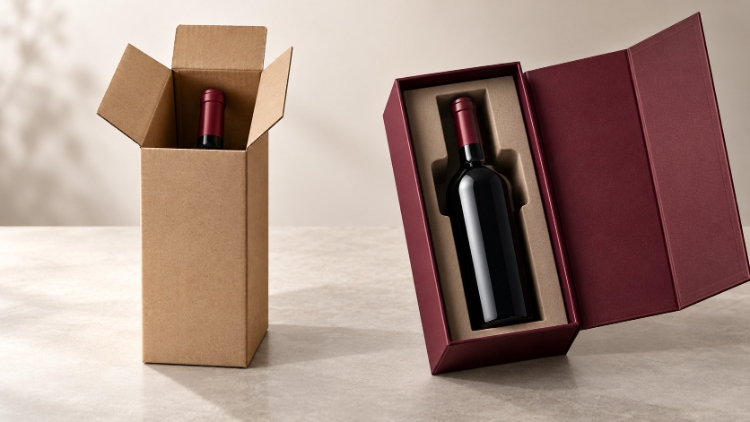
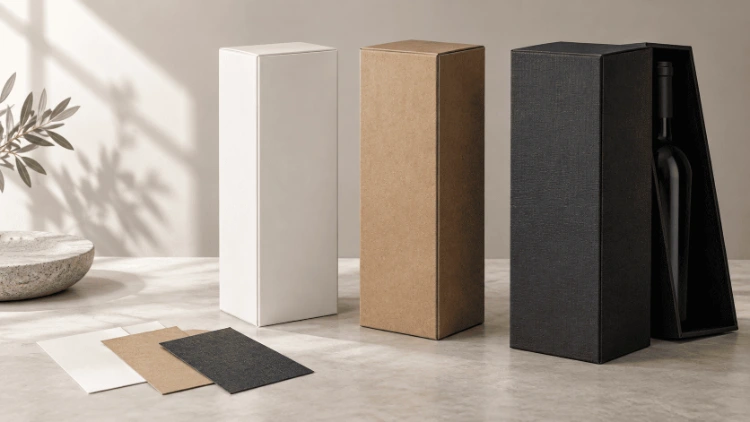
Start with the filled bottle and its handling route. Paperboard suits detailed graphics and can be converted into folding or rigid formats. Kraft paper brings a natural surface, but its brown tone can mute or shift brand colors. Corrugated board adds a fluted layer and may fit shipping or heavier single-bottle packs. Bottle weight, opening style, storage, and presentation decide which structure is appropriate.
Fit matters just as much as the material name. Too much space uses extra board and gives the bottle room to move. Too little can scuff the label or slow packing. Check the body, shoulder, neck, and closure before approving the outer dimensions.
FSC, Recycled Fiber, and Responsible Sourcing
FSC certification answers a sourcing question. Its chain of custody covers the route of certified material through the supply chain. It does not establish that the finished wine box will be accepted by a local recycling system. A laminate, coating, adhesive, or insert may change that result.
Recycled content belongs on a separate line of the specification. Record the requested paper grade and the exact basis for any recycled-fiber or FSC Recycled claim, together with the market where the box will be sold. “FSC,” “recycled,” and “recyclable” describe different attributes.
Inserts, Adhesives, and Mixed Materials
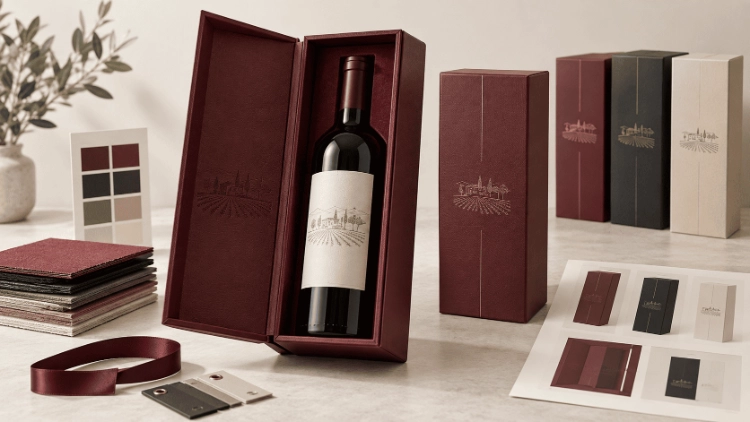
Open the sample and look at the insert by itself. Paper molds, corrugated dividers, and other fiber supports can be simpler to separate than EVA foam, plastic blister trays, or bonded textile parts. Protection still comes first. A heavy bottle or a demanding handling route may need a different support, and that choice changes the disposal instruction.
Check whether the bottle drops into place without force, whether the neck stays aligned, and how the insert is fixed. Adhesive should be limited to the joints that need it. Excess glue can make disassembly harder. These details belong in the approval record before the pack carries recyclable wine packaging wording.
Printing Process Determines More Than Color
Print decisions become measurable on press, not on a monitor. Substrate color, ink coverage, finishing, and artwork preparation all affect the approved result. They also determine how many additional layers become part of the box.
Ink Systems and Color Control
The same artwork will not look identical on coated paper, kraft, and textured stock. CMYK builds, spot colors, and white ink respond differently to each surface. On darker or more absorbent sheets, brand colors may lose brightness or shift in tone. The approval record therefore needs the actual substrate and accepted proof, not only a digital color value.
That proof also limits avoidable rework. A named color reference, the correct paper surface, and an agreed viewing sample give production a usable target. Vague color instructions leave too much room for interpretation during wine box printing.
Coatings, Foil, Embossing, and Lamination
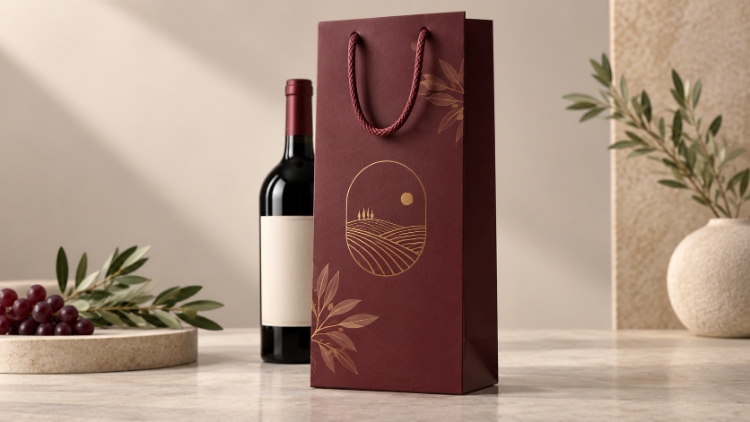
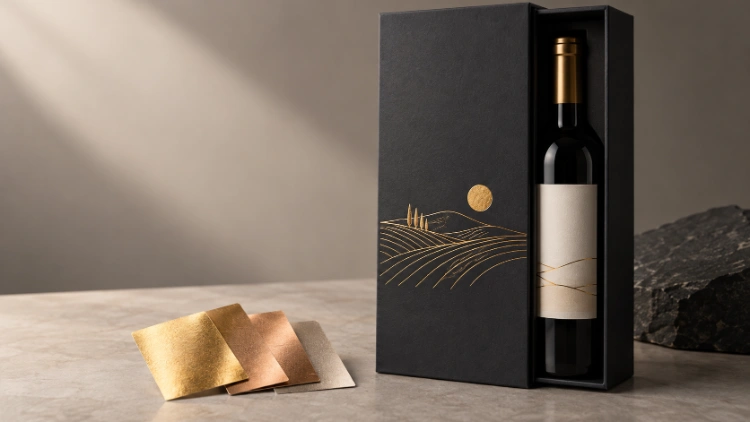
Premium finishing does not need to cover every panel. A restrained foil mark or embossing area may provide the required presentation cue with fewer added layers. Broad film lamination, heavy metallic coverage, or several permanently bonded materials make separation and recycling claims harder to assess.
Document each finish by material, location, and coverage. Note whether the coating is water-based or film-based and identify every affected panel. Any recyclable claim must be reviewed against the finished custom eco wine packaging structure, including the adhesive and insert.
Dieline, Bleed, and Proofing
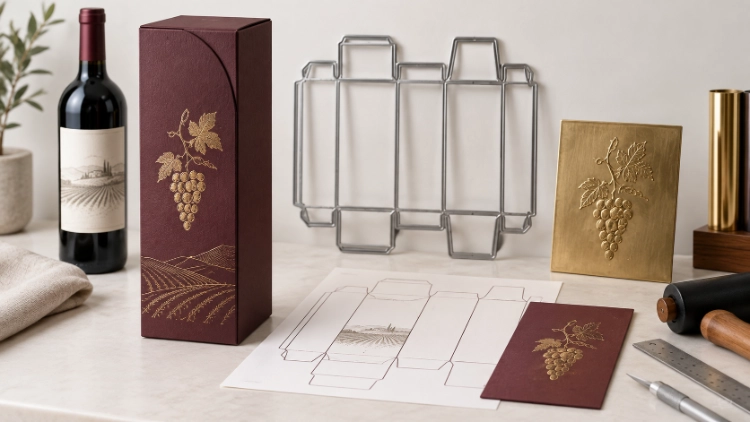
A production file needs more than attractive artwork. Bleed, safe zones, folds, cut lines, and insert orientation must be clear on the correct wine box dieline. Legal text, importer details, batch marks, and barcodes need stable positions away from seams and high-gloss effects. Linked assets, fonts, and the preflight result belong in the same approval set.
Approve structure before checking color and finishing on the actual material. The signed record should identify the dieline, paper grade, color system, finish, insert, and artwork version. When one item changes, issue a new approval record so the sample and production file do not drift apart.
How Should Environmental Claims Be Checked?
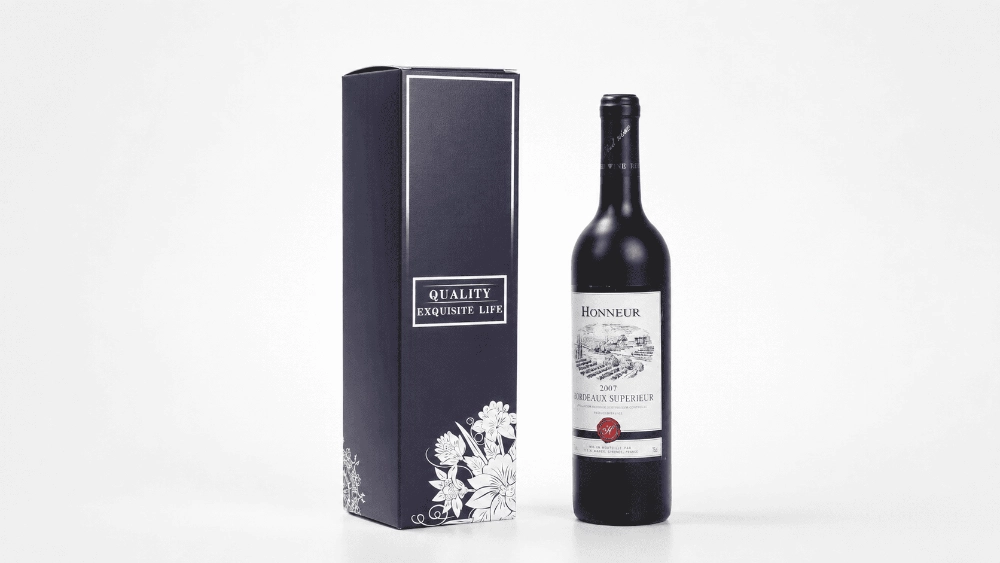
“Eco-friendly” can hide several unrelated claims. Responsible sourcing, recycled content, recyclability, compostability, and carbon statements each require their own evidence. Broad environmental claims need clear, specific qualification, especially when the wording appears on the pack.
Choose the statement from the project evidence, not from the visual concept. FSC documentation supports a sourcing and chain-of-custody claim. Recycled-content evidence concerns the fiber in the specified board. Recyclability depends on the finished material and the collection and processing system available in the market. Evidence for one does not establish the others.
Mixed materials narrow the claim further. A paper shell bonded to a difficult-to-remove insert may not support an unqualified “recyclable box” statement. Disposal routes can also differ between countries. Keep the material records with the approved specification, then decide whether the qualified wording belongs on the box, product page, or sales sheet.
Where Custom Design Still Fits
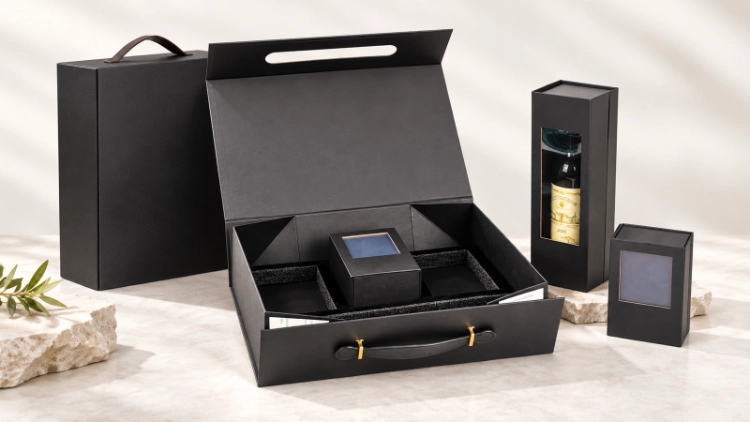
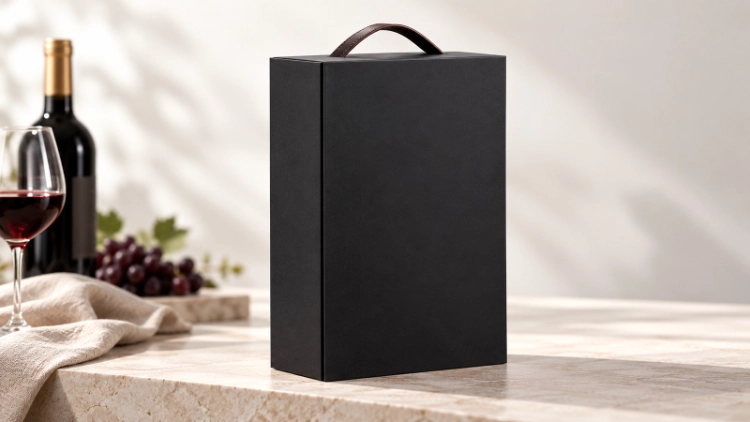
Custom design still earns its place when it solves a defined problem. A clear panel may help identify the bottle. Double doors can organize a gift set, while a foldable format can reduce storage volume before packing. Each idea still has to pass the same checks for bottle fit, repeatable assembly, material separation, and artwork placement.
After those criteria are set, buyers can compare structure and presentation options in TopWinePack’s wine box packaging range against the bottle, material, and artwork requirements already defined. The request should identify the actual bottle, box format, board, insert, finish, and proposed environmental wording. Those details, rather than the category name alone, define the sample to be approved.
Turn the Specification Into a Production-Ready Order
Keep the production information in one controlled file. A sustainable wine packaging order should include:
- bottle dimensions, filled weight, quantity, and handling route;
- box structure, dieline version, opening method, and insert material;
- board grade, recycled content or FSC claim basis, and paper surface;
- ink or color system, white ink needs, bleed, safe zones, and barcode position;
- coating, foil, embossing, lamination, adhesive, and the panels they affect;
- proof type, sample approval notes, tolerances, and the final artwork filename;
- the exact environmental wording, supporting evidence, and markets where it will appear.
Design, sampling, purchasing, and production should all work from that same version. If a seasonal graphic changes, retain the material and claim records beside the new artwork. Leave any unresolved item visibly open; a broad environmental promise is not a substitute for missing evidence.
Conclusion
An eco printed wine box is credible when its appearance, material record, and environmental wording describe the same finished pack. Start with bottle fit. Confirm the board and insert, then approve color, finishing, and the final claim against the actual sample. That sequence keeps presentation goals without treating visual cues as evidence. For a custom wine box project, prepare the bottle data, artwork, material request, and target market before requesting custom wine packaging support.
FAQ
Q: Does kraft paper make a wine box eco friendly?
Not by itself. Kraft describes a paper type and visual surface. Fiber source, recycled content, coatings, adhesives, inserts, and the local recovery route still need separate checks before an environmental claim is approved.
Q: What documentation should accompany an FSC claim?
Record the exact paper grade, applicable FSC claim, certificate or chain-of-custody details, and the approved artwork wording. The documents should correspond to the material used for that order rather than a general paper sample.
Q: Can the same recycling statement be used in every market?
Not automatically. Collection and processing systems vary, and local qualification may be required. Review the finished pack and destination market before repeating the same disposal wording across countries.